
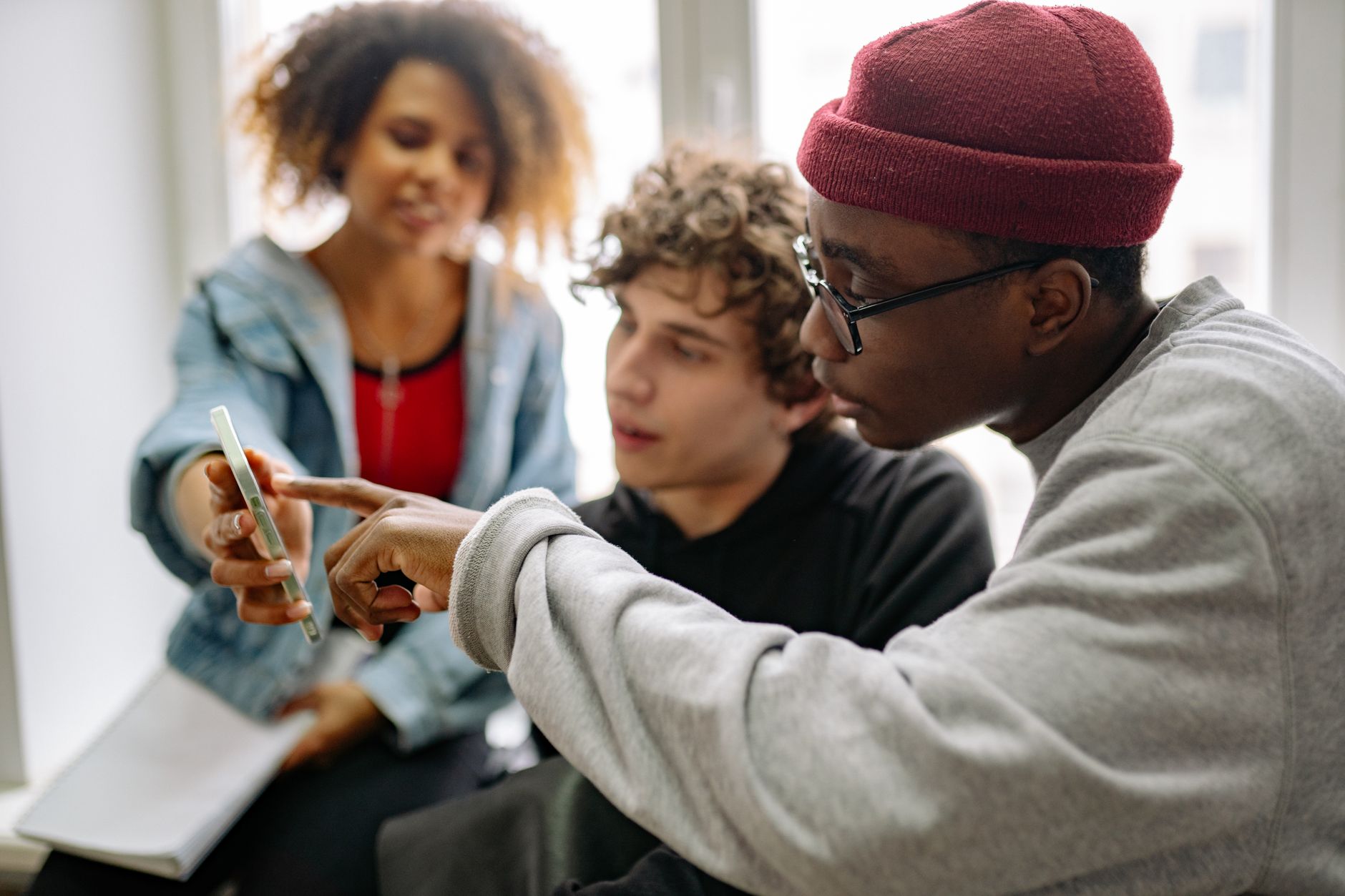
A decade ago, higher education institutions were buzzing with discussions about the arrival of “digital natives”—students who had grown up with the internet in their pockets. Universities adapted, infrastructure was overhauled, and the classroom became a hybrid environment. Today, we are standing on the precipice of a much more profound shift. We are witnessing the arrival of the first “AI-native” cohort. These are students for whom generative artificial intelligence is not a novelty or a disruptive newcomer, but a fundamental utility that has been present throughout their most critical years of formal education.
For the undergraduate class entering university this year, the launch of ChatGPT in late 2022 wasn’t a mid-career technological shift; it was a high school milestone. These students have used AI to brainstorm essay topics, summarize complex readings, and debug code for as long as they have been preparing for higher education. However, as educators and industry leaders observe this transition, a critical question emerges: what happens when a student’s technical fluency with AI tools outpaces their critical literacy?
Defining the AI-Native Student
The term “AI-native” describes a generation that views generative tools as an extension of their cognitive process. According to recent data from Eurostat, nearly 44 percent of young people aged 16-24 are utilizing AI for private purposes, with 39 percent integrating it directly into their formal education. This is the highest adoption rate of any demographic. For these students, the barrier to entry for complex tasks has been lowered, but the path to true mastery has become more obscured.
Elizabeth Ngonzi, an Adjunct Assistant Professor at New York University (NYU), notes that AI is already a primary way many students study and prepare for exams. The challenge for universities is no longer about whether to permit these tools, but rather how to ensure that students remain the primary thinkers in the room. As students become more adept at prompting, the risk is that they may lose the ability to identify a weak argument, a biased source, or a hallucinated fact generated by the machine.
The Gap Between Fluency and Literacy
There is a significant difference between knowing how to operate a tool and understanding its implications. Technical fluency is the ability to generate a desired output from an AI model. Critical literacy, on the other hand, involves understanding the ethics of data sourcing, the inherent biases in large language models, and the intellectual property concerns surrounding generative content.
Without formal training, AI-native students may default to a “path of least resistance” during high-pressure periods. When a deadline looms, the temptation to accept an AI-generated summary without verification is high. Universities must now pivot to teach students how to interrogate the machine. This includes verifying citations, understanding why an AI might favor certain perspectives, and recognizing when a task requires unaided human capability to achieve a specific learning outcome.
For students looking to bridge this gap through practical experience, exploring an AI & Machine Learning Internship can provide the deep technical context necessary to move from being a user to being a critical creator.
The Institutional Pivot: A New Pedagogical Era
The rise of AI-native students is being compared to the sudden shift to remote learning in early 2020. Much like the pandemic forced a rapid digital transformation, the AI era is demanding a total redesign of the curriculum. However, this change cannot be left to individual faculty members to navigate alone. It requires systemic institutional support.
Professor Alison Gibb of the Adam Smith Business School emphasizes that universities must move toward a proactive pedagogical redesign. This involves a two-pronged approach:
- Meaningful Integration: Designing assignments where AI is a required collaborator, teaching students how to iterate on AI outputs and use the technology for higher-level synthesis.
- Deliberate Exclusion: Identifying specific foundational skills that must be mastered without assistance to ensure the student develops the necessary “mental muscle.”
- Assessment Evolution: Moving away from standard take-home essays toward oral examinations, live presentations, and complex, real-world projects that cannot be solved by a simple prompt.
This shift allows professors to move away from being “graders of mechanics” and toward being mentors who focus on human interaction. By offloading repetitive tasks to AI, educators can focus on the nuances of critical thinking and creative problem-solving.
The “AI Divide” and Equity in Education
One of the most pressing concerns in the transition to an AI-native campus is the potential for an “AI divide.” While many students have access to free versions of generative tools, premium versions often offer significantly more advanced reasoning capabilities, better data privacy, and fewer hallucinations. Students who can afford high-tier subscriptions or who have access to the latest hardware may have a distinct advantage over those who do not.
To combat this, universities must establish school-wide policies and provide equitable access to tools. This ensures that a student’s success is determined by their intellectual engagement rather than their financial ability to pay for a “smarter” algorithm. Establishing a unified statement on AI use across all courses also prevents confusion and ensures that academic integrity standards are applied consistently across disciplines.
From Employees to CEOs: A Shift in Output
In South Korea, leaders like Greg Kang of the Tongmyong Culture and Education Foundation are advocating for an even more radical shift. Kang argues that traditional education was optimized for producing “good employees”—people who are excellent at finding the correct answers to well-defined problems. In the AI era, where the “correct answer” is often just a click away, this model is becoming obsolete.
Instead, Kang suggests that students must graduate with “CEO competencies.” This means the ability to set a goal, design a process, and execute a vision without waiting for permission or a predefined template. This approach prioritizes project-based learning and residency programs where students work on real-world challenges alongside industry practitioners. Whether a student is pursuing a Full Stack Development Internship or a business degree, the goal is to foster an entrepreneurial mindset that can navigate a world where the concept of a “job” is being reconstructed in real-time.
Practical Skills for the Real Economy
Beyond technical skills, the AI-native curriculum must include financial literacy, jurisdictional awareness, and an understanding of how to manage distributed teams. As work becomes more borderless and machine-assisted, the ability to structure ventures and manage compensation across different legal and economic frameworks becomes a high-value skill set. These are the areas where the market rewards human expertise, and where universities have a unique opportunity to lead.
The Future of the University as a Human Hub
As we move deeper into the 2020s, the physical university campus is evolving from a repository of information into a hub for human interaction. If information is ubiquitous and AI can provide personalized tutoring at any hour, the value of the university lies in its ability to facilitate debate, collaboration, and ethical reflection.
The goal is to “normalize excellence” by using technology to meet students where they are, customizing the pace of learning to match individual needs. This allows the human element of education—the mentorship between a professor and a student—to take center stage. The future of higher education isn’t about competing with AI; it’s about defining the unique human capabilities that AI cannot replicate.
Universities that thrive in this new era will be those that embrace the AI-native cohort not as a threat to academic integrity, but as a catalyst for a more rigorous, creative, and personalized form of learning. By teaching students to be the masters of the machine rather than its passive users, we ensure that the next generation is prepared for a world that is being rewritten in real-time.
The transition may be challenging, but it offers a rare opportunity to return to the core purpose of education: fostering the curiosity and critical thinking necessary to solve the world’s most complex problems.
#ainatives #highereducation #edtech #artificialintelligence #futureoflearning #academicintegrity


 Views Today : 131
 Views Yesterday : 159
 Your IP Address : 216.73.217.98