
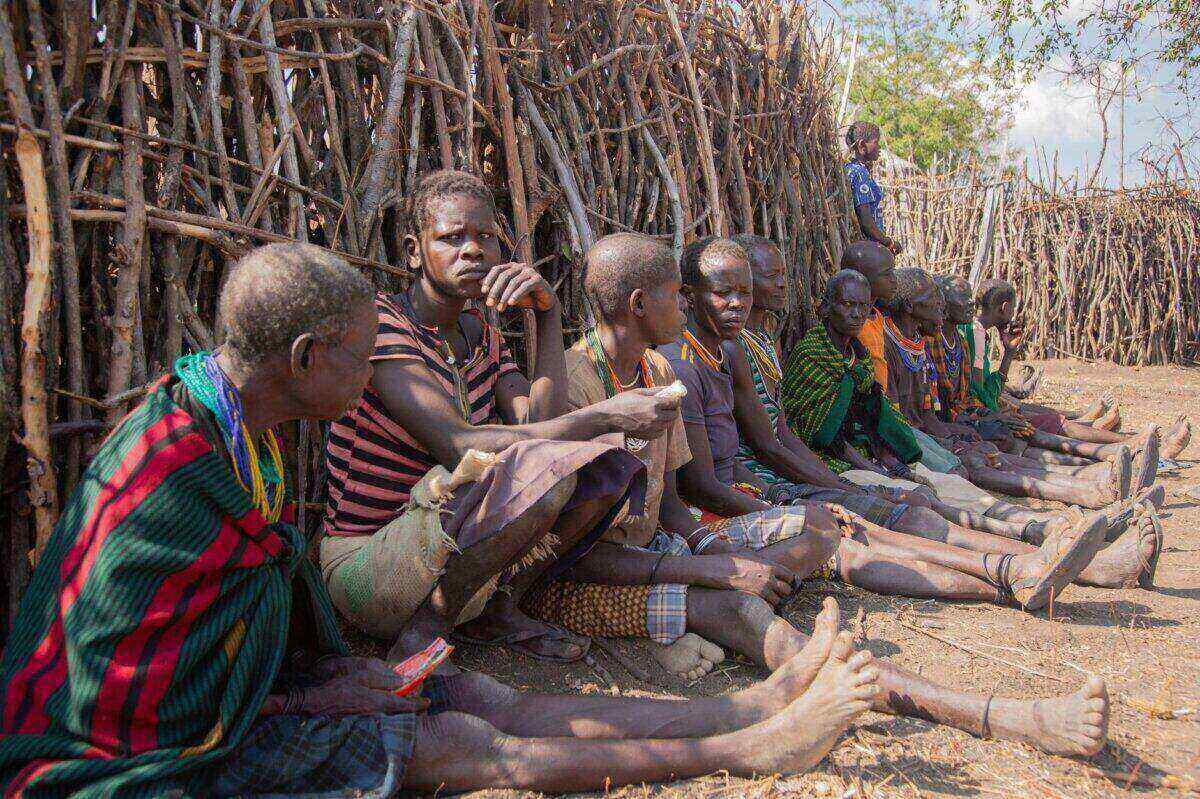
The Earthna Prize 2026 has opened applications, with submissions due by July 20, 2026. At its core, the prize recognizes something many environmental debates have ignored for too long: some of the most effective solutions to climate stress, biodiversity loss, water scarcity, and land degradation are rooted in knowledge that communities have developed over generations.
That makes this call especially relevant for nonprofits, researchers, community organizations, social enterprises, educators, and mission-driven innovators working at the intersection of sustainability and cultural heritage. The prize is designed to support projects and organizations that preserve, integrate, and apply traditional knowledge in ways that respond to urgent environmental challenges.
Excerpt: Earthna Prize 2026 invites changemakers to turn traditional knowledge and cultural heritage into practical environmental solutions, from water resilience to biodiversity protection. #earthnaprize #traditionalknowledge #climateaction #sustainability #culturalheritage #environmentalinnovation
What the Earthna Prize 2026 is really about
The Earthna Prize is not simply another sustainability award. Its emphasis is more specific and more timely. It focuses on the environmental value of traditional knowledge, local practices, and cultural heritage systems that have often been sidelined by purely technical or top-down development models.
In practical terms, this means the prize is likely to resonate with initiatives that do more than celebrate heritage symbolically. Strong projects will usually show how inherited knowledge can actively improve environmental outcomes today, whether through land stewardship, traditional architecture, ecological restoration, water conservation, seed preservation, coastal adaptation, or community-led climate resilience.
This framing matters because many environmental systems are local. Communities living with drought, heat stress, shifting rainfall, soil erosion, or ecosystem decline often hold deep place-based understanding. The Earthna Prize appears to recognize that sustainability is not only about new technology. It is also about continuity, memory, adaptation, and the intelligent reuse of knowledge that has already proven resilient over time.
Why traditional knowledge matters in modern environmental action
Environmental problem-solving is often presented as a race toward the next breakthrough. But in many parts of the world, communities are not starting from zero. They already have tested methods for managing scarce resources, building in harsh climates, protecting biodiversity, and adapting to environmental variability.
Traditional knowledge should not be romanticized or treated as fixed. It evolves. It changes as landscapes, livelihoods, and social realities change. The most promising environmental work today often comes from combining community knowledge with research, design, public policy, and appropriate technology.
Climate resilience starts with local understanding
Climate adaptation works best when it reflects local conditions. A community that has managed drylands, wetlands, mountain ecosystems, or coastal zones for centuries usually understands patterns of risk in ways that outside institutions can miss.
That can include:
- water harvesting techniques adapted to seasonal rainfall
- heat-responsive building methods using local materials
- rotational grazing and land-use systems that reduce ecological stress
- traditional cropping patterns that improve resilience to drought or pests
- community rules for resource sharing during environmental pressure
These practices are increasingly relevant as climate change intensifies. What once looked local or old-fashioned may now offer scalable lessons for resilience planning.
Biodiversity and cultural heritage are often interconnected
Many ecosystems survive because communities have protected them through customary practices, sacred relationships with land, or carefully managed use. Traditional seed systems, medicinal plant knowledge, seasonal harvesting rules, and community conservation models can all contribute to biodiversity protection.
This is one reason global organizations such as IPBES have increasingly highlighted the value of indigenous and local knowledge in environmental assessment. Cultural heritage is not separate from ecology. In many contexts, it is one of the reasons ecological knowledge has survived at all.
Who should consider applying
The Earthna Prize 2026 is likely to be especially relevant for organizations and teams that are already doing applied work, not just producing ideas on paper. While applicants should always review the official eligibility guidance on the Earthna website, the opportunity appears well aligned with several types of changemakers.
- Community organizations protecting local ecosystems through inherited stewardship practices
- Nonprofits and NGOs working on sustainable livelihoods, water resilience, climate adaptation, or cultural preservation
- Researchers and academic teams documenting, validating, or co-developing traditional ecological knowledge with communities
- Social enterprises building ethical, community-led sustainability models rooted in local heritage
- Museums, archives, and cultural institutions preserving environmental practices and translating them into present-day use
- Youth-led and intergenerational initiatives that help transfer knowledge from elders to new generations
Importantly, the strongest applicants will likely be those who show that local communities are not passive subjects of documentation. They are partners, leaders, and knowledge holders whose work shapes the project itself.
Project ideas that fit the spirit of the prize
Because the call centers on preserving, integrating, and adopting traditional knowledge, there is room for a wide range of environmental approaches. What matters most is not the label on the project but the quality of its environmental relevance and the authenticity of its relationship with knowledge-holding communities.
Water and land stewardship
Projects in this area could include restoring traditional irrigation systems, reviving rainwater harvesting methods, mapping community water knowledge, or blending ancestral land-management techniques with modern watershed monitoring.
In water-stressed regions, such work can be especially powerful because it connects ecological restoration with practical human need.
Regenerative agriculture and food resilience
Seed-saving networks, locally adapted crops, heritage farming methods, soil restoration practices, and community agroecology programs are all examples of work that could align well with the prize. These efforts matter not only for food security but also for biodiversity, cultural continuity, and climate adaptation.
Architecture and climate-responsive design
Traditional building practices are increasingly being revisited for their environmental intelligence. Passive cooling, local materials, courtyard design, shading systems, earth-based construction, and settlement patterns shaped by climate all have new relevance in an era of rising temperatures and energy demand.
Projects that document and adapt such approaches for contemporary housing or public design could be compelling.
Coastal and ecosystem restoration
Communities with long histories of living near mangroves, deserts, forests, islands, and marine ecosystems often carry unique ecological knowledge. Restoration initiatives that integrate local observation, seasonal knowledge, and customary management can produce more durable results than purely external interventions.
Knowledge preservation with practical use
Documentation alone may not be enough. A strong proposal could go further by showing how oral histories, archives, cultural practices, or community mapping are being translated into usable environmental tools, educational programs, policy recommendations, or field-based action.
What strong applications are likely to demonstrate
Even without seeing every judging detail, it is possible to identify qualities that usually make environmental and heritage-focused applications stand out.
- Clear environmental relevance: The project should address a real ecological issue such as water stress, habitat loss, climate adaptation, waste, food resilience, or resource management.
- Authentic community connection: Traditional knowledge should come from meaningful collaboration, not superficial branding.
- Respect for ethics and ownership: Applicants should show how they handle consent, credit, data rights, and cultural sensitivity.
- Evidence of impact: Even early-stage initiatives benefit from measurable outcomes, pilot results, community participation, or observable change.
- Potential for learning and replication: Projects that generate transferable lessons often have broader value.
- Intergenerational relevance: Work that helps pass knowledge to younger generations can be especially powerful.
Judges in this space are often looking for more than good intentions. They want to see that traditional knowledge is being applied thoughtfully, respectfully, and effectively.
How students, researchers, and innovators can contribute
The Earthna Prize may sound like an opportunity aimed only at established institutions, but students and early-career professionals can play an important role in projects of this kind. Many successful environmental initiatives need support in research, documentation, digital mapping, storytelling, data analysis, impact measurement, and community engagement.
For example, a team working on traditional water systems may need help analyzing rainfall patterns, visualizing groundwater data, or building accessible dashboards. A cultural landscape project may need geospatial mapping, digital archiving, or biodiversity monitoring. A regenerative agriculture initiative may benefit from remote sensing, crop data analysis, or community survey design.
For learners who want to build practical skills that support work like this, experience in data analytics and data science can be valuable for environmental monitoring and impact evaluation. Similarly, projects involving predictive models, pattern recognition, or ecological data processing may benefit from knowledge gained through AI and machine learning.
The larger point is that traditional knowledge and modern tools do not need to compete. When used responsibly, digital methods can help communities document threatened knowledge, track environmental change, and strengthen evidence for funding or policy support.
How to prepare a competitive application before July 20, 2026
With the deadline set for July 20, 2026, applicants have a clear window to sharpen their materials. The most successful submissions are usually the result of preparation, not last-minute writing.
1. Define the environmental problem clearly
Be specific. Are you addressing drought, soil degradation, coastal erosion, biodiversity decline, heat stress, waste, or loss of sustainable livelihoods? A focused problem statement immediately improves the quality of an application.
2. Show how traditional knowledge is central, not decorative
Explain where the knowledge comes from, how it has been preserved, and how it shapes the project approach. Avoid vague language. Name the practices, methods, materials, systems, or decision-making traditions involved.
3. Demonstrate community leadership and consent
If knowledge comes from a specific community, the application should make clear who is involved, how they participate, and how benefits are shared. Ethical clarity can be just as important as technical quality.
4. Include evidence and credibility
Use pilot data, case studies, testimonials, field observations, photos, evaluations, or research findings where possible. Even small-scale evidence can help reviewers see that the work is grounded in reality.
5. Explain the long-term value
Why does this project matter beyond the immediate award cycle? Does it preserve endangered knowledge, strengthen adaptation, create educational resources, influence policy, or improve environmental governance?
6. Write for both experts and non-specialists
Prize reviewers may come from multiple backgrounds. The strongest applications are clear enough for general readers while still showing depth for technical reviewers.
Useful resources and reference points for applicants
Applicants working in this space may find it helpful to review how major institutions frame the relationship between culture, knowledge, and sustainability. The UNESCO Intangible Cultural Heritage platform is a useful starting point for understanding how knowledge, practice, and cultural transmission are documented globally.
Likewise, materials from organizations studying biodiversity and local knowledge systems can help applicants place their work in a broader context. Referencing the wider conversation around traditional ecological knowledge can strengthen the intellectual and policy grounding of a proposal.
That said, the most persuasive applications are usually not the most academic. They are the ones that combine clear environmental outcomes with a strong, respectful account of how knowledge lives within communities.
Why opportunities like this matter right now
Environmental funding is gradually shifting. There is growing recognition that durable climate and sustainability work must be socially rooted, culturally aware, and locally informed. Awards like the Earthna Prize reflect that shift. They create room for solutions that are not purely extractive, purely technological, or disconnected from history.
They also send an important signal to younger researchers, students, and innovators: environmental leadership does not only belong to laboratories, ministries, or large startups. It can also emerge from villages, oral histories, craft traditions, farming practices, architecture, and community memory.
That is what makes the Earthna Prize 2026 especially meaningful. It invites applicants to think beyond preservation as nostalgia and toward preservation as practical environmental intelligence. In a century defined by ecological disruption, that may be one of the most important forms of innovation we have.
For organizations and teams already doing this work, the deadline is more than a date on a calendar. It is an opportunity to present community-centered environmental knowledge as a serious, scalable, and future-facing response to some of the world’s most pressing challenges.
#earthnaprize #traditionalknowledge #climateaction #sustainability #culturalheritage #environmentalinnovation


 Views Today : 70
 Views Yesterday : 159
 Your IP Address : 57.141.20.34