
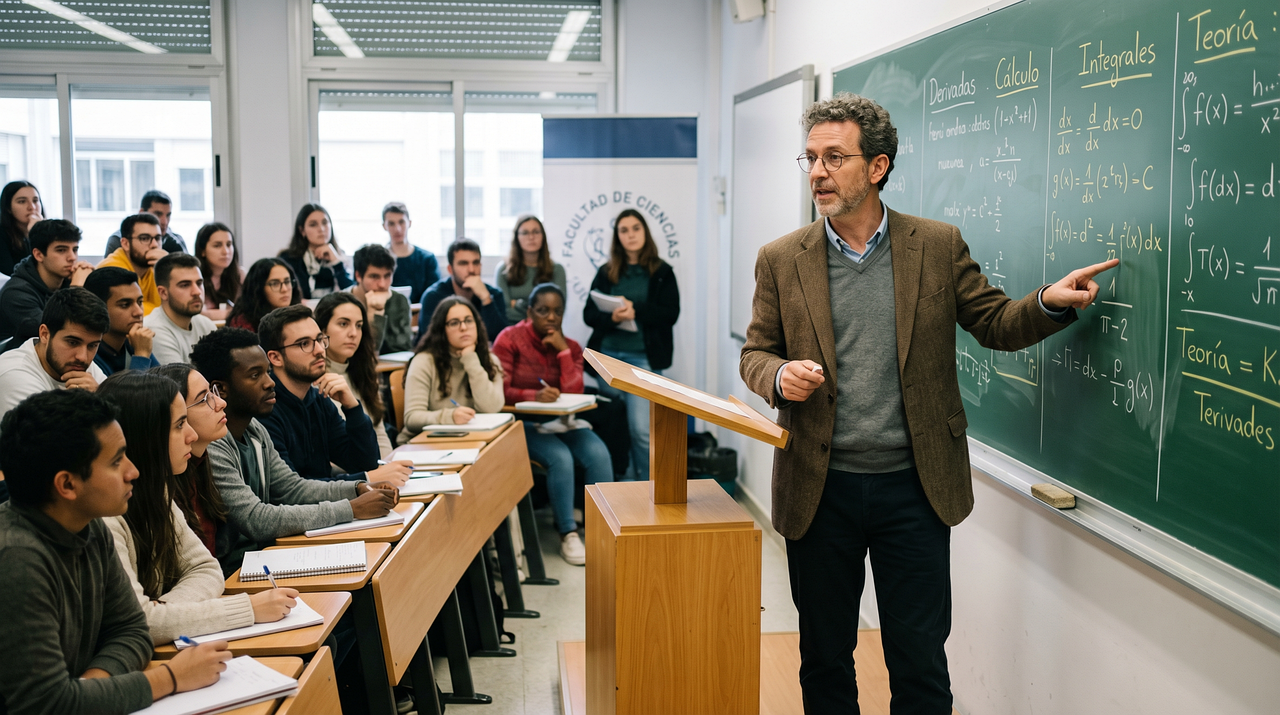
AI can deliver information instantly, but knowledge still depends on context, judgment, ethics, and experience. In modern classrooms, the real value of higher education is shifting toward critical thinking, collaboration, and applied learning. #aieducation #highereducation #criticalthinking #digitallearning #studentskills
Artificial intelligence has made one thing impossible to ignore: information is no longer scarce. A student can now ask an AI tool to explain a finance model, summarize a research paper, translate a dense theory into simpler language, or generate practice questions in seconds. That speed is changing how students learn and how universities define their value.
But access to information is not the same as building knowledge. That distinction matters more than ever in an AI-powered classroom. If institutions treat AI as just another content-delivery tool, they risk reducing education to a cheaper, faster version of a search engine. If they understand the difference between information and knowledge, they can redesign teaching around what humans still do best.
The future of higher education is not about competing with AI on recall, speed, or convenience. It is about helping students interpret, question, apply, and challenge what they find. In other words, the classroom is becoming less about transferring facts and more about developing judgment.
Why the difference between information and knowledge matters
In everyday conversation, people often use terms like data, information, and knowledge as if they mean the same thing. They do not. And in education, the differences are practical, not just philosophical.
Data is raw input
Data is the basic material: numbers, words, signals, observations, or recorded events. A spreadsheet of attendance records, a sensor reading, or a list of exam scores is data. By itself, it does not explain much.
Information is organized meaning
Information is what happens when data is sorted, structured, and presented in a way that answers a question. A graph showing attendance trends over a semester is information. A summary of student feedback is information. AI is especially good at producing this layer quickly.
Knowledge is contextual and actionable
Knowledge goes further. It involves interpretation, truth-testing, relevance, and application. It answers not just what is happening, but why it matters, when it applies, where it may fail, and what should happen next. Knowledge is shaped by experience, reflection, ethics, and human context.
That is why an AI tool can explain a concept, but still struggle with the real complexity of a classroom discussion. It can present options. It cannot fully understand the emotional, cultural, institutional, and moral weight behind those options in the way human learners and teachers can.
AI is transforming access to information
For students, this shift is profound. In the past, much of higher education depended on the institution controlling access to expertise, reading lists, libraries, and lectures. Today, a motivated learner can get a surprisingly strong introduction to many subjects through AI, open courses, digital libraries, and expert communities.
That does not make universities irrelevant. It does mean the old model of standing at the front of the room and repeating content slides is losing value fast. If students can get clear explanations on demand, class time needs to justify itself differently.
AI now supports several tasks that once consumed large parts of learning:
- summarizing long readings into manageable notes
- creating revision plans and self-tests
- translating technical language into simpler explanations
- offering instant feedback on drafts and code
- generating examples, case prompts, and comparisons
For students in technical fields, the impact is even more visible. Learners exploring machine learning, software, analytics, or automation can use AI as a practice partner while building practical skills through structured pathways such as the AI & Machine Learning internship or the Data Analytics & Data Science internship.
Used well, AI lowers friction. It helps students prepare before class, test their understanding, and move faster through routine tasks. That is a benefit, not a threat. The problem begins when speed is confused with mastery.
What AI still cannot replace in the classroom
The strongest argument for higher education in the AI era is not that professors know more facts than machines. It is that education at its best develops the human capacities machines cannot reliably reproduce.
Judgment under uncertainty
Real-world decisions are rarely neat. A business leader may have incomplete data. A software engineer may have to choose between speed, security, and usability. A healthcare manager may need to balance cost with fairness. AI can offer patterns and probabilities, but judgment requires human responsibility.
This is where case discussions, simulations, role-play exercises, and live debate become more valuable than passive lectures. When students are forced to defend a position, respond to criticism, and adjust their reasoning in real time, they are building something deeper than information recall.
Context and nuance
Knowledge always sits inside context. The same answer may be right in one market and wrong in another. The same strategy may work for a startup and fail inside a public institution. AI often produces smooth, confident responses, but confidence is not the same as understanding.
Students need practice in asking harder questions: What assumptions are hidden here? Who benefits from this recommendation? What information is missing? Does this output fit the social, legal, or cultural setting?
Ethical reasoning
AI can summarize ethical frameworks. It cannot carry moral responsibility. In classrooms shaped by AI, ethics should not be treated as an optional extra. It should sit inside business, engineering, data science, media, and policy education.
Universities that redesign curricula around ethical reasoning, interdisciplinary thinking, and responsible decision-making will offer something far more durable than content alone. Resources from UNESCO’s work on AI in education make this point clearly: generative AI should support learning, not replace human agency.
The classroom is becoming a place for thinking, not just listening
The best AI-powered classrooms are not fully automated spaces. They are more human, not less. AI handles routine preparation, while faculty design higher-value learning experiences.
That changes the role of the lecturer. Instead of acting mainly as a source of information, the educator becomes a curator, coach, challenger, and mentor. Their job is to select meaningful problems, expose weak reasoning, connect theory to lived reality, and guide students through complexity.
In practical terms, that can look like:
- students using AI before class to review core concepts
- class time spent on case analysis, peer debate, and problem-solving
- assignments that require reflection on how AI was used
- assessment focused on reasoning, originality, and application
- faculty showing students how to verify outputs and spot hallucinations
This model aligns with broader shifts in the labor market. Employers are increasingly looking for people who can work with intelligent tools without outsourcing all thinking to them. Technical fluency matters, but so do communication, adaptability, skepticism, and collaboration.
Why universities still matter when AI is everywhere
If AI can explain concepts on demand, students naturally ask a difficult question: why pay for a degree at all? The answer depends on what students believe they are buying.
They are not simply paying for access to information. They are paying for structure, mentorship, feedback, community, credibility, and opportunities that are difficult to recreate alone.
Structure and accountability
Self-directed AI learning can work very well for disciplined learners. But many students progress faster when they have deadlines, academic expectations, and a clear learning pathway. Higher education still provides a framework that helps students turn interest into sustained development.
Mentorship and feedback
AI can give feedback instantly, but it does not know the student’s long-term goals, confidence barriers, or professional context in a meaningful human way. Mentors do. A good educator sees patterns in a student’s thinking and can challenge them at exactly the right moment.
Networks and opportunity
Universities also create bridges: between disciplines, between research and industry, and between students and future employers. These networks often shape careers more than any single module. Students looking to strengthen employability often benefit from combining academic learning with hands-on experience through industry-focused internships and project work.
Recognized credentials
Credentials still matter in many fields. They signal persistence, subject exposure, and a level of evaluated competence. AI may help learners build skills outside formal education, but institutions still provide trust signals that employers, regulators, and graduate schools understand.
How students should use AI without weakening their learning
The smartest students are not the ones who avoid AI completely. They are the ones who use it strategically while protecting their own thinking.
A practical approach includes a few simple rules:
- use AI to clarify, not to replace reading entirely
- ask it for alternative explanations, not final answers only
- verify important claims with textbooks, papers, and reliable sources
- treat AI output as a draft to interrogate, not truth to submit
- record how AI influenced your reasoning so you can reflect on it
For students preparing for careers in technology, this habit is essential. Developers, analysts, and product teams now work in environments where AI speeds up output but also introduces new risks. Guidance from the OECD’s education resources consistently highlights the growing importance of higher-order skills such as critical thinking, adaptability, and digital responsibility.
What institutions need to rethink now
The rise of AI is not only a student issue. It is forcing institutions to revisit teaching design, assessment models, and the purpose of contact time.
Universities that respond well will likely do three things.
Redesign assessment
When AI can generate essays, summaries, and code quickly, assessments based only on standard outputs lose reliability. More institutions will move toward oral defenses, live projects, applied case work, collaborative problem-solving, and reflective assignments that show process as well as product.
Teach AI literacy explicitly
Students should not be left to figure out AI alone. They need formal instruction on prompting, verification, bias, privacy, citation, ethics, and appropriate use. AI literacy is rapidly becoming a core academic skill, not a niche technical add-on.
Protect the human side of education
Paradoxically, the more advanced AI becomes, the more valuable human interaction may feel. Students still need challenge, belonging, debate, and intellectual discomfort. A degree that offers only content will look overpriced. A degree that develops confidence, judgment, and professional identity will remain compelling.
The real shift: from what you know to how you think
The most important change in AI-powered education is not that machines know more. It is that human learning is being judged by a different standard. Memorizing and repeating information has lower value when intelligent systems can do it instantly. The premium is moving toward interpretation, creativity, synthesis, and wise action.
That is why the distinction between information and knowledge is so important. Information can be delivered. Knowledge must be built. It grows through discussion, failure, revision, experience, and reflection. It lives in communities, not just in prompts.
For students, that means the winning strategy is not choosing between AI and higher education as if they are opposites. The stronger path is to combine them: use AI for speed, access, and experimentation, while using classrooms, mentors, and peers for challenge, perspective, and growth.
In the years ahead, the universities that stand out will not be the ones that simply add AI tools to old systems. They will be the ones that clearly show students what cannot be automated: the formation of judgment, the discipline of critical thought, and the human ability to turn information into meaningful knowledge.
#aieducation #highereducation #criticalthinking #digitallearning #studentskills


 Your IP Address : 216.73.217.86