
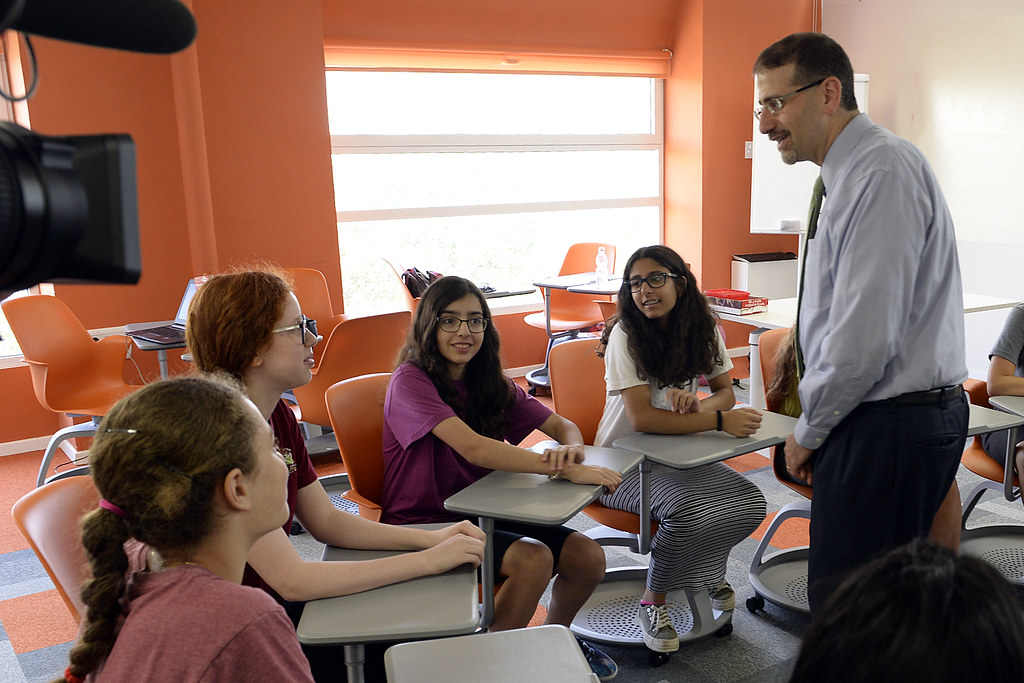
As the annual “Back to School” season approaches, the atmosphere in the education sector is noticeably different this year. It is no longer just about the transition from summer holidays to the rigors of the classroom; it is about a fundamental shift in how technology is integrated into the learning experience. We are moving away from the era of “tech for tech’s sake” and entering a period defined by intentionality, design, and measurable impact. From the halls of the US Department of Education to the bustling EdTech hubs of Southeast Asia, the conversation is shifting from how much screen time students are getting to what specific learning problems that screen time is solving.
The Great Reckoning: Instructional vs. Recreational Use
One of the most significant developments this season is the guidance issued by the US Department of Education. In a recent “Dear Colleague” letter, federal leaders made a sharp distinction between digital instructional use and recreational use of technology. This is a crucial pivot. For years, parents and educators have been concerned about the “techlash”—a growing skepticism toward the ubiquity of screens in schools. By separating the two, the Department is asking school leaders to move beyond the binary debate of “screens: good or bad” and instead focus on the intent of the tool.
The guidance encourages leaders to ask five core evidence-based questions before adopting any new educational solution: What learning problem does it address? When should it be used? For whom is it most effective? Under what conditions does it succeed? And finally, what is the evidence of its impact? This framework places instructional design at the very heart of EdTech purchasing. It ensures that technology serves as a lever for learning rather than a distraction. For developers and students pursuing a Full Stack Development Internship, understanding these pedagogical requirements is becoming just as important as mastering the code itself.
The Southeast Asia EdTech 50: A Region Building Close to the Classroom
While the US focuses on regulation and evidence, Southeast Asia is experiencing a surge in grassroots innovation. The 2026 Southeast Asia EdTech 50 report reveals a region that is building solutions remarkably close to the act of learning. Unlike other markets that might focus heavily on administrative tools or back-end management, the ASEAN cohort is dominated by K-12 support. This includes instructional solutions, personalized tutoring, and AI-enabled learning experiences that directly interact with students.
This concentration is significant because it provides a deep supply of solutions designed around the actual needs of teachers and students. Countries like Vietnam, Indonesia, and Thailand are seeing a rise in platforms that democratize access to high-quality instruction. This growth is a prime example of how regional needs dictate technological evolution. As these platforms scale, the demand for local talent in data science and software engineering continues to grow, making a Data Analytics & Data Science Internship a strategic move for graduates in the region who want to shape the future of localized education.
AI Beyond the Hype: Real Classroom Results
The conversation around Artificial Intelligence in education is moving from speculative hype to practical implementation. While the “AI Hype Audit” remains a necessary exercise for school boards, we are starting to see real-world applications that go beyond simple chatbots. For instance, Samsung recently unveiled an AI assistant designed specifically for interactive classroom displays. This isn’t just about answering questions; it’s about creating a more interactive, responsive environment where the display can adapt to the teacher’s flow and the students’ queries in real-time.
Furthermore, platforms like Medly AI are demonstrating the power of personalized exam preparation. By using AI to identify specific gaps in a student’s knowledge, these tools can provide targeted practice that is far more efficient than traditional “one-size-fits-all” study guides. For those interested in the underlying mechanics of these systems, engaging in an AI & Machine Learning Internship provides the technical depth needed to build the next generation of adaptive learning tools.
Global Partnerships and Digital Transformation
Innovation isn’t happening in a vacuum. It is being fueled by massive international partnerships and government-led initiatives. In Africa, Meta has partnered with the Nigerian government to expand AI skills and support the startup ecosystem. This initiative is designed to build digital capacity and ensure that the next wave of technological innovation is homegrown. Similarly, in Kenya, Konza Technopolis and Amazon are working together to advance the country’s digital infrastructure, providing the backbone for a modern digital economy.
In Europe, the landscape is shifting due to demographic and economic pressures. UK universities, facing a decline in international enrollments, have begun offering significant tuition discounts to attract talent from major hubs like India. This move highlights the global competition for talent and the need for institutions to remain accessible in an increasingly expensive world. These geopolitical shifts remind us that education is not just a local issue but a global commodity influenced by policy, economy, and technology.
Securing the Future: The Importance of Cybersecurity in Schools
As schools become more digitized, they also become more vulnerable. The influx of AI agents, cloud-based learning management systems, and student data platforms has made educational institutions prime targets for cyberattacks. The US Department of Education’s focus on “responsible use” naturally extends to data privacy and security. It is no longer enough for a tool to be effective; it must be secure. This creates a massive opportunity for specialists in the field. Students who choose a Cyber Security & Ethical Hacking Internship will find themselves at the forefront of protecting the digital classrooms of tomorrow.
The Investment Landscape: Where the Money is Flowing
Despite a broader slowdown in some tech sectors, EdTech investment remains robust in specific high-growth areas. Reach Capital recently closed a $265 million fund to back early-stage companies across learning, health, and work. Their focus is on companies that address the whole person—recognizing that learning does not happen in isolation from mental health or career readiness. We are also seeing significant “power moves” in the industry, such as Risepoint’s acquisition of Keypath Education’s North American operations, signaling a consolidation in the healthcare education space.
- Personalized Learning: Medly AI raised $8 million to expand its AI tutoring platform.
- Technical Training: Codio secured $5 million to enhance its learning experience platform for higher education, focusing on coding and technical skills.
- AI Development: Imagi raised $4.5 million to continue its mission of making AI-powered learning accessible to younger students.
These investments suggest that the market is betting on tools that provide tangible, technical skills and those that use AI to offer a more personalized, human-centric learning experience.
Reimagining the Path to College and Work
The ultimate goal of all this innovation is to reshape the path from K-12 to the workforce. Organizations like NewSchools Venture Fund and Comp Sci High are rethinking what a high school education should look like. They are moving away from traditional rote learning and toward models that integrate real-world skills, internships, and project-based learning. This “School, Reimagined” approach acknowledges that the traditional degree is no longer the only path to success. The integration of industry-recognized certifications and hands-on experience is becoming a standard part of the modern curriculum.
As we look toward the next 25 years, the focus will be on creating “responsive campuses.” These are institutions that use AI agents to handle administrative burdens, allowing educators to focus on mentorship and deep instruction. They are institutions that measure what matters—not just grades, but competencies, critical thinking, and the ability to adapt to a changing technological landscape.
The upcoming “Back to School” summit in New York City and the QS Reimagine Education conference in London will serve as critical touchpoints for these discussions. They bring together the brightest minds in academia, government, and technology to ensure that the innovations we see today lead to a more equitable and effective education system tomorrow. The era of passive technology consumption is over; the era of intentional, designed learning has officially begun.
#edtech #educationinnovation #futureoflearning #aiireducation #southeastasia #digitaltransformation


 Views Today : 70
 Views Yesterday : 142
 Your IP Address : 216.73.217.78