
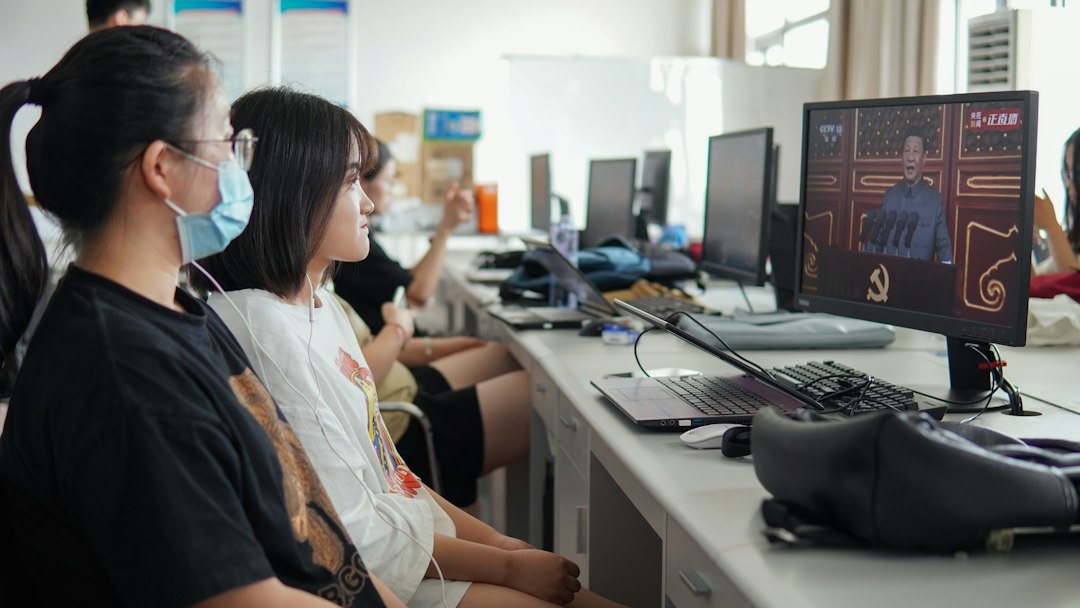
For decades, the university degree has served as a comprehensive, all-in-one package. It was a bundled offering that combined academic instruction, rigorous assessment, prestigious credentials, a built-in community, and a clear-cut route into the professional world. However, the landscape of higher education is currently undergoing a seismic shift. The rise of artificial intelligence, the growing influence of employer-led learning, and the proliferation of modular microcredentials are pulling these traditional components apart, a process often described by industry experts as the ‘unbundling’ of education.
While the degree itself is far from disappearing, the interior architecture of what constitutes a higher education qualification is changing fundamentally. Students, educators, and employers are collectively navigating a new reality where learning is no longer a linear, four-year journey, but a continuous, modular, and deeply integrated experience. This transformation is not just about technology; it is about rethink the value proposition of traditional institutions in a world where skills evolve faster than curriculum cycles.
The Unbundling of the Academic Experience
Unbundling refers to the process where the various components of a traditional degree are separated and offered as standalone services. Historically, you went to a university for everything: the social network, the lectures, the library access, and the final certificate. Today, learners can get high-quality content from one provider, peer networking from another, and professional certification from a third. This modularity offers unprecedented flexibility, especially for working professionals and those in rapidly changing industries like tech and data science.
The movement toward stackable and portable credentials has gained significant momentum. Rather than waiting four years for a single piece of paper, students are now looking for ‘micro-wins.’ These microcredentials focus on specific, high-demand skills. For instance, organizations like the IEEE are leading the way by offering specialized certifications in AI ethics, governance, and auditing. This allows professionals to update their skills in real-time as the regulatory landscape for artificial intelligence evolves, without needing to return for a full master’s degree.
For those looking to build these technical foundations, exploring practical opportunities such as a Full Stack Development Internship can provide the modular, hands-on experience that modern employers value alongside traditional academic knowledge. This shift acknowledges that the value of education is increasingly found in the specific capabilities one can demonstrate, rather than just the institution’s name on a resume.
Workplace Integration and Employer-Led Learning
One of the most profound changes in the education sector is the blurring of the line between ‘work’ and ‘study.’ In the past, these were distinct phases of life. Today, they are merging. Forward-thinking institutions like Torrens University Australia are setting a precedent by allowing verified workplace capabilities to count toward formal qualifications. This recognition of prior learning—delivered not by the university but by the employer—validates the idea that significant, high-level learning happens on the job.
The growth of employer-led pathways is a direct response to the ‘skills gap’ that many industries face. When a technology develops rapidly, traditional academic cycles struggle to keep pace. By partnering with industry leaders, universities can ensure their graduates are day-one ready. This has also led to the rise of accelerated programs. In the United States, nearly 90 colleges now offer three-year bachelor’s degrees. These programs aim to reduce student debt and accelerate the transition into the workforce, focusing on the core competencies required for professional success.
As work becomes part of the qualification, the demand for specialized internships has surged. Students often seek out a Data Analytics & Data Science Internship to bridge the gap between theoretical classroom models and real-world data messy environments. These experiences are no longer seen as extracurricular; they are becoming central pillars of the redesigned degree.
The Proof of Capability in the Age of AI
As learning becomes more distributed and modular, a critical question arises: What counts as proof of capability? In an era where generative AI can write essays, solve complex equations, and even write code, traditional assessment methods are under fire. Universities and employers are being forced to rethink how they evaluate genuine understanding. It is no longer enough to look at a final paper; one must look at the process and the individual’s ability to apply knowledge in novel situations.
Recent research into AI-assisted marking has shown that while generative AI is powerful, it has limitations in consistently applying nuanced assessment criteria. This has led to the development of new platforms like Coraltalk, which focuses on oral assessments. By evaluating a student’s verbal explanation of a concept, institutions can ensure that the knowledge is internalized and not just generated by an algorithm. This move back toward ‘viva voce’ style examinations represents a modern twist on ancient academic traditions, updated for a high-tech world.
The ethical implications of AI in education are also being addressed at the governmental level. Brazil, for instance, has introduced national AI guidelines for universities, requiring transparent institutional policies and human oversight of academic decisions. These frameworks are essential for maintaining the integrity of the educational system while still leveraging the efficiency that AI provides. Students entering this field through an AI & Machine Learning Internship are at the forefront of these discussions, learning not just the code, but the governance required to deploy it responsibly.
Global Innovations and Policy Shifts
The transformation of higher education is a global phenomenon, with different regions adopting unique strategies to integrate technology and improve access. In Qatar, the government has partnered with Scale AI to develop classroom assistants for younger students and advanced academic adviser tools for Qatar University. These tools help personalize the learning experience, providing students with immediate feedback and guidance tailored to their specific progress.
Meanwhile, in New Zealand, the government has expanded post-study work options for international graduates. By offering work rights to Graduate Diploma holders, they are acknowledging the value of shorter, more focused programs that help international talent integrate into the local economy. This policy shift reflects a broader understanding that the ‘product’ of education is not just the degree, but the career opportunities and economic contributions that follow.
On the corporate side, the Microsoft AI Transparency Initiative, involving over 40 organizations, is working to establish shared standards for accountability and security. This is particularly relevant for those pursuing a Cyber Security & Ethical Hacking Internship, as the intersection of AI and security becomes a primary concern for institutional and national safety. These partnerships highlight that the future of education will be defined by collaboration between the public sector, private tech giants, and academic institutions.
What Remains: The Value of the Bundled Degree
Despite the trend toward unbundling, there are certain elements of the traditional degree that are incredibly difficult to replicate through modular learning alone. The degree still offers a trusted credential that carries weight with recruiters and licensing boards globally. More importantly, it provides access to an expert community and a peer network that can last a lifetime. The research environment of a university—where new knowledge is created rather than just consumed—remains a unique value proposition.
The question for modern universities is no longer how to prevent unbundling, but how to redesign the ‘bundle’ to be more relevant. This involves deciding which parts of the experience the university should own, which parts it should partner for, and where it provides the most distinctive value. For example, a university might offer the social and research environment while partnering with industry leaders for the technical, skill-based portions of the curriculum.
This hybrid model is likely the future. We are moving toward an era where the university acts as a ‘curator’ of a student’s lifelong learning journey. Instead of a one-time transaction, the relationship becomes a continuous loop of upskilling and re-credentialing. Events like the QS Reimagine Education conference in London provide the necessary forum for leaders to discuss these transitions, ensuring that as the degree changes, it remains a robust and reliable pathway to personal and professional growth.
As we look toward 2025 and beyond, the education sector is clearly in a state of creative destruction. The institutions that thrive will be those that embrace AI, validate workplace learning, and offer flexible, modular pathways while maintaining the high standards of integrity and community that have defined higher education for centuries. The degree isn’t going away; it is simply becoming more dynamic, personalized, and integrated into the fabric of our working lives.
Ultimately, the goal of this evolution is to create a more inclusive and efficient system that recognizes the diverse ways people learn and work today. Whether through a traditional campus experience, a series of stackable microcredentials, or an intensive internship program, the focus is shifting from the time spent in a classroom to the actual capabilities an individual possesses. In this new landscape, the most successful learners will be those who view their education as a living, evolving asset rather than a static milestone from the past.
#highered #futureoflearning #edtech #artificialintelligence #microcredentials #upskilling


 Views Today : 40
 Views Yesterday : 183
 Your IP Address : 113.24.225.92