
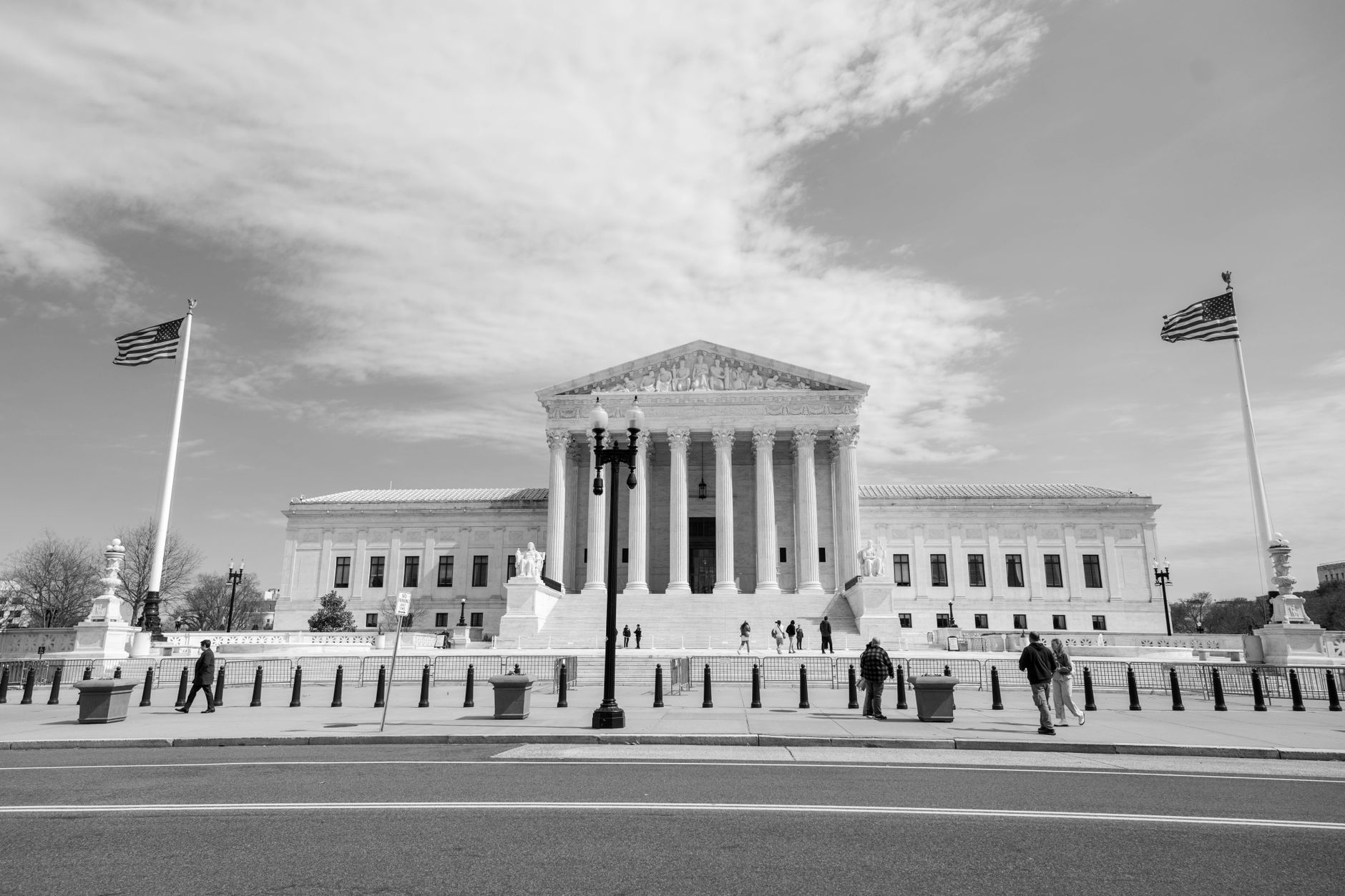
The landscape of civil rights in higher education is on the verge of a seismic shift. This month, the Supreme Court of the United States will hear arguments in a case that delves into the very heart of Title IX, the landmark 1972 legislation originally designed to ensure gender equity in educational programs. While most people associate Title IX with campus sexual assault policies or the leveling of the playing field in collegiate sports, this specific legal battle focuses on a different group: the employees. The high court’s decision will determine whether faculty, staff, and other higher education workers possess a private right of action to sue their institutions for sex-based discrimination directly under Title IX, rather than relying solely on Title VII of the Civil Rights Act of 1964.
For decades, the intersection of Title VII and Title IX has been a point of contention for legal scholars and university administrators alike. Title VII is the primary federal law prohibiting employment discrimination based on race, color, religion, sex, and national origin. It comes with a robust set of administrative requirements, including the necessity of filing a complaint with the Equal Employment Opportunity Commission (EEOC) before heading to court. Title IX, conversely, has historically offered a more direct path to litigation for students. The question now before the Supreme Court is whether employees should also have access to that same direct path, or if they are restricted to the procedural hurdles of Title VII.
The Historical Evolution of Title IX Protections
To understand the gravity of the current Supreme Court case, one must look back at the intent and evolution of Title IX. When it was passed as part of the Education Amendments of 1972, the statutory language was deceptively simple: “No person in the United States shall, on the basis of sex, be excluded from participation in, be denied the benefits of, or be subjected to discrimination under any education program or activity receiving Federal financial assistance.” While the law does not explicitly mention employees, the Supreme Court ruled in the 1982 case North Haven Board of Education v. Bell that the term “person” encompasses both students and employees of educational institutions.
Since that 1982 ruling, the Department of Education has maintained regulations that prohibit sex discrimination in employment within federally funded schools. However, the legal community has remained divided on the mechanism for enforcement. While the government can certainly pull funding from a school that violates these rules, the right of an individual employee to bring a private lawsuit has been interpreted differently across various federal circuits. This inconsistency has led to a “circuit split,” where a professor in one state might have the right to sue under Title IX, while a professor in a neighboring state is barred from doing so, forced instead into the more restrictive framework of Title VII.
The Conflict Between Title VII and Title IX
The core of the legal debate centers on whether Title VII is the “exclusive remedy” for employment-related sex discrimination. Critics of the expanded Title IX use argue that if employees can bypass the EEOC and go straight to federal court under Title IX, it undermines the carefully crafted administrative process of Title VII. Title VII includes specific statutes of limitations and mandatory mediation phases that are designed to resolve disputes before they escalate into full-scale litigation.
On the other hand, proponents of Title IX protections for employees argue that the two laws are complementary rather than mutually exclusive. They suggest that because universities are unique environments where employment and education are deeply intertwined—especially for graduate students and researchers—the broader protections of Title IX are necessary. For instance, a doctoral student who also serves as a teaching assistant occupies a dual role. If they experience harassment, are they a student or an employee? The answer often determines which legal path they must take, and a restrictive ruling could leave many in a legal limbo.
Implications for the Modern Academic Workforce
The outcome of this case will have immediate practical implications for university HR departments and legal counsels. If the Supreme Court rules in favor of the employees, institutions may see an uptick in Title IX litigation. Unlike Title VII, which caps compensatory and punitive damages based on the size of the employer, Title IX does not have the same statutory caps, potentially exposing universities to much higher financial liabilities in cases of proven discrimination.
Furthermore, the standard of proof can differ. In some contexts, Title IX litigation has focused on “deliberate indifference” by the institution, whereas Title VII focus is often on the actions of the employer through the lens of agency law. Aligning these two frameworks is a complex task that the Supreme Court must now navigate. This decision arrives at a time when gender equity in STEM and higher education leadership is under intense scrutiny, making the stakes even higher for the next generation of academic professionals.
Impact on Career Development and Student-Workers
The blurring lines between education and employment are particularly visible in the realm of internships and early-career training. Many students today are engaging in high-level technical training that bridges the gap between the classroom and the office. For example, those pursuing a full stack development internship often work within university-affiliated labs or startups that receive federal grants. If these student-workers face discrimination, the Supreme Court’s ruling will define the scope of their legal recourse.
Similarly, in fields like cybersecurity, where gender gaps have been a long-standing challenge, the clarity of legal protections is vital. A student engaged in a cyber security and ethical hacking internship needs to know that their environment is governed by clear, enforceable anti-discrimination laws. If the Court restricts Title IX, it may place a higher burden on these emerging professionals to navigate the complexities of Title VII’s administrative exhaustion requirements before seeking justice.
- Institutional Liability: Universities may need to overhaul their grievance procedures to ensure they are compliant with both Title VII and any new interpretations of Title IX.
- Resource Allocation: Funding for Title IX offices might need to increase to handle a broader range of employee-related complaints.
- Contractual Changes: Faculty contracts and collective bargaining agreements may be rewritten to reflect the shifting legal landscape.
- Insurance Premiums: Employment Practices Liability Insurance (EPLI) for educational institutions could see significant rate adjustments.
The Arguments Before the Supreme Court
During the upcoming oral arguments, the justices will likely focus on the concept of “implied private right of action.” Because Title IX does not explicitly state that individuals can sue, the Supreme Court previously “implied” this right for students in the 1979 case Cannon v. University of Chicago. The university’s legal teams are expected to argue that extending this implied right to employees is a bridge too far, especially since Congress provided an express right to sue via Title VII. They will likely argue that “implying” a second, redundant path to court violates the principle of statutory interpretation.
Conversely, the lawyers representing the employees will argue that Title IX was intended to be a broad, sweeping mandate to eliminate sex discrimination in all its forms within education. They will likely cite the U.S. Department of Education guidelines which have long held that Title IX covers employment. They will contend that forcing employees into the Title VII box ignores the unique, federally-funded nature of educational institutions, which carries a higher standard of accountability to the public.
The Role of Graduate Researchers and Teaching Assistants
One of the most complex areas of this case involves graduate researchers. These individuals are the backbone of university research, often working on projects related to data analytics and data science. They are simultaneously students and employees. If a graduate researcher is denied a fellowship or tenure-track opportunity due to sex-based bias, the distinction between Title IX and Title VII becomes a critical tactical decision for their legal counsel.
The Supreme Court’s decision will likely provide a definitive answer on whether these individuals must choose one path or if they can leverage both. A ruling that limits Title IX to purely “student” issues could complicate the lives of thousands of academic workers who don’t fit neatly into a single category. It could also influence how universities manage their internal investigations, as the timelines and procedural requirements for Title IX investigations are often stricter than standard HR reviews.
Broader Implications for Workplace Equity
Beyond the walls of academia, this case is being watched closely by civil rights advocates and employment lawyers. A restrictive ruling could signal a broader trend of the current Court to limit the scope of implied rights of action. This has potential ripple effects for other laws, such as Title VI (which prohibits race discrimination) and Section 504 of the Rehabilitation Act (which prohibits disability discrimination). If the Court signals that Title VII is the only way to address employment bias, it could narrow the avenues for justice for anyone working in a federally funded environment.
For the higher education sector, the ruling will be a moment of reckoning. Many institutions have spent the last several years expanding their Title IX offices to handle sexual harassment and assault claims more effectively. If these offices now become the primary intake point for all employee sex discrimination claims, they will require significant new investment and expertise. This shift could lead to more centralized and transparent processes, but it also carries the risk of administrative bloat and slower resolution times.
The Path Forward for Academic Institutions
As the legal community awaits the oral arguments, universities are already beginning to audit their policies. The goal for many is to create a seamless environment where discrimination is prevented regardless of which law applies. This involves better training for department heads, clearer reporting structures for faculty, and a commitment to transparency that goes beyond mere legal compliance. The shift toward a more inclusive academic environment is not just about avoiding lawsuits; it is about fostering a culture where research and education can thrive without the shadow of bias.
The Supreme Court’s decision is expected by the end of the term, likely in June. Until then, the higher education workforce remains in a state of watchful waiting. The ruling will not only resolve a technical legal dispute but will also serve as a statement on the value and protection of those who dedicate their careers to the pursuit of knowledge. Whether through the lens of Title VII or Title IX, the ultimate objective remains the same: a fair, equitable, and safe workplace for every member of the academic community.
The resolution of this case will ultimately provide the clarity that has been missing for over forty years. By defining the boundaries of Title IX, the Supreme Court will help institutions and employees alike understand their rights and responsibilities. As we move further into a digital and data-driven age, where the boundaries of the traditional workplace continue to evolve, these foundational legal protections remain as relevant as ever in ensuring that the doors of education remain open to everyone, regardless of sex.
#titleix #supremecourt #highereducation #law #discrimination #employmentrights


 Views Today : 96
 Views Yesterday : 242
 Your IP Address : 216.73.216.135