
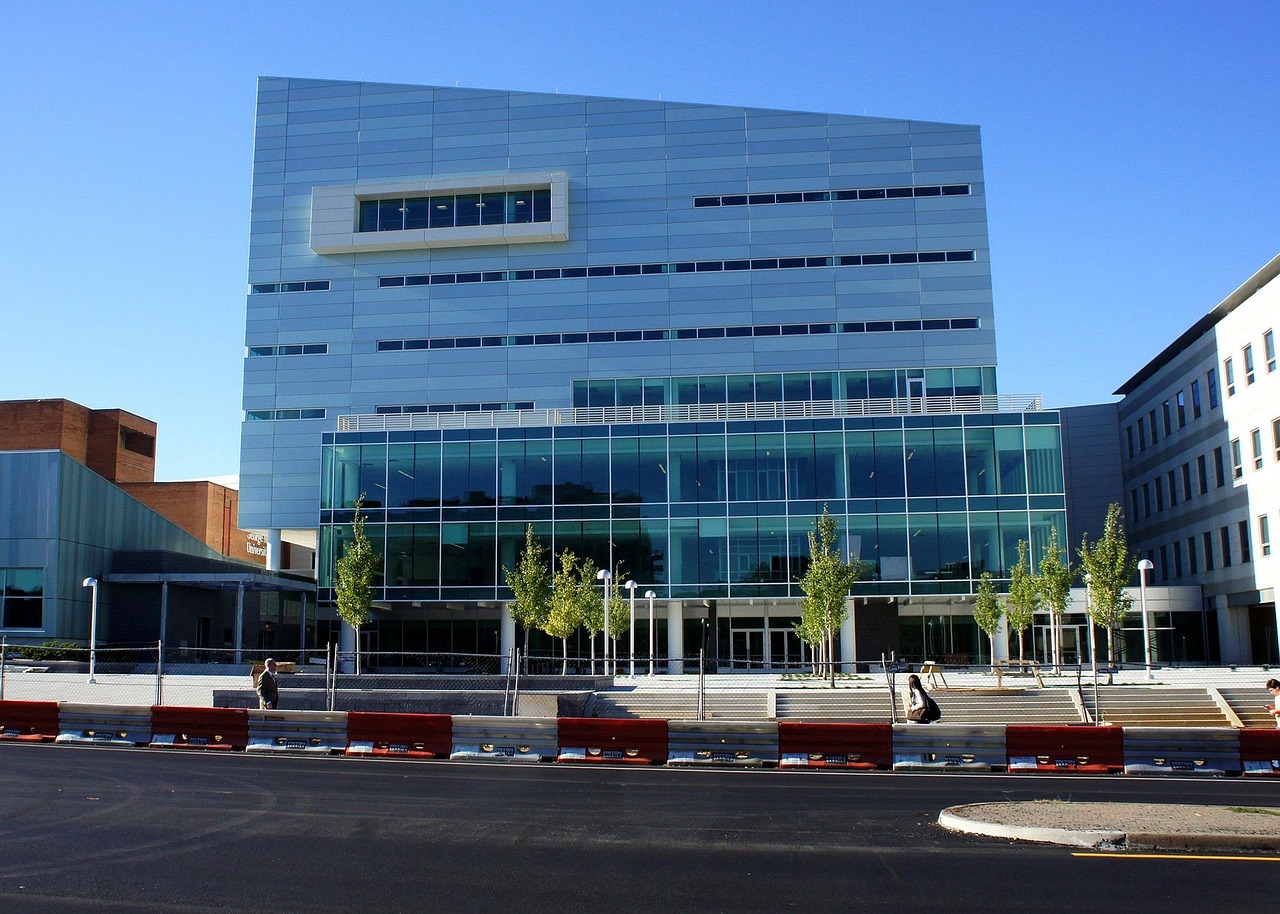
Illinois Institute of Technology’s decision to lay off 160 faculty and staff members highlights growing financial pressures across higher education, including international enrollment volatility, reduced research funding, and the difficult balance between institutional restructuring and student support. #highereducation #illinoistech #studentlife #researchfunding #careerdevelopment #edtech
Illinois Institute of Technology, widely known as Illinois Tech, has entered a difficult chapter after announcing layoffs affecting 160 faculty and staff members as part of a wider institutional restructuring. For a private research university with deep roots in engineering, computing, architecture, science, law, and business, the decision reflects more than a single campus budget adjustment. It points to a broader reality facing many universities: the financial model of higher education is becoming harder to sustain when enrollment patterns shift, research support tightens, and operating costs continue to rise.
The university has cited challenges tied to international student enrollment and reductions in research activity as major reasons behind the restructuring. These pressures are particularly significant for institutions that depend on a global student body and research-driven revenue to support academic programs, faculty hiring, laboratories, graduate education, and campus services.
For students, alumni, employees, and families, layoffs at a university are never just administrative news. They raise questions about class availability, student advising, research continuity, campus morale, and long-term institutional strategy. At the same time, they also reveal how universities are attempting to adapt to a changing education market shaped by global mobility, technology, workforce expectations, and financial uncertainty.
A major restructuring at a technology-focused university
Illinois Tech has long positioned itself as a career-oriented, urban research university with strong connections to Chicago’s technology, engineering, architecture, science, and professional sectors. Its location in one of the United States’ largest metropolitan economies gives students access to employers, startups, research collaborations, internships, and applied learning opportunities.
That identity makes the current restructuring especially notable. Universities built around technical and professional education are often seen as more resilient because their programs connect directly to high-demand fields such as computer science, cybersecurity, artificial intelligence, data analytics, biomedical engineering, and advanced manufacturing. Yet even institutions with strong career relevance are not immune to financial disruption.
Layoffs involving 160 faculty and staff members represent a significant personnel reduction. Faculty cuts can affect teaching capacity, research mentorship, and academic specialization. Staff reductions can influence admissions, student services, technology support, compliance, career advising, residence life, and administrative operations. In many cases, the full effect of such changes becomes visible gradually, as departments adjust workloads and students encounter changes in course schedules or support systems.
Restructuring is often presented as a way to align resources with institutional priorities. In practice, it can involve combining departments, reducing low-enrollment programs, reorganizing administrative units, revising research support systems, and redirecting investment toward areas with stronger demand. The challenge is to make those changes without weakening the student experience that universities rely on to attract future applicants.
Why international enrollment matters so much
International students play a major role in American higher education, particularly at research universities and private institutions. They bring academic talent, cultural diversity, tuition revenue, graduate research capacity, and global networks. In STEM-heavy universities, international students often make up a substantial share of graduate programs in engineering, computer science, data science, and related fields.
When international enrollment declines or becomes unpredictable, universities can experience immediate budget strain. This is especially true because international students often pay higher tuition rates and may not receive the same level of institutional aid as domestic students. A decline in this population can therefore affect revenue more sharply than a similar decline in other enrollment categories.
Several factors have made international enrollment more volatile in recent years:
- Visa delays and immigration policy uncertainty can discourage prospective students from applying or enrolling.
- Currency fluctuations may make U.S. tuition more expensive for families abroad.
- Competition from universities in Canada, Europe, Australia, and Asia has intensified.
- Geopolitical tensions can affect student mobility from key sending countries.
- Rising housing, health insurance, and living costs make studying in major U.S. cities more expensive.
- More countries are investing in high-quality domestic universities, reducing the need for students to study overseas.
Data from organizations such as the Open Doors international education report has shown that global student flows remain important but uneven. While some institutions have recovered from pandemic-era declines, others continue to face uncertainty depending on their program mix, geographic recruitment strategy, and ability to offer financial support.
For a university like Illinois Tech, where technology and graduate education are central to the academic brand, international students are not simply part of the enrollment picture. They are often embedded in research labs, teaching assistant roles, innovation projects, and professional master’s programs. Any reduction can therefore affect both finances and academic operations.
Research cutbacks and the pressure on university finances
Research funding is another critical piece of the university financial puzzle. At research universities, grants and sponsored projects help support faculty salaries, graduate assistants, laboratory equipment, specialized facilities, compliance offices, and institutional overhead. When research activity slows or external funding becomes harder to secure, the impact can spread across academic departments.
Research cutbacks may happen for several reasons. Federal funding priorities can shift. Grant competition can intensify. Corporate research partnerships may slow during uncertain economic periods. Faculty departures can reduce grant activity. Some projects may end without replacement funding. In highly specialized fields, maintaining laboratories and technical infrastructure can be expensive even when external support fluctuates.
The National Science Foundation’s higher education research statistics regularly show how dependent research ecosystems are on a combination of federal agencies, private industry, foundations, and institutional investment. Universities must often spend money upfront to remain competitive for grants, recruit faculty, and maintain facilities. That creates risk when research revenue does not grow as expected.
For students, research funding matters because it shapes access to hands-on learning. Undergraduate research programs, graduate assistantships, laboratory courses, conference travel, and thesis opportunities can all depend on a healthy research environment. When funding is reduced, fewer students may have access to paid research roles or specialized mentorship.
In the long term, universities facing research cutbacks may choose to concentrate resources in fewer high-performing areas. That can strengthen select programs but may reduce breadth. The difficult question is whether the institution can preserve its academic identity while narrowing investment.
What layoffs can mean for students
Students often experience university layoffs indirectly at first. A staff member who once handled advising may no longer be available. A course may be offered less frequently. A department office may take longer to respond. A research group may scale back hiring. A student success program may operate with fewer people.
The most immediate concerns usually fall into a few categories:
- Course access: Reduced faculty capacity may limit electives, smaller seminars, or specialized advanced courses.
- Advising and support: Staff reductions can affect academic advising, financial aid support, disability services, tutoring, and career guidance.
- Research continuity: Graduate students may worry about lab funding, assistantships, thesis supervision, and project timelines.
- Campus experience: Layoffs can affect morale, communication, student activities, and confidence in institutional leadership.
- Career preparation: If career services or employer engagement teams are reduced, students may need to be more proactive in finding internships and professional networks.
That does not mean students automatically lose access to quality education. Many universities undergoing restructuring continue to deliver strong academic programs. However, the burden of adaptation often increases. Students may need to plan schedules earlier, build relationships with multiple mentors, monitor degree requirements carefully, and seek external professional development opportunities.
For technology-focused students, practical experience becomes even more important during periods of institutional change. Internships, portfolio projects, certifications, open-source contributions, and applied training can help students maintain career momentum even if campus resources are stretched. Students exploring structured learning opportunities can review programs such as professional internship pathways to complement their academic work with practical exposure.
The human side of institutional restructuring
Behind every layoff number are people who have taught classes, supported students, managed departments, maintained systems, recruited applicants, written grants, advised student organizations, and kept daily campus life functioning. Universities are labor-intensive communities, and their value depends heavily on relationships between students, faculty, and staff.
Faculty members contribute far beyond classroom instruction. They mentor students, publish research, design curricula, serve on committees, attract grants, and build academic reputations that benefit the institution. Staff members are equally essential, often serving as the first point of contact for students navigating financial aid, immigration documentation, housing, health services, or academic procedures.
When layoffs occur, remaining employees may face heavier workloads. Departments may need to redistribute responsibilities quickly. Students may be asked to use centralized services instead of familiar departmental contacts. In some cases, institutional knowledge leaves with departing staff, making processes slower or less personal.
Universities must therefore manage restructuring with transparency and care. Clear communication can help reduce confusion. Practical transition plans can protect students from disruption. Support for affected employees, including severance, career assistance, and respectful communication, matters deeply for institutional trust.
A sign of broader stress in higher education
Illinois Tech’s restructuring is part of a larger pattern across higher education. Colleges and universities across the United States are dealing with a complicated mix of demographic, economic, and technological pressures. The number of traditional college-age students is expected to decline in many regions due to lower birth rates. Families are more skeptical about tuition costs. Employers are expanding skills-based hiring. Online learning and alternative credentials have created new competition.
Private institutions, especially those without massive endowments, face a particularly narrow path. They must offer competitive academic programs, maintain facilities, provide student aid, invest in technology, recruit globally, support research, and keep tuition from becoming unaffordable. Balancing those priorities is increasingly difficult.
Some universities are responding by expanding online graduate programs, merging departments, closing under-enrolled majors, increasing corporate partnerships, and investing in high-demand fields. Others are pursuing international partnerships, accelerated degrees, and stackable credentials. The central goal is to remain relevant while controlling costs.
Technology institutions may have an advantage if they can align programs with labor market demand. Fields such as artificial intelligence, cybersecurity, cloud computing, data analytics, robotics, and sustainable engineering continue to attract student interest. However, launching and maintaining these programs requires investment in faculty, infrastructure, software, labs, and employer partnerships. Cutting costs while staying innovative is a difficult balance.
Why program relevance matters more than ever
One lesson from the current higher education environment is that academic programs must show clear value. Students and families increasingly ask direct questions: Will this degree lead to meaningful work? Does the university provide internships? Are faculty connected to industry? Do graduates earn enough to justify the cost? Can students build real projects before graduation?
For universities such as Illinois Tech, the answer depends on how effectively they connect rigorous academics with applied learning. A strong engineering or computing curriculum is valuable, but students also need experience with modern tools, teamwork, communication, product thinking, and industry workflows.
Students in computing and engineering-related fields can strengthen their career readiness by focusing on areas that remain in demand across industries:
- Software development: Building full-stack applications, understanding APIs, and working with databases.
- Artificial intelligence: Learning machine learning fundamentals, model evaluation, and ethical AI practices.
- Data analytics: Using data visualization, statistics, SQL, and business intelligence tools.
- Cybersecurity: Understanding risk, secure coding, network defense, and ethical hacking principles.
- Cloud and DevOps: Working with deployment pipelines, containers, cloud platforms, and automation.
- Professional communication: Explaining technical ideas clearly to non-technical audiences.
For students seeking practical experience in high-demand areas, specialized options such as an AI and machine learning internship or a data analytics and data science internship can help build project-based confidence beyond the classroom.
The role of Chicago’s innovation ecosystem
Illinois Tech’s location remains one of its strongest assets. Chicago has a broad economy that includes finance, healthcare, logistics, manufacturing, architecture, insurance, transportation, consulting, education, and technology startups. That diversity creates opportunities for students across disciplines, from computer science and engineering to design, law, business, and public policy.
A university facing restructuring can still leverage its city connections to support students. Employer partnerships, co-op programs, alumni networks, startup incubators, and applied research collaborations can help maintain value even during internal transitions. In fact, external partnerships may become more important when universities have fewer internal resources.
Chicago’s tech sector has grown steadily in areas such as fintech, health technology, logistics software, climate technology, cybersecurity, and data-driven business services. Students who learn to connect academic knowledge with regional employer needs may find strong opportunities even in uncertain campus conditions.
For Illinois Tech, strengthening relationships with employers and alumni could be an important part of rebuilding confidence. Students want to see that their education leads somewhere tangible. Employers want graduates who can solve problems. Universities that connect those needs effectively can remain competitive even in a challenging market.
How prospective students should evaluate university stability
News of layoffs can make prospective students nervous, but it should not be the only factor in a college decision. Many respected institutions go through restructuring. What matters is how the university manages change and whether the student’s intended program remains strong.
Applicants should take a careful, practical approach. Instead of relying only on rankings or reputation, they should ask specific questions during campus visits, admissions events, and department conversations:
- Is my intended major growing, stable, or being reorganized?
- How often are required courses offered?
- What is the student-to-faculty ratio in my department?
- Are research opportunities available for undergraduates and graduate students?
- What career outcomes do recent graduates report?
- How strong are internship and employer partnerships?
- Will financial aid remain consistent across all years of enrollment?
- What academic support services are available if staffing changes occur?
Prospective graduate students should be even more detailed, especially if they depend on assistantships or research funding. They should ask about lab funding, advisor availability, grant timelines, publication expectations, and contingency plans if a project changes direction.
The most important signal is not whether a university faces challenges. Almost all institutions do. The stronger signal is whether leaders communicate clearly, protect academic quality, and invest in areas that directly support students.
What current students can do now
Students already enrolled at a university undergoing restructuring should avoid panic, but they should become more proactive. The goal is to reduce uncertainty by gathering information, documenting progress, and building options.
Current students can take several practical steps:
- Meet with academic advisors early: Confirm degree requirements and map courses for future semesters.
- Build relationships with multiple faculty members: This helps if one professor becomes unavailable or a course changes.
- Track official communications: Department updates, registrar notices, and financial aid messages may contain important changes.
- Prioritize required courses: Complete core requirements when they are available rather than delaying them unnecessarily.
- Strengthen career materials: Update resumes, portfolios, GitHub profiles, LinkedIn pages, and project documentation.
- Seek external learning opportunities: Use internships, competitions, professional associations, and online credentials to broaden experience.
- Stay connected with peers: Student communities often share useful information and emotional support during uncertain periods.
Students should also remember that employers rarely evaluate candidates based on campus restructuring headlines alone. They look for skills, projects, communication ability, internships, academic performance, and evidence of initiative. A student who continues building a strong profile can remain competitive even if their university is going through difficult changes.
Institutional choices that will shape the next phase
The long-term impact of Illinois Tech’s layoffs will depend on what comes next. Cost reductions alone do not create a stronger university. Sustainable recovery requires a clear academic strategy, stronger enrollment planning, renewed research momentum, and visible commitment to student outcomes.
Several priorities will likely matter in the years ahead. The university will need to rebuild trust among students, faculty, staff, alumni, and donors. It will need to demonstrate that restructuring is connected to a coherent vision rather than short-term budget balancing. It will need to protect high-demand programs while preserving the broader intellectual environment that makes a university more than a training center.
Universities that specialize in technology and professional education must also keep pace with rapid industry change. Artificial intelligence is reshaping software development, design, law, finance, healthcare, and research. Cybersecurity threats are expanding. Data literacy is becoming essential across fields. Climate and infrastructure challenges require engineers and planners with interdisciplinary skills. These trends create opportunities for institutions that can adapt thoughtfully.
Illinois Tech’s official academic and research identity, described through its university website, remains tied to innovation, access, and applied problem-solving. The challenge now is to align that identity with a leaner operating structure while keeping the student experience strong.
A campus moment that reflects a national shift
The layoffs at Illinois Institute of Technology are significant because they combine several of higher education’s most pressing issues into one story: international enrollment risk, research funding pressure, rising costs, and the need to prove the value of a degree. For the people directly affected, the moment is personal and difficult. For students and families watching from outside, it is a reminder to evaluate universities with both ambition and realism.
Still, institutional restructuring does not automatically define a university’s future. The outcome depends on the decisions that follow: how programs are supported, how students are protected, how employees are treated, how research is rebuilt, and how clearly leaders communicate the path ahead.
Higher education is changing, but the need for strong technical education, research talent, and career-ready graduates is not disappearing. If universities can adapt without losing their academic purpose, moments of disruption can eventually lead to more focused and resilient institutions. For students, the best response is to stay informed, keep building practical skills, and choose learning environments that combine academic depth with real-world opportunity.
#highereducation #illinoistech #studentlife #researchfunding #careerdevelopment #edtech


 Your IP Address : 216.73.216.182