
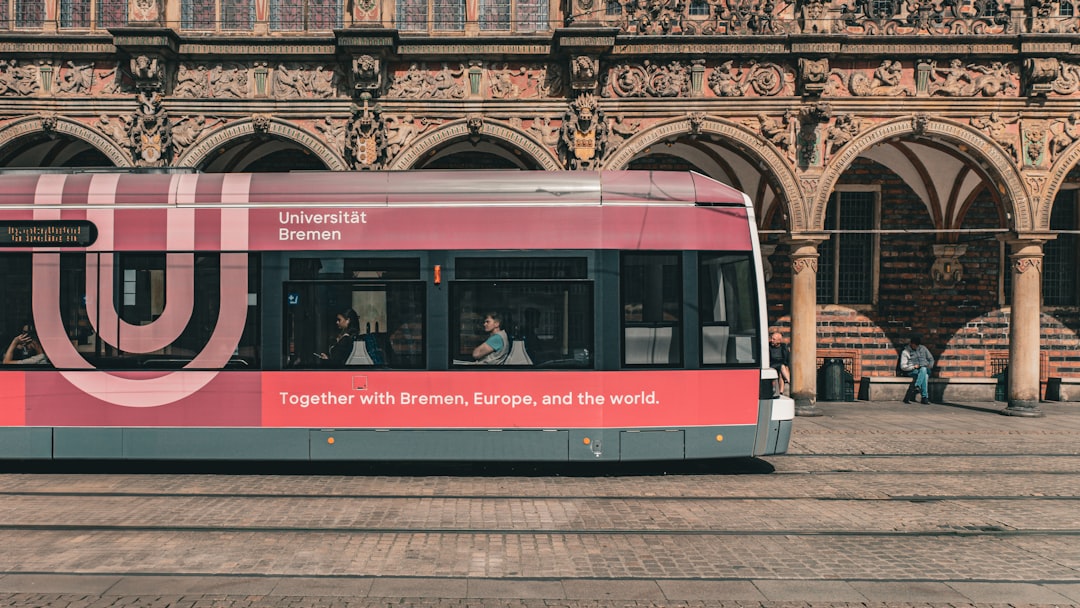
The WiSo Faculty at the University of Cologne stands out for business, economics, and social sciences education shaped by research, industry links, and international opportunities. #universityofcologne #businesseducation #economics #studyabroad #highereducation #studentlife
For students exploring top universities in Germany, the WiSo Faculty at the University of Cologne deserves serious attention. Known for its strong reputation in business, economics, and social sciences, WiSo combines academic depth with practical relevance in a way that appeals to both local and international students. It sits within one of Germany’s oldest and largest universities, giving students access to a broad academic ecosystem while still benefiting from the identity of a focused, professionally oriented faculty.
What makes WiSo particularly attractive is that it is not just about lectures, theory, or a recognizable university name. It is about studying in a faculty that understands how education, research, and careers increasingly overlap. Whether a student is interested in management, economics, policy, entrepreneurship, analytics, or international business, WiSo offers an environment where those interests can grow in a structured and future-facing way.
Why the WiSo Faculty Stands Out
The WiSo Faculty has built its reputation around subjects that matter deeply in today’s economy: how organizations work, how markets change, how societies respond to disruption, and how data influences decision-making. That breadth gives students more than a narrow business-school experience. It creates room for interdisciplinary thinking, which is now essential in careers shaped by technology, sustainability, regulation, and globalization.
In practical terms, that means students are not only learning classic concepts such as finance, marketing, economic theory, and organizational behavior. They are also entering discussions about digital transformation, responsible leadership, labor markets, innovation systems, and evidence-based policy. This balance is one reason the faculty remains relevant to students who want both intellectual credibility and career flexibility.
Another advantage is scale. As part of the wider University of Cologne, WiSo benefits from a large research university setting with extensive academic resources, international partnerships, and student services. At the same time, the faculty has a clear identity of its own, which helps students feel connected to a distinct academic community rather than lost in a very large institution.
Academic Areas Students Commonly Explore
WiSo is especially attractive to students who want to study fields connected to business, economics, and the social sciences without isolating those disciplines from the real world. Its academic profile typically appeals to learners who are interested in both analytical thinking and practical application.
Business and management pathways
Students drawn to business education often look for a program that goes beyond textbook management theory. At a faculty like WiSo, business studies are usually framed through strategic thinking, international markets, operations, consumer behavior, and organizational leadership. This is especially useful for students who see themselves working in consulting, finance, corporate management, startups, or multinational firms.
Economics with real-world relevance
Economics at a research-focused faculty is rarely just about charts and formulas. It can involve understanding inflation, employment, trade, public policy, sustainability, and the behavior of institutions. Students who enjoy asking why economies change, how governments respond, and what policy decisions mean for everyday life often find economics especially rewarding in this environment.
Social sciences and policy perspectives
WiSo’s identity also reflects the social sciences, which broadens the academic experience. Students interested in political economy, social structures, public affairs, and the relationship between markets and society can benefit from a faculty that does not separate economic outcomes from human and institutional realities.
Research Culture and Intellectual Environment
One of the strongest reasons to consider a faculty like WiSo is its research culture. Research-active faculties tend to offer more than polished classroom delivery. They create an atmosphere where ideas are debated, evidence matters, and current global issues shape the curriculum. That is important for students who do not want their education to feel dated by the time they graduate.
In an environment shaped by active scholarship, students are more likely to encounter themes such as sustainable business models, digital platforms, financial resilience, social inequality, behavioral economics, and governance. Even at the undergraduate level, that can influence how modules are taught and how students learn to analyze problems. Instead of memorizing isolated concepts, they begin to understand how knowledge is produced, tested, and applied.
For postgraduate students, the value can be even greater. Access to faculty expertise, research projects, seminars, and academic networks may support thesis work, doctoral ambitions, or career preparation in policy, analytics, and applied research. Students who enjoy asking difficult questions often thrive in this kind of academic setting.
International Opportunities and a Global Learning Environment
The University of Cologne has long been visible on the international higher education map, and that matters for WiSo students. In business and economics especially, global exposure is not an optional extra. It shapes employability, communication skills, and the ability to work across cultures. A faculty with international partnerships, exchange opportunities, and a diverse student body helps develop those strengths naturally.
For international applicants, Germany remains highly attractive because of its academic standards, strong public universities, and reputation for combining theory with employability. Cologne adds another advantage: it is a major city with a lively student population, strong transport links, and access to a broad labor market. That makes study life feel connected to real opportunities rather than confined to a campus bubble.
Students considering an application should spend time exploring the official WiSo Faculty website to review available programs, language requirements, exchange options, and current admission details. Program structures and requirements can vary, especially for international applicants or specialized master’s tracks.
How WiSo Connects Learning With Careers
A major reason students choose business and economics programs is career relevance. WiSo’s profile fits well with that expectation because the subjects it covers map directly onto sectors that continue to hire globally: finance, consulting, public policy, data-driven business, international trade, marketing, operations, and organizational strategy.
That said, today’s job market rewards more than academic knowledge. Employers increasingly look for graduates who can work with data, communicate clearly, solve ambiguous problems, and understand how technology is reshaping decision-making. Students who want to strengthen that practical side often benefit from combining university study with industry exposure.
For that reason, many learners seek internship opportunities across business and technology fields while they study. This can be especially useful for WiSo students aiming to build profiles in consulting, digital business, operations, or startup environments.
Data literacy is another major advantage. Business students who can interpret trends, visualize information, and support decisions with evidence often stand out in competitive hiring processes. Exploring complementary experience in data analytics and data science can make a business or economics degree even more marketable.
Similarly, students interested in digital transformation, automation, or product strategy may benefit from exposure to AI and machine learning projects. Even if they do not plan to become engineers, understanding how intelligent systems affect operations, customer behavior, and business models is increasingly valuable.
What Student Life in Cologne Can Offer
Choosing a university is never only about academics. Daily life matters, and Cologne is one of those cities that can significantly shape the student experience. It is large enough to offer internships, events, museums, startup activity, and professional networking, but still recognizable as a student city with a lively social atmosphere.
For many students, that balance matters. A city should support both study and personal growth. Cologne offers cultural diversity, international communities, public transportation, and a rhythm that suits students balancing classes, part-time work, and social life. For international students in particular, this kind of environment can make the transition into German university life much smoother.
The city’s broader economic landscape also creates useful context for WiSo studies. Students are not learning about business, media, markets, or policy in the abstract. They are doing so in a region where companies, institutions, and public organizations are active and visible. That often makes coursework feel more immediate and professional development more realistic.
Admissions, Preparation, and What Applicants Should Consider
Students interested in WiSo should approach the application process with a clear understanding of fit. A well-known faculty may be attractive on paper, but the better question is whether its style of study matches your goals. Applicants should think not only about rankings or reputation, but also about language of instruction, curriculum design, quantitative demands, and long-term career plans.
Before applying, it helps to evaluate a few practical questions:
- Do you want a program centered on business practice, economics theory, or a broader social science perspective?
- Are you comfortable with analytical and quantitative coursework?
- Would you benefit from a large university environment with strong research links?
- Are you looking for international mobility, exchange options, or a career in Europe?
- Do you want to pair your degree with internships, analytics, or digital skills training?
International students should also look carefully at documentation timelines, language expectations, housing preparation, and visa planning. For broader guidance on studying in Germany, scholarships, and academic pathways, the DAAD can be a useful starting point. It provides practical information that helps applicants understand the wider German higher education system.
Who Is Likely to Thrive at WiSo?
Not every university environment suits every learner, and that is a good thing. WiSo is likely to be a strong fit for students who are intellectually curious but also professionally focused. It suits people who want more than a narrow credential and who are willing to engage with complex economic, social, and organizational questions.
Students who tend to do well in this kind of environment often share a few traits:
- They are comfortable connecting theory with current events and business realities.
- They want international exposure and value cross-cultural learning.
- They understand that modern careers require adaptability, not just one specialization.
- They are open to combining academic study with practical experience.
- They are interested in how data, policy, and organizations influence each other.
That combination of qualities is increasingly common among ambitious students. Many no longer see business, economics, technology, and society as separate conversations. They want an education that reflects how intertwined those areas have become. WiSo fits that mindset well.
The Growing Importance of Digital and Analytical Skills
One of the most important shifts in higher education is that traditional subject boundaries matter less than they used to. A business graduate now needs some degree of digital awareness. An economics student benefits from stronger statistical and data interpretation skills. A social sciences student gains from understanding platforms, automation, and algorithmic decision-making.
This is where a faculty like WiSo can become especially valuable. Its core academic disciplines naturally connect to pressing issues such as digital markets, platform economies, fintech, organizational change, supply chain risk, sustainable growth, and labor transformation. Students who use their time well can graduate not only with domain knowledge, but with a much clearer sense of how modern institutions actually function.
That is also why students increasingly complement their degrees with practical project work, online certifications, internships, research assistant roles, and interdisciplinary learning. Employers rarely ask whether a candidate only knows one subject in isolation. They look for people who can interpret information, collaborate across teams, and make sense of complexity. WiSo provides a strong foundation for that kind of profile.
Why WiSo Continues to Attract Ambitious Students
The appeal of the WiSo Faculty comes down to a combination that is hard to ignore: academic reputation, strong subject areas, international relevance, and a location that supports both study and career growth. For students interested in business, economics, or the social sciences, it offers a serious academic environment without losing sight of real-world outcomes.
In a higher education landscape where students are trying to balance cost, quality, employability, and global exposure, institutions that bridge all four stand out. WiSo does that by sitting at the intersection of rigorous research, modern economic thinking, and practical opportunity. For many students, that is exactly the kind of place where a degree becomes more than a qualification. It becomes the starting point for a wider professional and intellectual journey.
#universityofcologne #businesseducation #economics #studyabroad #highereducation #studentlife


 Your IP Address : 216.73.217.8