
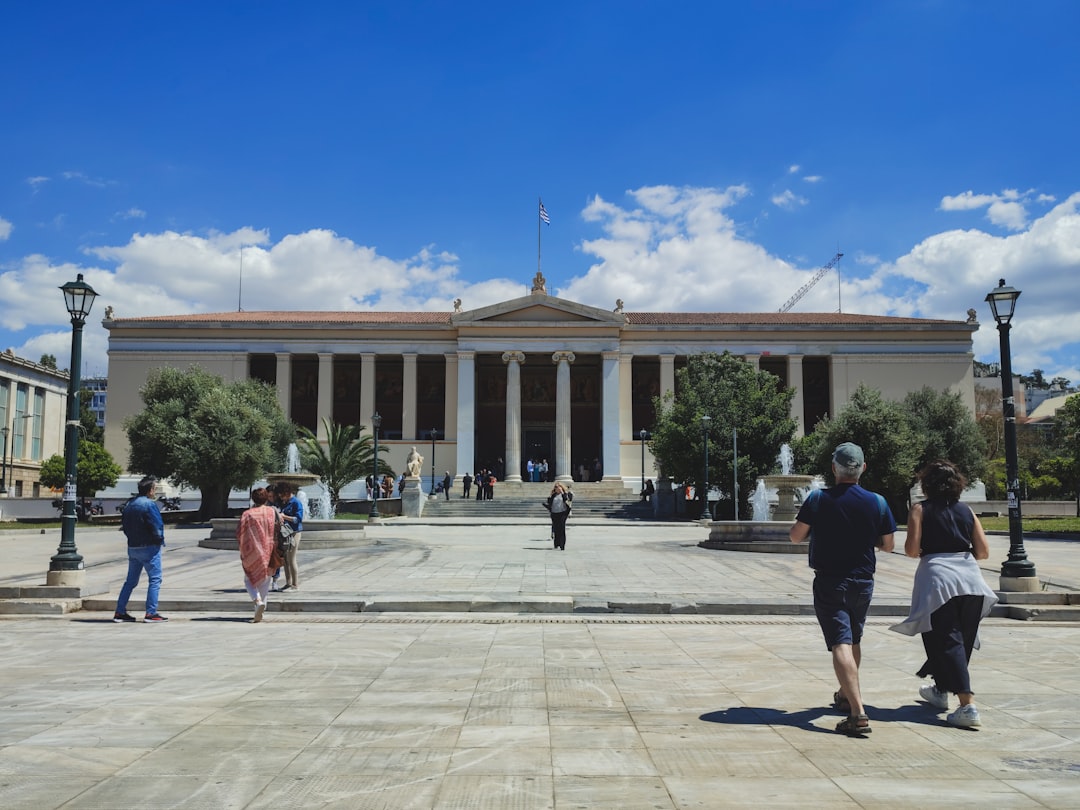
For decades, the narrative of elite higher education was largely centered around a few specific geographic hubs. For students in the United States, the ultimate goal was often the Ivy League; for those in the United Kingdom, it was Oxbridge. However, a quiet revolution has been unfolding across the European continent. What was once considered a niche or alternative path for the adventurous few has now become a mainstream, highly competitive, and strategically sound choice for students worldwide. The traditional boundaries of university admissions are dissolving, replaced by a globalized landscape where European institutions are no longer just an afterthought—they are the main event.
The shift is driven by a combination of factors: the explosion of English-taught programs, the rising cost of domestic education in North America, and a growing recognition that a global perspective is a prerequisite for success in the modern workforce. As we look at the data, the transformation is staggering. In 2001, there were fewer than 800 English-taught degree programs in continental Europe. Today, that number has surged to over 8,000. This tenfold increase has effectively removed the language barrier that once kept international talent at bay, opening the doors to some of the oldest and most prestigious research centers in the world.
The New Standard: Outcome-Focused Education
Today’s applicants are fundamentally different from those of previous generations. They are more comparative, more outcome-focused, and significantly less influenced by the sheer prestige of a “destination” brand. While the charm of a historic campus in Vienna or a modern facility in Berlin is undeniable, students are now asking harder questions. They want to know about employability, the specific ROI of their degree, and how a university in the Netherlands or Switzerland will position them for a career in a globalized tech or finance sector.
This shift toward pragmatism has led to a rise in interest for specialized institutions. For example, students interested in the intersection of technology and business are increasingly looking at full stack development and engineering pathways offered by technical giants like TU Delft in the Netherlands or KTH Royal Institute of Technology in Sweden. These schools are no longer “backups” for those who didn’t get into MIT; they are first-choice destinations for students who recognize that European tech ecosystems are thriving.
Breaking the Ivy League Monopoly
The most selective institutions in Europe are now appearing on the same shortlists as the most famous names in the US and UK. For a family targeting top-tier economics programs, Bocconi University in Milan is now frequently discussed alongside Harvard or the LSE. For those pursuing social sciences, Sciences Po in France offers a level of political networking and academic rigor that rivals any institution globally. This is not just about variety; it is about the parity of prestige.
Furthermore, the European model often provides a level of specialization that is rare in the American liberal arts system. Many European programs allow students to dive deep into their chosen field from day one. For a student who knows they want to specialize in AI and machine learning, the direct-entry programs in Europe can offer a more streamlined and intensive path to expertise than a generalist four-year degree elsewhere.
The Economic Reality of Global Education
We cannot discuss the rise of European admissions without addressing the elephant in the room: the cost of education. In the United States, the total cost of attendance at a private university can easily exceed $80,000 per year. In contrast, many of Europe’s top-ranked public universities offer tuition that is either remarkably low or, in some cases (like Germany or Norway), non-existent even for international students. Even at private European institutions, the tuition often sits at a fraction of the cost of their American counterparts.
This economic reality is changing the conversation from “Can we afford university?” to “Where can we get the best education for our investment?” When you combine low tuition with the fact that many European bachelor’s degrees are completed in three years rather than four, the value proposition becomes undeniable. Students graduate with less debt, a year earlier, and with a background that includes international living and often multiple languages.
Navigating the Complexity of Different Systems
While the accessibility of English-taught programs has improved, the complexity of the application process remains a significant hurdle. Unlike the Common App system in the US, Europe is a patchwork of different national systems, deadlines, and entry requirements. Germany’s “Numerus Clausus” (NC) system is vastly different from the holistic review process used in the Netherlands or the entrance exams required in Italy.
This is where the traditional model of school advising often falls short. Many high school counselors are experts in their local systems but lack the specialized knowledge required to navigate the ECTS (European Credit Transfer and Accumulation System) or the specific visa requirements for post-study work permits in different EU nations. For students aiming for high-level careers, securing professional internships while studying abroad is a crucial part of the strategy, yet many advisors don’t know which countries offer the best industry links for international students.
The Role of Technology and Innovation
European universities are also at the forefront of the digital revolution. From the tech hubs of Stockholm to the startup culture of Amsterdam, universities are deeply integrated with industry. This is particularly evident in fields like data science and cybersecurity. Students pursuing a data science pathway in Europe often find themselves in the heart of cities that are leading the way in data privacy and ethical AI development.
The research output of European institutions in the STEM fields is also a major draw. Large-scale projects like CERN or the various Max Planck Institutes provide a research infrastructure that is second to none. For students, this means access to labs, grants, and mentors who are literally defining the future of technology. The ability to work on cross-border research projects is a unique feature of the European Higher Education Area that prepares students for the collaborative nature of modern scientific inquiry.
The Cultural Dividend
Beyond the academics and the cost, there is the “cultural dividend.” Living in Europe as a student is an education in itself. The ease of travel between countries, the exposure to different political systems, and the daily necessity of navigating different cultural norms foster a level of maturity and adaptability that is highly prized by employers. In a world where remote work and international collaboration are the norms, the “soft skills” gained by studying in Europe are often just as valuable as the degree itself.
Many students find that their weekend trips to neighboring countries provide a broader perspective on global issues than any textbook could. They learn to see the world through multiple lenses, which is an essential trait for leadership in the 21st century. This global mindset is what sets European graduates apart in the hiring pool for multinational corporations.
Advising for a Global Future
As the landscape changes, the role of the admissions advisor must evolve. It is no longer enough to help a student write a compelling personal statement for a local college. Advisors must become global strategists. They need to understand how a degree from a Swiss university will be recognized in the US, what the job market looks like for an English-speaker in Berlin, and which programs offer the best pathways into specialized fields like cyber security.
The demand for this expertise is growing. Parents and students are looking for professionals who can look at a student’s profile and suggest a range of global options that match their ambitions. This requires a deep dive into the specificities of each country’s educational philosophy. For instance, the Dutch “Research University” vs. “University of Applied Sciences” distinction is a critical nuance that can make or break a student’s academic experience.
The Future of the Degree
We are moving toward a future where the location of a university is less important than the network and the skills it provides. European universities have recognized this early, focusing on building international partnerships and ensuring their curricula are relevant to a global market. The rise of the “European University Alliances”—consortia of universities across different EU countries that allow students to move seamlessly between campuses—is a glimpse into the future of higher education.
In this future, a student might start their degree in Paris, spend a semester in Madrid, and finish their research in Munich. This level of mobility and flexibility is something that traditional, single-campus models struggle to replicate. It aligns perfectly with the lifestyle and expectations of Gen Z and the generations to follow, who view the world as a single, interconnected space.
The integration of European universities into the mainstream admissions conversation is not a temporary trend; it is a permanent shift in the global education market. As more students experience the benefits of high-quality, affordable, and internationally-focused education, the pressure on traditional domestic institutions to justify their value will only increase. For the ambitious student, the message is clear: the world is much larger than your local zip code, and some of the best opportunities for your future may be a flight away.
Ultimately, the choice to study in Europe is a choice to embrace complexity, diversity, and innovation. It is an investment in a future that is not defined by borders, but by the ability to navigate them. As the number of English-taught programs continues to grow and the reputation of European institutions continues to climb, the question for many applicants is no longer “Why Europe?” but rather “Why not?”
#highereducation #studyabroad #europeanuniversities #globalcareers #internationalstudents #admissions


 Views Today : 253
 Views Yesterday : 195
 Your IP Address : 216.73.217.178