
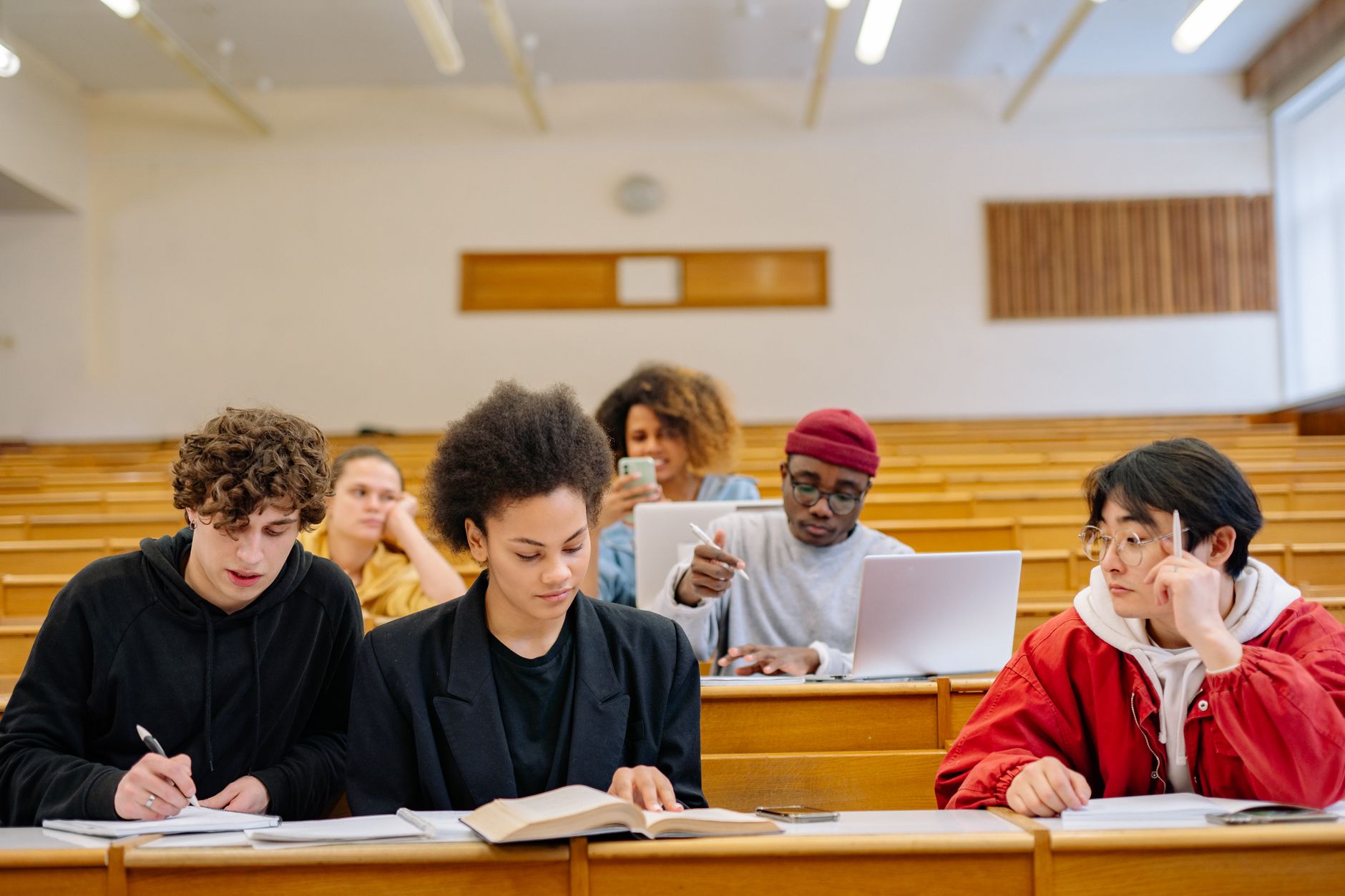
As AI reshapes classrooms and careers, higher education’s lasting value lies in critical thinking, ethics, creativity, and connection, the deeply human strengths machines cannot replace. #highereducation #artificialintelligence #futureofwork #digitalliteracy #studentsuccess
Artificial intelligence is no longer a distant concept in higher education. It is already embedded in study tools, research workflows, advising systems, and hiring pipelines. Students use AI to summarize readings, draft ideas, generate code, and prepare for interviews. Faculty members experiment with it for lesson planning, grading support, and administrative tasks. Institutions are racing to define policies, build guardrails, and decide what responsible use should look like.
That rapid change has triggered a familiar question: if AI can deliver information instantly and automate many routine tasks, what is the distinct value of college or university education?
The strongest answer is not that higher education can out-compute machines. It cannot. Its deeper value is that it develops qualities machines do not possess: judgment, empathy, curiosity, moral reasoning, resilience, and a sense of purpose. In an age of automation, those traits are not soft extras. They are becoming the real differentiators.
This is why the AI conversation in universities should not be limited to efficiency or academic integrity. It should also focus on what makes learning human, why that matters more now, and how institutions can prepare students for a future where technical fluency and human depth must exist together.
AI is changing the campus experience, but not the purpose of education
There is no question that AI is changing how students learn. Search has become more conversational. Writing has become more iterative. Coding has become more assisted. Research can move faster when tools help organize notes, identify patterns, or translate dense materials into more accessible language.
On the institutional side, AI is being tested in admissions support, chat-based student services, scheduling, academic advising, and student retention analysis. Used carefully, these tools can reduce repetitive work and make support services more responsive.
But speed is not the same as education. Information access is not the same as understanding. A generated answer may look polished and still lack depth, evidence, context, or originality. That gap matters.
Universities exist not simply to transfer content, but to help people grow through structured challenge. A good education asks students to wrestle with uncertainty, defend ideas, test assumptions, revise weak arguments, collaborate across differences, and connect knowledge to society. AI can assist parts of that process, but it cannot replace the experience of becoming a more thoughtful person through it.
This is where higher education still holds a meaningful edge. Its best contribution is not content delivery alone. It is the formation of capable, reflective, responsible human beings.
What AI does well, and what it still cannot do
To understand higher education’s human advantage, it helps to be clear about what AI is good at. AI performs impressively in pattern recognition, summarization, prediction, and generation. It can process vast volumes of data, imitate style, suggest likely next steps, and reduce friction in routine tasks. For students and professionals, that can be genuinely useful.
Yet even advanced systems do not possess lived experience, emotional understanding, accountability, or personal stakes. They do not care whether a decision harms someone. They do not feel the tension of choosing between competing values. They do not build wisdom through failure, responsibility, or reflection.
That distinction matters across nearly every field. In business, data can suggest a strategy, but leaders still have to judge risk, timing, culture, and ethics. In healthcare, AI may support diagnosis, but trust and care remain human. In engineering, software can optimize, but people decide what should be built and for whom. In education itself, a tool can answer a question, but a mentor helps a student make meaning from it.
The more capable AI becomes, the more important it is to distinguish between producing output and exercising judgment. One is computational. The other is human.
Why the human side of higher education matters more now
Critical thinking is becoming more valuable, not less
When students can generate an instant answer, the challenge shifts from finding information to evaluating it. Is the response accurate? What assumptions shape it? What evidence is missing? Whose perspective is left out? These questions sit at the heart of critical thinking, and they are exactly the skills universities should be strengthening.
In the AI era, critical thinking includes knowing when not to trust convenience. A fast response can create false confidence. Students need practice checking sources, comparing interpretations, and understanding how systems can reproduce bias or flatten complex issues into neat but misleading summaries.
This is one reason universities should resist framing AI as either a miracle or a threat. It is a tool that expands possibility and risk at the same time. Students need the intellectual habits to navigate both.
Learning through effort still matters
Real learning often feels inefficient. It involves confusion, revision, dead ends, and the uncomfortable moment when a student realizes that surface familiarity is not the same as mastery. AI can reduce some useful friction, but it can also remove the productive struggle that helps people build deeper understanding.
That does not mean students should avoid AI. It means they should use it with intention. A student who asks an AI tool to explain a concept in simpler language may be using it well. A student who outsources the entire thinking process is giving away the very part of education that matters most.
Higher education at its best teaches students how to stay with difficult questions long enough to form stronger answers. That kind of intellectual stamina will remain valuable long after today’s tools evolve.
Mentorship cannot be automated
One of the most underestimated parts of university life is human guidance. A professor who notices a student’s potential, an advisor who helps someone rethink a path, a supervisor who offers candid feedback, a peer group that encourages confidence, these moments shape lives in ways no chatbot can replicate.
Students do not only need information. They need recognition, challenge, encouragement, and belonging. Especially during periods of uncertainty, that human support affects persistence, mental health, and long-term ambition.
For first-generation students, international students, and those changing careers, the relational side of education can be decisive. AI may streamline communication, but it cannot replace the trust built through real interaction.
Ethics and civic responsibility are now core skills
As AI spreads through workplaces and public systems, technical literacy alone is not enough. Students also need to understand privacy, bias, transparency, intellectual property, labor impact, and the social consequences of automation. These are not side topics for philosophy electives. They are central to leadership in nearly every profession.
Organizations such as UNESCO have repeatedly stressed that AI in education should be guided by human rights, inclusion, and responsible governance. That principle matters on campus as much as it does in industry.
Higher education has a unique role here. It can create space for students to debate difficult trade-offs, examine real cases, and think seriously about what responsible innovation should look like. That is a profoundly human task.
What universities should do next
If institutions want to stay relevant in the AI era, the answer is not to ban new tools or surrender to them. It is to redesign learning around what students actually need now: AI fluency, human depth, and practical adaptability.
Teach AI literacy across disciplines
Students in computer science need it, but so do students in business, media, law, healthcare, and the humanities. AI literacy should include more than prompts and platforms. It should cover limitations, bias, data use, verification, and appropriate professional application.
For learners who want direct technical exposure, applied pathways such as an AI & Machine Learning internship can help bridge theory and real-world problem solving.
Redesign assessment for authentic thinking
If assignments reward generic output, AI will produce generic output. Universities should move toward assessments that require reflection, original analysis, oral defense, iterative drafts, collaboration, fieldwork, and applied problem solving. These formats make learning more meaningful and make it harder to outsource thinking entirely.
This shift is already being discussed by higher education groups such as EDUCAUSE, which has highlighted the need for institutions to rethink teaching, policy, and digital readiness rather than treating AI as a short-term disruption.
Invest in communication and interdisciplinary learning
Students who can connect technical knowledge with clear communication will stand out. The same is true for those who can translate between fields, such as data and policy, software and design, or research and public impact.
That is why interdisciplinary education is becoming more important, not less. The future belongs less to isolated specialists and more to people who can combine domain expertise with collaboration, creativity, and ethical awareness.
Expand experiential learning
Classroom learning remains important, but experience makes it durable. Internships, labs, team projects, startup incubators, and community partnerships give students opportunities to test ideas in real environments.
Students interested in evidence-driven decision making may benefit from a Data Analytics & Data Science internship, while those still exploring different directions can browse broader internship opportunities aligned with emerging digital careers.
Experiential learning does something AI cannot do on its own: it places students in situations where communication, judgment, accountability, and teamwork matter in real time.
What students should focus on now
For students, the AI era can feel both exciting and unstable. The good news is that the most future-ready approach is not to compete with machines on speed. It is to become the kind of person who knows how to use them well while contributing something uniquely human.
- Learn the tools, but do not depend on them blindly. Use AI to explore ideas, organize information, or practice skills, then verify and refine the results yourself.
- Strengthen communication. Writing clearly, speaking thoughtfully, and presenting ideas persuasively matter in every field.
- Build a habit of asking better questions. Strong questions often matter more than fast answers.
- Develop ethical awareness. Understand how technology affects people, not just performance metrics.
- Seek feedback from humans. Mentors, professors, and peers can challenge you in ways software cannot.
- Create a portfolio of real work. Projects, research, internships, and case studies show how you think, not just what tools you used.
Students who combine AI fluency with self-awareness, adaptability, and integrity will be better prepared than those who focus on technical shortcuts alone.
What employers are likely to value in the years ahead
Employers are increasingly interested in candidates who can work alongside AI, not simply use it passively. That means understanding workflows, data, automation opportunities, and digital tools. But it also means being able to interpret outputs, communicate implications, manage ambiguity, and make responsible decisions.
In practice, the most attractive candidates are often those who can do both of the following:
- Use technology efficiently to improve productivity and insight
- Bring human strengths that make teams smarter, more trustworthy, and more adaptable
Those strengths include judgment, collaboration, empathy, creativity, and leadership under uncertainty. These are not old-fashioned traits. They are competitive advantages in a workplace increasingly shaped by automation.
That is another reason higher education still matters. A university experience, when done well, creates more than technical competency. It helps students learn how to think under pressure, work with different kinds of people, and connect knowledge to real consequences.
The advantage no algorithm can award
AI will continue to transform higher education. Some tasks will become easier. Some assignments will need to change. Some jobs will be reshaped. That much is clear. What should remain clear too is that education is not only about producing faster output. It is about developing the capacity to live, work, and decide well in a complicated world.
That is where higher education keeps its strongest edge. Humans are imperfect, emotional, uncertain, and meaning-seeking. Far from being weaknesses, those qualities are central to learning, leadership, and social responsibility. The institutions that recognize this will not become less relevant in the AI era. They will become the places where students learn how to use powerful tools without losing the very things that make their work matter.
#highereducation #artificialintelligence #futureofwork #digitalliteracy #studentsuccess


 Your IP Address : 216.73.217.78