
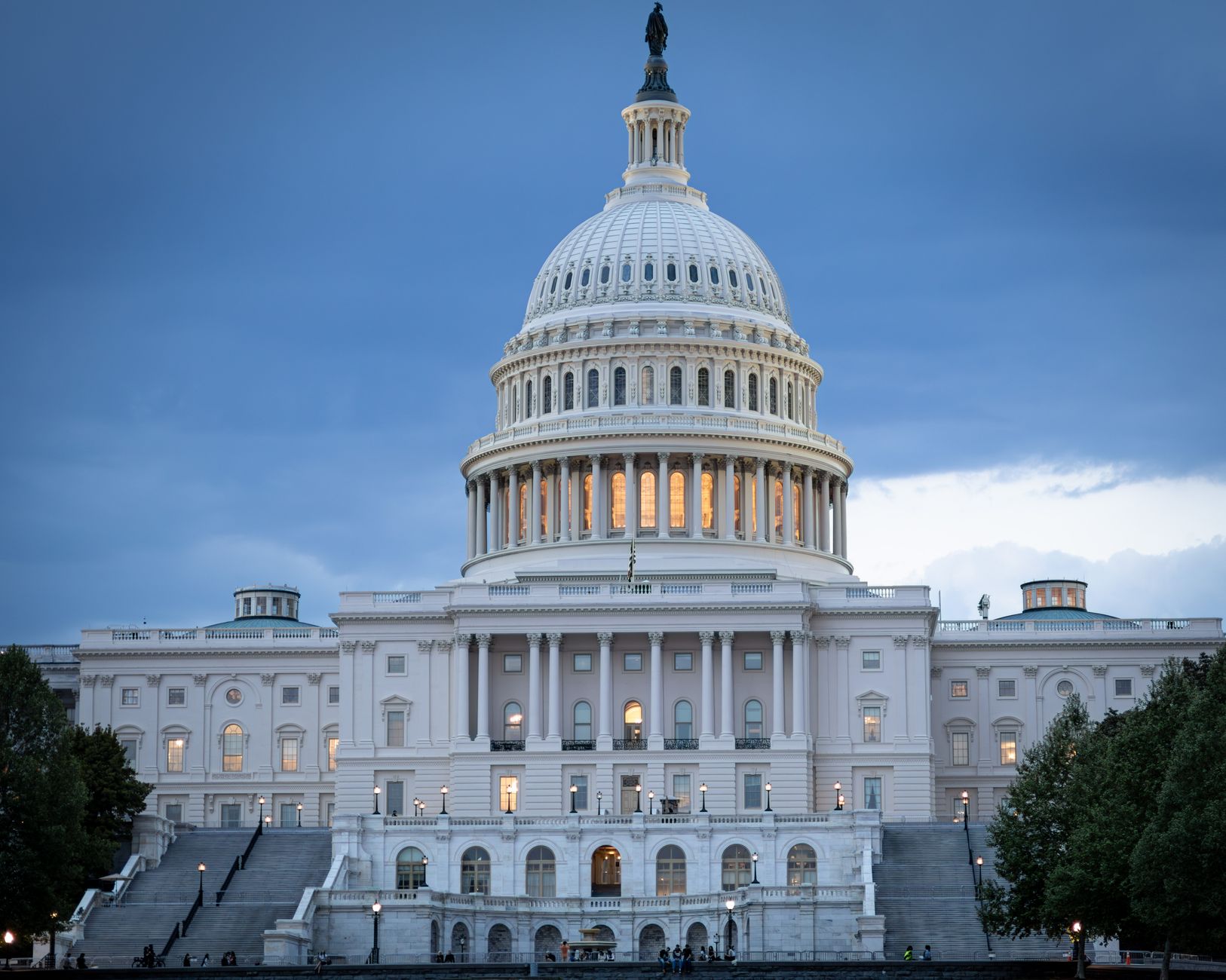
The planned relocation of the U.S. Department of Education is more than a routine government office move. It reflects a broader policy debate about how Washington should use valuable federal property in an era shaped by hybrid work, rising housing demand, aging office buildings, and pressure to make downtown districts more livable. When a major agency changes its footprint, the effects ripple beyond federal employees. City planners, nearby residents, universities, businesses, and students all have a stake in what happens next.
The Education Department’s planned relocation points to a bigger shift in Washington: converting underused federal offices into housing, updated workplaces, and future tax revenue while rethinking how agencies use space. #educationpolicy #federalrealestate #housingredevelopment #washingtondc #publicpolicy #urbanplanning
Why this relocation matters beyond one agency
At first glance, moving an agency headquarters can sound administrative and technical. In reality, it can signal a strategic change in how the federal government manages real estate. Many large government buildings were designed for a different work culture, one that assumed full-time in-person staffing, paper-heavy processes, and long-term space needs that no longer match today’s operational models.
The Department of Education’s departure from its current headquarters opens the door to a question cities across the United States are asking: what should happen to older office properties that are no longer essential in their current form? In Washington, that question carries unusual weight because so much centrally located land is tied to federal ownership. If even a portion of that space is repurposed, the impact on housing supply, downtown activity, and city finances could be substantial.
There is also a symbolic dimension. The Department of Education plays a national role in student aid, civil rights oversight, institutional accountability, and data collection. Its physical headquarters does not define those responsibilities, but the location and design of its workspace can influence how efficiently teams collaborate, how easily the public can access services, and how the department adapts to modern digital operations.
The larger backdrop: federal real estate is being rethought
Across government, there is growing recognition that the federal office portfolio is larger and less flexible than current needs require. Hybrid work, digital workflows, and updated records management systems have changed how agencies use buildings. Office towers built for maximum occupancy may now sit partially empty for long stretches of the week, even while cities face housing shortages and downtown businesses struggle with reduced foot traffic.
That is why this relocation is being discussed in connection with redevelopment. Supporters of such moves argue that unused or underused federal properties should not remain frozen in low-productivity use when they could support new housing, mixed-use neighborhoods, or a stronger local tax base. In Washington, where land is scarce and affordability is a persistent concern, redevelopment can serve both urban planning and economic goals.
Official agencies such as the U.S. General Services Administration have increasingly focused on optimizing federal space rather than simply maintaining existing footprints. That shift does not mean every federal building should be sold or converted, but it does suggest that the old assumption of permanent office occupancy is being replaced by a more flexible model.
For readers following higher education policy, this is a useful reminder that public institutions are not only defined by their programs and budgets. Their physical infrastructure also reflects priorities. A department that modernizes its workspace while enabling urban redevelopment may be participating in a larger transformation of government itself.
What redevelopment could mean for Washington, D.C.
More housing where it is needed most
The most immediate argument in favor of redevelopment is housing. Washington has long faced pressure to expand supply, especially near transit, employment centers, and civic infrastructure. If former federal office sites are converted into apartments, mixed-income housing, or residential towers with ground-floor retail, the city could gain badly needed inventory in highly connected areas.
That matters not only for long-term residents but also for students, recent graduates, university staff, and early-career professionals who often struggle with rents near central D.C. A well-located redevelopment project can shorten commutes, improve access to public transit, and support more walkable neighborhoods. Over time, those changes can reshape who can afford to live near the heart of the city.
A stronger local tax base
Federal buildings are generally exempt from local property taxes. Once land or buildings move into taxable private use, cities may gain new revenue streams through property taxes, sales taxes, and business activity. That can help fund schools, transport, public safety, and neighborhood services.
In practical terms, a single large redevelopment project can do more than change a skyline. It can influence how a city pays for public priorities. That is one reason local leaders often support converting dormant or low-use federal real estate into more productive uses.
Downtown revitalization
Washington is not alone in trying to revive downtown districts after the pandemic-era shift in office attendance. Cities need people downtown at more times of day, not just during weekday office hours. Residential redevelopment can help create that balance. Residents support grocery stores, cafes, child care centers, fitness spaces, and neighborhood services that do not depend entirely on office workers.
If this type of redevelopment is handled well, it can encourage a more resilient downtown economy. Instead of a district that goes quiet in the evenings, the area can become active throughout the day and week.
- More homes near transit and jobs
- New retail and service opportunities
- Improved street-level activity and safety
- Potential increases in tax revenue
- Better use of strategically located land
What the move means for the Department of Education itself
For the Education Department, relocation raises a different set of questions. The central issue is not whether the agency should occupy the same building forever, but whether the new arrangement will support its mission more effectively. A modern headquarters can be smaller, more secure, and better aligned with digital workflows. It can also be designed around current staffing patterns instead of past assumptions.
The U.S. Department of Education manages work that touches nearly every college-going family in the country, from federal student aid to borrower communications to institutional oversight. Any relocation must preserve continuity in those services. That means physical space planning has to be matched by careful operational planning, strong digital systems, and clear communication for employees and the public.
Relocation can also affect staff morale and productivity. Commute times, transit access, office layout, and availability of meeting space all matter. Agencies that move without considering day-to-day experience can end up with inefficiencies that cancel out the financial logic of downsizing or relocation. On the other hand, a well-planned move can reduce costs, improve collaboration, and support flexible work without weakening accountability.
There is a public access issue as well. Even in a digital-first environment, some government interactions still depend on physical presence, mail handling, records management, and secure in-person meetings. The success of any headquarters move depends on whether it makes the agency easier to operate, not simply cheaper to house.
Why students, universities, and policy watchers should pay attention
This story matters to more than urban planners and federal administrators. Students and university communities should pay attention because the relocation touches three larger themes shaping education and public life: government modernization, city affordability, and the intersection between policy and infrastructure.
First, government operations increasingly depend on data systems, cloud platforms, cybersecurity, and digital service design. A headquarters move is often part of a larger effort to modernize those systems. Students interested in public-sector careers can learn a lot by watching how agencies handle technology transitions alongside physical relocations.
Second, higher education is deeply connected to city economics. Universities rely on surrounding housing markets, transport systems, and neighborhood affordability. If central D.C. gains more residential supply through redevelopment, the benefits may extend to graduate students, researchers, interns, and young professionals building careers in education, policy, nonprofits, and technology.
Third, this is an example of how policy choices become physical realities. Debates about office utilization, housing shortages, and tax revenue are not abstract. They affect who can live where, how public institutions spend money, and what kind of city develops around key civic corridors.
For learners exploring career paths related to digital transformation, this is also a useful reminder that public-sector change creates demand for practical skills. Students looking to build experience can explore data analytics and data science internship opportunities relevant to evidence-based planning, as well as cloud computing and DevOps training that supports modern government systems. Since relocation and records management also raise protection concerns, cyber security internship programs can be especially relevant for students interested in public infrastructure and digital trust.
The hidden complexity of turning offices into housing
Redevelopment may sound straightforward, but converting office buildings into housing is rarely simple. Older federal buildings often have deep floor plates, limited operable windows, rigid structural layouts, and specialized security features that do not easily translate into residential design. In some cases, demolition and full reconstruction may be more practical than conversion. In others, adaptive reuse can work, but only with major design and compliance changes.
There are also regulatory hurdles. Historic preservation rules, environmental reviews, zoning constraints, financing conditions, and accessibility requirements can all shape what is possible. The most successful projects tend to balance public goals with market realities. If policymakers want more housing from these sites, they may need to combine redevelopment ambitions with incentives, streamlined approvals, or partnerships that make complex projects viable.
Community response matters too. Residents may welcome added housing but still raise concerns about height, traffic, affordability levels, school capacity, or construction disruption. That means redevelopment is not just a property transaction. It is a civic process that requires public trust and clear communication.
- Can the building realistically be converted?
- Will the redevelopment include affordable housing?
- How quickly can approvals and financing move?
- What public benefits will the community see?
- Will the new use strengthen the surrounding neighborhood?
Why tax revenue is part of the conversation
One of the strongest practical arguments for redevelopment is fiscal. Cities often host large amounts of tax-exempt land without receiving the full local revenue benefits that private development can generate. In Washington, that issue is especially significant because of the federal presence. When an underused property becomes a residential or mixed-use asset, the city can potentially collect revenue that supports public services over the long term.
That does not mean every decision should be driven by tax logic alone. Public agencies need appropriate, secure, and functional workspaces. But when a building no longer serves its original purpose efficiently, the financial case for repurposing becomes harder to ignore. In that sense, the Education Department relocation sits at the intersection of operational efficiency and local economic strategy.
Housing policy experts at organizations such as the U.S. Department of Housing and Urban Development have long emphasized that supply, land use, and affordability are connected. While one federal building will not solve a citywide housing challenge, strategic redevelopment of multiple properties can gradually shift the equation.
What to watch as the process unfolds
Several questions will determine whether this move becomes a model for smart redevelopment or simply another administrative reshuffle. The first is timing: how quickly can the department transition to a new location without disrupting operations? The second is clarity: will planners articulate a convincing vision for the current site’s future use? The third is execution: can public agencies, developers, and city officials align around a realistic plan that delivers housing, value, and long-term neighborhood benefits?
Observers should also watch for the quality of the redevelopment itself. A successful project is not just about replacing offices with apartments. It should create a place that contributes to the city, supports transit use, improves street life, and responds to local demand. Design quality, affordability commitments, and mixed-use planning will all shape whether the outcome feels like a public gain.
For students and professionals following policy, urban development, or government operations, this is a revealing case study. It shows how one institutional move can open debates about land, work, technology, and public value all at once. The future of federal real estate will likely involve more decisions like this, where agencies shrink or relocate so that cities can reclaim strategic sites for broader civic needs.
In that sense, the Education Department’s move is not just about where desks and offices end up. It is about how a capital city adapts to new realities and whether public assets can be used in ways that serve more people over time. If redevelopment is handled thoughtfully, the result could be more housing, better urban vitality, and a clearer model for how government space can evolve without losing public purpose.
#educationpolicy #federalrealestate #housingredevelopment #washingtondc #publicpolicy #urbanplanning


 Your IP Address : 216.73.217.8