
Christopher Nolan’s journey shows that great filmmakers do not always begin in film school. His English Literature background, student film society work, and self-taught discipline helped shape one of modern cinema’s most distinctive storytelling voices. #christophernolan #filmmaking #filmstudents #englishliterature #creativecareers #studentlife
Christopher Nolan is often discussed as a filmmaker of scale: IMAX cameras, practical effects, vast emotional stakes, and stories that make audiences lean forward rather than sit back. Yet one of the most interesting things about his rise is not simply what he has made, but how he learned to think like a director.
For a filmmaker so closely associated with cinematic precision, Nolan did not follow the most obvious academic route. He did not enroll in a traditional film school as his main field of study. Instead, he studied English Literature at University College London, a choice that may sound surprising at first but becomes increasingly logical the more closely one looks at his work.
His films are full of literary concerns: memory, identity, unreliable perception, fractured chronology, moral obsession, and characters trapped inside the stories they tell themselves. From Memento to Inception, from Dunkirk to Oppenheimer, Nolan has repeatedly used the grammar of cinema to explore ideas that novelists have handled for centuries. His education did not teach him only what stories mean. It helped him understand how stories can be structured.
A Director Built by Books, Cameras, and Curiosity
Christopher Edward Nolan was born in London in 1970 to a British father and an American mother, giving him a cultural perspective that has often felt visible in his career. His films frequently combine British restraint with Hollywood ambition. They are cerebral without being small, spectacular without being simple.
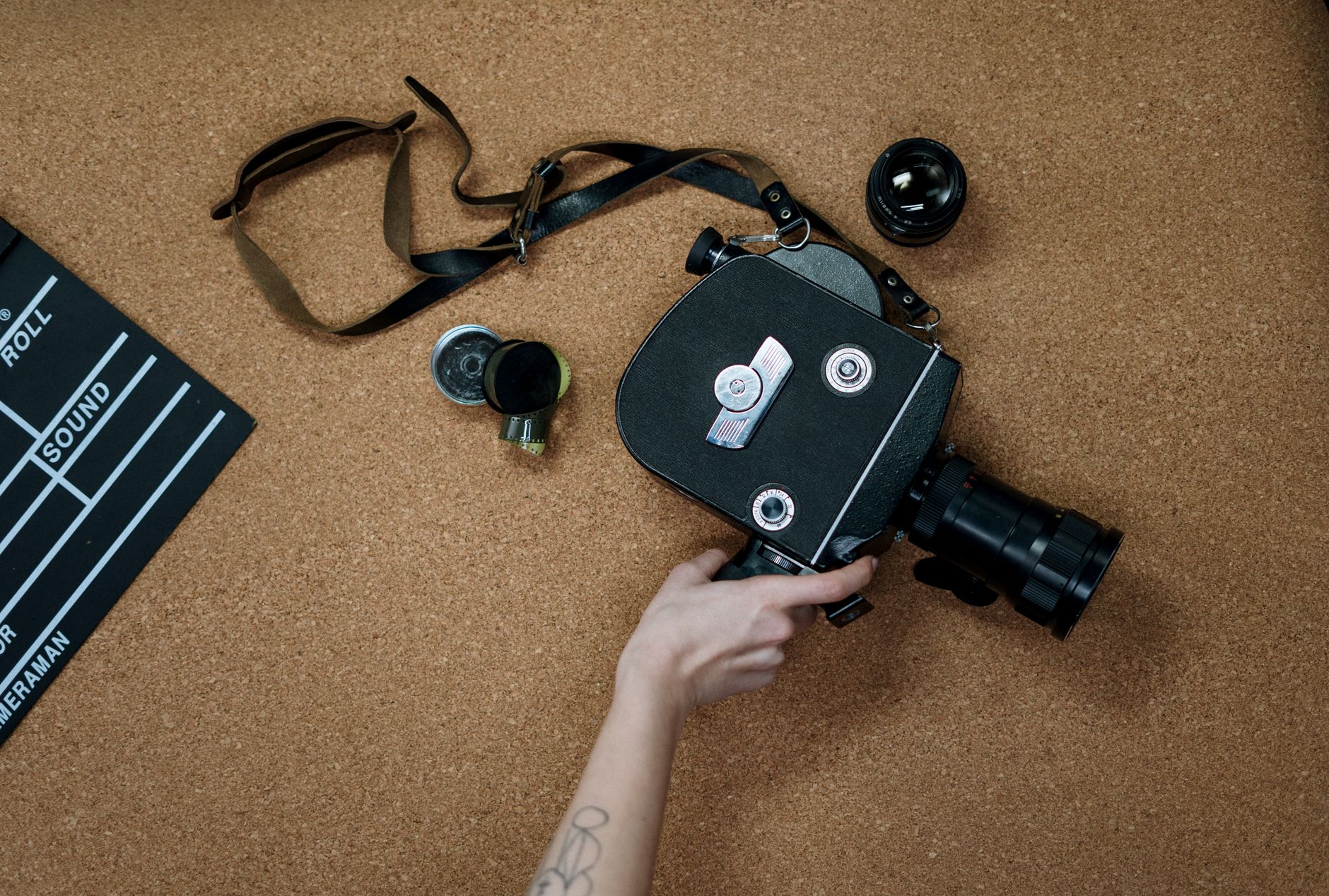
His interest in filmmaking began early. Nolan started experimenting with a Super 8 camera as a child, making short films long before professional sets, studio budgets, and awards-season campaigns entered the picture. That early exposure mattered. It gave him something that many creative people spend years trying to develop: the habit of making.
Before his name became attached to billion-dollar box office discussions, Nolan worked in the scrappy world of low-budget filmmaking. His first feature, Following, was made with minimal resources and a disciplined production approach. It was not a glamorous beginning, but it was a practical education in planning, problem-solving, and storytelling under constraint.
That combination of literary study and hands-on experimentation would become central to his creative identity. Nolan did not wait for permission to become a filmmaker. He read deeply, watched carefully, organized screenings, shot on film, and learned by doing.
Why Nolan Chose English Literature Instead of Film School
Nolan’s decision to study English Literature at University College London is one of the most discussed parts of his academic background. For many students, the assumption is that a film career requires a film degree. Nolan’s path complicates that idea.
He has spoken in interviews about taking a film class and finding the experience frustrating in a productive way. His point was not that studying film has no value. Rather, he seemed to feel that film, as a living practice, was difficult for him to approach purely through academic analysis. He was already aware of the compromises and practical pressures involved in making movies. Books, by contrast, gave him room to think about narrative without the immediate burden of production logistics.
Literature offered him a different kind of freedom. Novels can move across time with ease. They can enter a character’s mind, withhold information, distort memory, and switch perspectives without needing to justify every transition visually. For a young filmmaker interested in structure, this was powerful material.
Instead of learning only how to operate within established film conventions, Nolan was studying forms of storytelling that had spent centuries testing the boundaries of time, voice, and point of view. That influence can be felt across his career.
The Literary DNA Inside Nolan’s Films
One of the clearest ways Nolan’s English Literature background appears in his cinema is through structure. His films rarely unfold in a simple straight line. Even when the plot is understandable, the arrangement of information is carefully engineered to shape how the audience feels, thinks, and remembers.
Memento is perhaps the most obvious example. The film’s reverse chronology is not a gimmick placed on top of the story. It is the story. The audience experiences confusion, repetition, and uncertainty in a way that mirrors the protagonist’s condition. That is a deeply literary move: form and meaning are inseparable.
Inception takes a different approach, building nested layers of dreams that function almost like chapters inside chapters. Each layer has its own rhythm, time scale, and emotional stakes. The result is a blockbuster that behaves like a puzzle novel, asking viewers to track multiple realities while remaining invested in a personal grief story.
Dunkirk compresses and expands time through three overlapping perspectives: land, sea, and air. Rather than presenting the evacuation as a conventional war drama, Nolan turns time itself into a source of tension. The structure makes viewers feel trapped inside different versions of urgency.
Oppenheimer also reflects this literary instinct. Its timeline moves through memory, testimony, ambition, regret, and political consequence. It is not simply a biopic about a scientist. It is a study of how history is narrated, judged, and reinterpreted.
What Students Can Learn from Nolan’s Academic Path
Nolan’s education offers a useful lesson for students who feel pressured to choose the perfect degree for a creative career. The truth is more flexible. A degree can be valuable not only because it trains you for a specific job, but because it shapes how you think.
For aspiring filmmakers, writers, designers, developers, or entrepreneurs, the most important question is not always, Which course title sounds closest to my dream career? Sometimes the better question is, What kind of thinking do I want to develop?
English Literature trains students to analyze language, interpret ambiguity, understand character motivation, and recognize structure. Those skills can be surprisingly practical in creative industries. A director needs to understand pacing. A screenwriter needs to understand subtext. An editor needs to understand rhythm. A producer needs to understand what an audience is being asked to feel at each stage of a story.
This does not mean film school is unnecessary. It means there is no single correct route. Some students benefit from structured technical training, access to equipment, mentors, and peer networks. Others thrive by studying adjacent disciplines and building their craft independently.
The Importance of Learning by Making
Although Nolan did not major in film, he was not passive during university. His time at UCL included involvement with the university’s film society, where he helped screen films and worked on his own projects. That practical environment mattered as much as the classroom.
Film societies can be underrated creative laboratories. They give students access to cinema history, community discussion, and opportunities to test ideas. For Nolan, the film society was not just a club. It was a place to watch, organize, experiment, and develop discipline.
This is one of the most relevant lessons for students today. Academic learning becomes far more powerful when paired with projects. Whether someone is studying cinema, computer science, literature, design, journalism, or data analytics, building a portfolio can turn abstract interest into visible ability.
Students looking to gain structured practical exposure beyond the classroom can explore skill-based opportunities such as professional internship programs. The specific field may differ, but the principle remains the same: real projects teach judgment, resilience, and collaboration in ways theory alone cannot.
Film School, Self-Teaching, and the Myth of the Perfect Path
Nolan’s route often raises a familiar question: should aspiring directors avoid film school? The honest answer is no. They should avoid assuming that film school is the only path, just as they should avoid assuming that skipping it guarantees originality.
Many extraordinary directors studied film formally. Spike Lee, George Lucas, Chloé Zhao, and many others benefited from film programs that gave them access to tools, collaborators, and critical feedback. Film school can be especially useful for students who need structure, equipment, and a community of people trying to solve similar creative problems.
At the same time, many major directors came from other academic backgrounds. Martin Scorsese studied English before pursuing graduate film study. Steven Spielberg studied English and built his career through persistence and practical experience. Greta Gerwig studied English and philosophy before becoming one of contemporary cinema’s most influential writer-directors. Denis Villeneuve studied science before moving toward film. Alfred Hitchcock’s background included engineering and art.
The pattern is clear: great directors often bring something from outside cinema into cinema. That outside knowledge becomes part of their signature. A filmmaker who has studied architecture may think differently about space. A filmmaker trained in music may approach editing through rhythm. A filmmaker with a background in literature may become unusually sensitive to structure and perspective.
Why Literature Remains Powerful in a Visual Age
In a world dominated by video platforms, streaming services, and short-form content, literature might seem less directly relevant to film than ever. Nolan’s career suggests the opposite. The deeper visual culture becomes, the more valuable strong narrative thinking becomes.
Technology can make images sharper, effects more seamless, and production workflows faster. But technology cannot replace the human need for meaning. Audiences still respond to tension, mystery, emotional stakes, and moral conflict. These are literary foundations as much as cinematic ones.
For students in creative and technical fields, reading widely is not a decorative habit. It builds imagination, empathy, and structural awareness. A software developer designing user experiences, a game designer building worlds, a marketer crafting campaigns, and a filmmaker planning a scene all benefit from understanding how people follow stories.
This is especially important as artificial intelligence, virtual production, and immersive media reshape creative industries. Tools are changing quickly, but storytelling principles remain durable. Students interested in the intersection of creativity and technology may also find value in learning how emerging systems work through areas such as AI and machine learning training, particularly as film, media, and digital content become more data-informed and technology-driven.
Nolan’s Career Shows the Value of a Distinctive Voice
One reason Nolan’s films attract such large audiences is that they feel recognizably his. Viewers may debate his dialogue, emotional style, sound mixing, or narrative complexity, but few would describe his work as anonymous. In an entertainment industry often driven by franchises and algorithms, a distinctive voice is rare.
That voice did not emerge from technical skill alone. It came from a set of obsessions: time, memory, guilt, sacrifice, identity, and the cost of ambition. His education helped give shape to those interests, while his practical filmmaking experience taught him how to express them at scale.
Students can learn from this balance. Technical competence matters, but it is not enough. A director must have something to say. A developer must understand the problem behind the product. A researcher must know why a question matters. A designer must recognize the human behavior behind the interface.
Nolan’s career is a reminder that originality is often built from cross-pollination. Literature fed his cinema. Independent filmmaking fed his studio work. British and American influences shaped his tone. Practical constraints sharpened his discipline.
The Role of University Beyond the Degree Name
When people talk about university, they often focus narrowly on the degree. But the broader environment can be just as important. Universities offer libraries, societies, peers, mentors, screenings, lectures, competitions, labs, and informal conversations that can shape a student’s direction.
For Nolan, UCL was not simply a place where he studied English Literature. It was also a place where he could participate in a film culture, organize screenings, and make early work. That combination of academic study and extracurricular practice created momentum.
This is relevant for students in any discipline. A computer science student might discover entrepreneurship through a startup club. A literature student might discover screenwriting through a drama society. A business student might become interested in cybersecurity after attending a workshop. A design student might move into product development through a collaborative hackathon.
The best university experiences often happen when students use the institution fully, not just as a route to exams. Learning happens in classrooms, but confidence often grows in the spaces where students apply what they know.
Creative Careers Are Becoming More Interdisciplinary
Nolan’s path also feels timely because modern careers rarely stay inside one category. Film now intersects with data, artificial intelligence, software, gaming, streaming analytics, visual effects, virtual production, and global digital marketing. A creative professional who understands multiple fields has an advantage.
For example, a filmmaker may need to understand audience behavior on streaming platforms. A screenwriter may collaborate with game studios. A cinematographer may work with virtual production teams. A producer may use data dashboards to plan distribution. A media entrepreneur may need web development, branding, and content strategy.
This does not mean every creative student must become a programmer. It means curiosity across disciplines is increasingly valuable. Students who combine storytelling with technical awareness can move more confidently through changing industries. Those interested in building digital products, portfolio websites, or media platforms may benefit from pathways such as a full stack development internship, especially if they want to create and publish their own work independently.
The broader lesson is simple: do not underestimate the unusual combination. English plus film. Design plus business. Psychology plus technology. Data plus storytelling. These mixtures often create the most interesting careers.
What Aspiring Filmmakers Should Focus on Today
For students inspired by Nolan’s journey, the goal should not be to copy his path exactly. The goal is to understand the principles behind it. His career suggests several practical priorities for emerging filmmakers and creative professionals.
- Read beyond your field: Novels, essays, history, philosophy, and science can all expand your creative vocabulary.
- Make small projects consistently: Short films, scripts, visual experiments, and editing exercises build fluency.
- Study structure: Learn how stories manage time, reveal information, and create emotional payoff.
- Find collaborators early: Film is rarely a solo art. Student communities and creative societies are valuable training grounds.
- Accept constraints: Low budgets, limited equipment, and small crews can teach clarity and discipline.
- Build a portfolio: Finished work matters more than imagined potential.
Students should also watch films actively, not just for entertainment. Ask why a scene begins where it does. Notice how sound changes emotion. Study how editing controls attention. Compare adaptations with their source texts. Read screenplays and observe what changes on screen.
Good filmmaking is not only about knowing cameras. It is about knowing decisions.
Why Nolan’s Story Resonates With Students
Nolan’s background resonates because it challenges a fear many students carry: that one wrong academic choice can permanently close a door. His career suggests a more generous truth. Education is not only a credential. It is material. What you study becomes part of how you see.
An English Literature degree did not prevent Nolan from becoming a director. It helped make him the kind of director he became. His student filmmaking did not require massive funding to matter. It built habits that later scaled into major productions. His unconventional route did not weaken his authority. It became part of his creative foundation.
This is encouraging for students whose interests do not fit neatly into one department. A person can love cinema and study literature. Love technology and study design. Love entrepreneurship and study psychology. What matters is whether they keep building, connecting, questioning, and refining their craft.
The world does not need every creative person to follow the same map. In fact, culture becomes richer when they do not.
A Lasting Lesson From an Unconventional Education
Christopher Nolan’s education is not a simple argument against film school. It is a stronger argument for intellectual independence. His example shows that a student’s path can be unconventional and still be rigorous, practical, and deeply relevant.
He became a filmmaker not because he ignored education, but because he used education in a personal way. Literature gave him narrative tools. Film society work gave him practice. Low-budget production gave him discipline. Years of persistence turned those foundations into a body of work that continues to shape mainstream cinema.
For students, graduates, and young creators, the message is both practical and liberating: choose fields that sharpen your thinking, seek communities that let you practice, and do not wait for the perfect permission slip to begin. The most meaningful careers are often built at the intersection of what you study, what you make, and what you cannot stop thinking about.
#christophernolan #filmmaking #filmstudents #englishliterature #creativecareers #studentlife


 Your IP Address : 216.73.217.30