
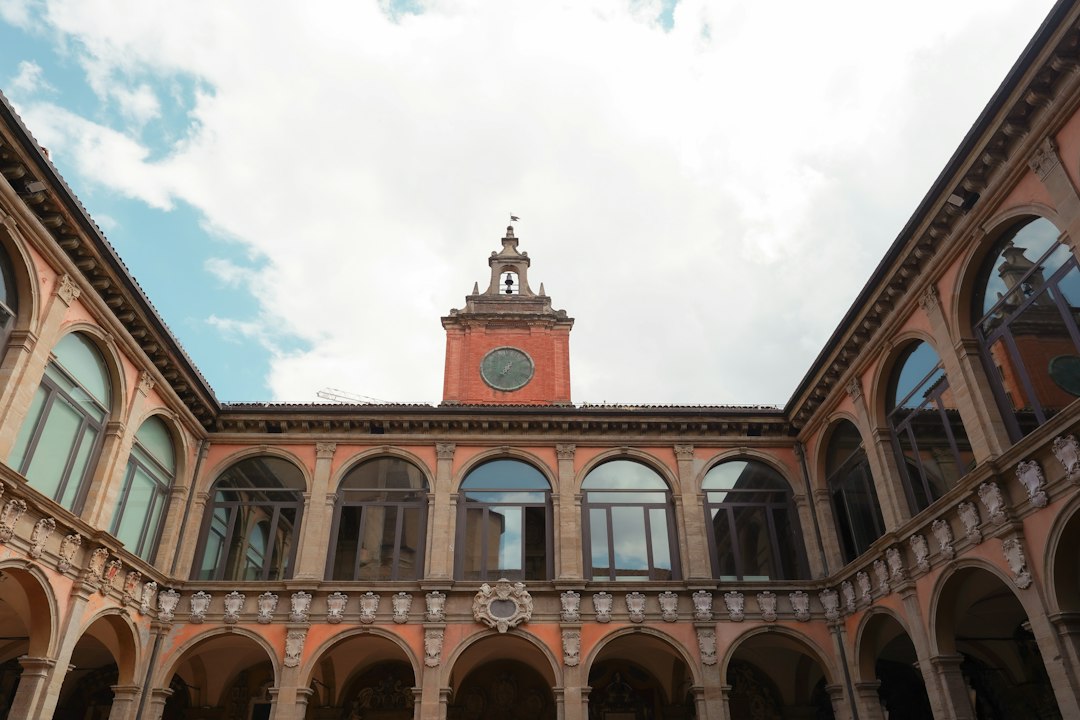
In recent years, Italy has emerged as one of the most attractive destinations for Pakistani students seeking high-quality European education without the staggering price tags often associated with the UK or North America. With its blend of historic academic prestige, cutting-edge research facilities, and a deeply rooted culture of innovation, Italy offers a unique environment for both personal and professional growth. Whether you are aiming for a Bachelor’s degree in Engineering or a Master’s in Artificial Intelligence, the Italian higher education system provides a pathway that is both accessible and globally recognized.
The appeal of Italy lies not just in its scenic landscapes and culinary heritage, but in its public university system. Unlike many other Western nations, Italian public universities receive significant state funding, allowing them to keep tuition fees remarkably low—often ranging from as little as €150 to €4,000 per year. For Pakistani students, this affordability, combined with extensive scholarship opportunities, makes Italy a practical and strategic choice for the 2027 academic cycle.
Why Italy is the New Hub for International Education
Italy is home to some of the oldest and most prestigious universities in the world, such as the University of Bologna and the Sapienza University of Rome. However, it is not just about history. In the modern era, Italy has become a powerhouse in fields like automotive engineering, fashion, architecture, and increasingly, digital technology. For students interested in the tech sector, pursuing a career in AI and Machine Learning within an Italian context provides exposure to European standards of data ethics and industrial application.
Moreover, the Italian government and regional authorities have made concerted efforts to internationalize their campuses. Today, hundreds of degree programs are taught entirely in English, specifically designed to attract global talent. This removes the language barrier for Pakistani students, who are often already proficient in English through their domestic education systems.
Academic Pathways: Bachelor’s and Master’s Programs
The Italian academic structure follows the Bologna Process, ensuring that degrees are compatible across Europe. For Pakistani students, the entry points are generally divided into two categories:
Undergraduate Studies (Laurea)
To apply for a Bachelor’s degree, students must have completed 12 years of education (Matric and Intermediate or O/A-Levels). Many technical and economic programs require an entrance exam known as the TOLC (Test Online CISIA). For instance, TOLC-I is for engineering, while TOLC-E is for economics. Aspiring medical students must prepare for the IMAT (International Medical Admissions Test), which is highly competitive but offers a gateway to world-class medical training at a fraction of the cost found elsewhere.
Postgraduate Studies (Laurea Magistrale)
For a Master’s degree, a 16-year education (a 4-year Bachelor’s from a recognized Pakistani university) is mandatory. At this level, universities look closely at the relevance of your previous studies to the chosen Master’s curriculum. Students aiming for advanced fields like Data Analytics and Data Science will find that Italian universities emphasize a strong theoretical foundation paired with practical lab work.
The 2027 Financial Update: Understanding the New Bank Statement Requirements
One of the most critical updates for the 2026/2027 and 2027/2028 academic years is the significant increase in the required “means of subsistence.” The Italian Ministry of University and Research (MUR) has raised the minimum financial threshold by approximately 46%. Previously set at around €6,947, the new requirement is now €10,179.85 per year.
This change is vital for Pakistani applicants to understand. When applying for a study visa, you must demonstrate that you have access to these funds. The Italian Embassy in Islamabad and the Consulate in Karachi are strict about the source of these funds. They must be traceable, legal, and ideally held in your own account or that of a close family member (up to the fourth degree of kinship). A six-month bank statement history is standard, and sudden large deposits without justification are a common reason for visa rejections.
Navigating the Document Legalization Process
Since Pakistan joined the Hague Apostille Convention, the process for document verification has been streamlined but remains rigorous. To ensure your application is successful, you must follow a specific sequence of attestations:
- Educational Documents: Matric and Inter certificates must be attested by the IBCC, while degrees and transcripts require HEC attestation.
- Apostille: Once attested by the relevant boards, all documents must receive an Apostille stamp from the Ministry of Foreign Affairs (MoFA).
- Legal Documents: Birth certificates and Family Registration Certificates (FRC) from NADRA also require the MoFA Apostille.
After legalization, you must obtain a document that proves your Pakistani qualification is equivalent to the Italian standard. You generally have two choices: the CIMEA Statement of Comparability (an online, faster process) or the Declaration of Value (DoV) issued by the Embassy. Most modern universities, including top-tier institutions for Full Stack Development and engineering, now prefer the CIMEA statement due to its efficiency.
Regional Scholarships: The DSU Advantage
The most significant advantage of studying in Italy is the “Right to Study” (Diritto allo Studio – DSU) regional scholarships. These are need-based grants offered by regional agencies such as EDISU (Piedmont), ER-GO (Emilia-Romagna), and LazioDisco (Lazio). Unlike merit-based scholarships that depend solely on grades, DSU scholarships are based on your family’s economic situation.
A successful scholarship application can provide:
- A yearly cash stipend (ranging from €2,500 to nearly €8,000).
- Full tuition fee waiver.
- Subsidized or free accommodation in university hostels.
- Free or discounted meals at university canteens.
To qualify, you must provide an ISEE Parificato document. This is an Italian calculation of your family’s global income and assets. It requires careful preparation of Pakistani income certificates, property papers, and bank statements, all of which must be translated into Italian and apostilled. It is highly recommended to begin this process in June or July, as regional deadlines usually fall in August.
The Universitaly Portal and Pre-Enrolment
The Universitaly portal is the official gateway for all non-EU students. Once you receive an admission offer from an Italian university, you must complete the pre-enrolment process on this platform. You will upload your passport, academic records, and the university’s acceptance letter. The university then reviews and validates your application. This validation is a prerequisite for your visa interview; without it, the embassy will not process your application.
The Visa Application Process via BLS-Intiana
For Pakistani students, the visa process is handled through BLS-Intiana. The Type D National Study Visa is what you will need for long-term stays. The embassy has moved toward a more organized system, often emailing students directly with appointment dates once their Universitaly pre-enrolment is validated.
Key documents for the visa interview include:
- A valid passport and Form A (visa application form).
- The university admission letter and Universitaly summary.
- Proof of financial means (the updated €10,179.85 threshold).
- Proof of accommodation (hostel booking or lease agreement).
- Health insurance covering at least €30,000 for the initial period.
The deadline for filing visa applications for the 2026/2027 cycle is typically November 30, 2026. However, applying as early as possible is advised to avoid the late-summer rush.
Life in Italy: Arrival and Integration
Once you land in Italy, the first eight days are crucial. You must apply for the Permesso di Soggiorno (Residence Permit) at a local post office. This document is your legal ID while living in Italy and allows you to travel within the Schengen Area. Following this, you will finalize your university matriculation and obtain your “Codice Fiscale” (tax code), which is necessary for everything from opening a bank account to signing a mobile phone contract.
Pakistani students are legally allowed to work part-time for up to 20 hours per week. While this is a great way to gain local experience and cover some pocket expenses, it should not be relied upon to fund your entire education or living costs. The primary focus should always be on maintaining the academic credits (CFUs) required to renew your scholarship each year.
Italy offers a high quality of life, a welcoming atmosphere, and a strategic location in the heart of Europe. For the dedicated student, it is not just a place to study, but a launchpad for a global career. By staying organized, adhering to the new financial guidelines, and preparing documentation well in advance, Pakistani students can successfully navigate the journey to an Italian degree in 2027.
#studyinitaly #pakistanistudents #italyscholarships #highereducation #europeanscholarships #studentvisa


 Views Today : 30
 Views Yesterday : 271
 Who's Online : 0
 Your IP Address : 213.209.159.133