
The global education sector is currently navigating one of its most transformative periods in recent history. As we move through the latter half of 2026, the financial landscape of EdTech is undergoing a significant correction, shifting away from the speculative venture capital frenzy of the early 2020s toward a more pragmatic, acquisition-driven ecosystem. While venture funding totals have cooled, the underlying innovation—particularly in the realm of artificial intelligence—is accelerating at an unprecedented pace. From prestigious academic institutions like Stanford University to emerging markets in Africa and Southeast Asia, the way we learn, teach, and fund education is being fundamentally rewritten.
The Great Venture Pullback: Analyzing the 2026 Funding Gap
For the first nine months of 2026, education venture funding reached approximately $1.28 billion. To the casual observer, this may seem like a substantial sum, but the figures represent a stark 35% decline compared to the previous year. Perhaps more telling is the performance of the third quarter, which marked the weakest quarter for venture activity in over a decade. This downturn signals a “flight to quality” among investors who are no longer content with high-growth user metrics alone. Instead, the focus has pivoted toward sustainable business models, proven efficacy in learning outcomes, and clear paths to profitability.
The contraction in venture capital doesn’t necessarily mean innovation has stalled; rather, it indicates that the “easy money” era has ended. Startups are now required to demonstrate how their technology solves specific, measurable problems in the classroom or the workplace. This belt-tightening has led to a leaner, more competitive market where only the most robust solutions survive. However, the void left by venture capitalists is quickly being filled by established corporate entities looking to solidify their market positions through strategic acquisitions.
The Rise of Strategic M&A: Buying Growth and Capability
While venture rounds are down, Mergers and Acquisitions (M&A) have seen a dramatic 34% surge. We are currently witnessing a market where there are nearly two acquisition deals for every single venture round. This trend is driven by industry giants—the so-called “legacy” education companies—that are aggressively adding niche AI capabilities to their existing product suites. Rather than building complex AI systems from scratch, companies like Pearson and McGraw Hill are acquiring agile startups that have already perfected specific tools.
For instance, Pearson recently acquired Workera, a move designed to bolster its AI-driven skills assessment capabilities. Similarly, McGraw Hill’s acquisition of TeachFX, an AI coaching tool for educators, highlights a growing interest in tools that provide immediate, actionable feedback. These acquisitions focus on “testable” capabilities—grading, attendance, and assessment—where the results of AI intervention can be clearly audited and verified. This pragmatic approach to AI integration makes these startups attractive targets for established players who need to modernize their offerings rapidly.
Artificial Intelligence as the New Curriculum Core
The integration of AI is moving beyond simple administrative tools and into the very heart of the academic experience. Stanford University has taken a bold step by committing $10 million in grants to help academic departments redesign their undergraduate majors for the AI era. This initiative, which offers grants of up to $750,000, acknowledges that the skills required for a degree in 2027 and beyond will be fundamentally different from those of the past decade. If you are a student looking to stay ahead, exploring a AI & Machine Learning internship is becoming less of an elective choice and more of a career necessity.
This academic shift is supported by massive investments from tech giants like Google, which recently committed over $6 million in research grants to the National University of Singapore (NUS) and Nanyang Technological University (NTU). These partnerships aren’t just about research; they involve comprehensive faculty training and professional certification programs. The goal is to ensure that the next generation of graduates is not just “AI-aware” but “AI-native,” capable of using these tools to solve complex global challenges in engineering, medicine, and the humanities.
The K-12 AI Landscape: Search, Robotics, and Responsibility
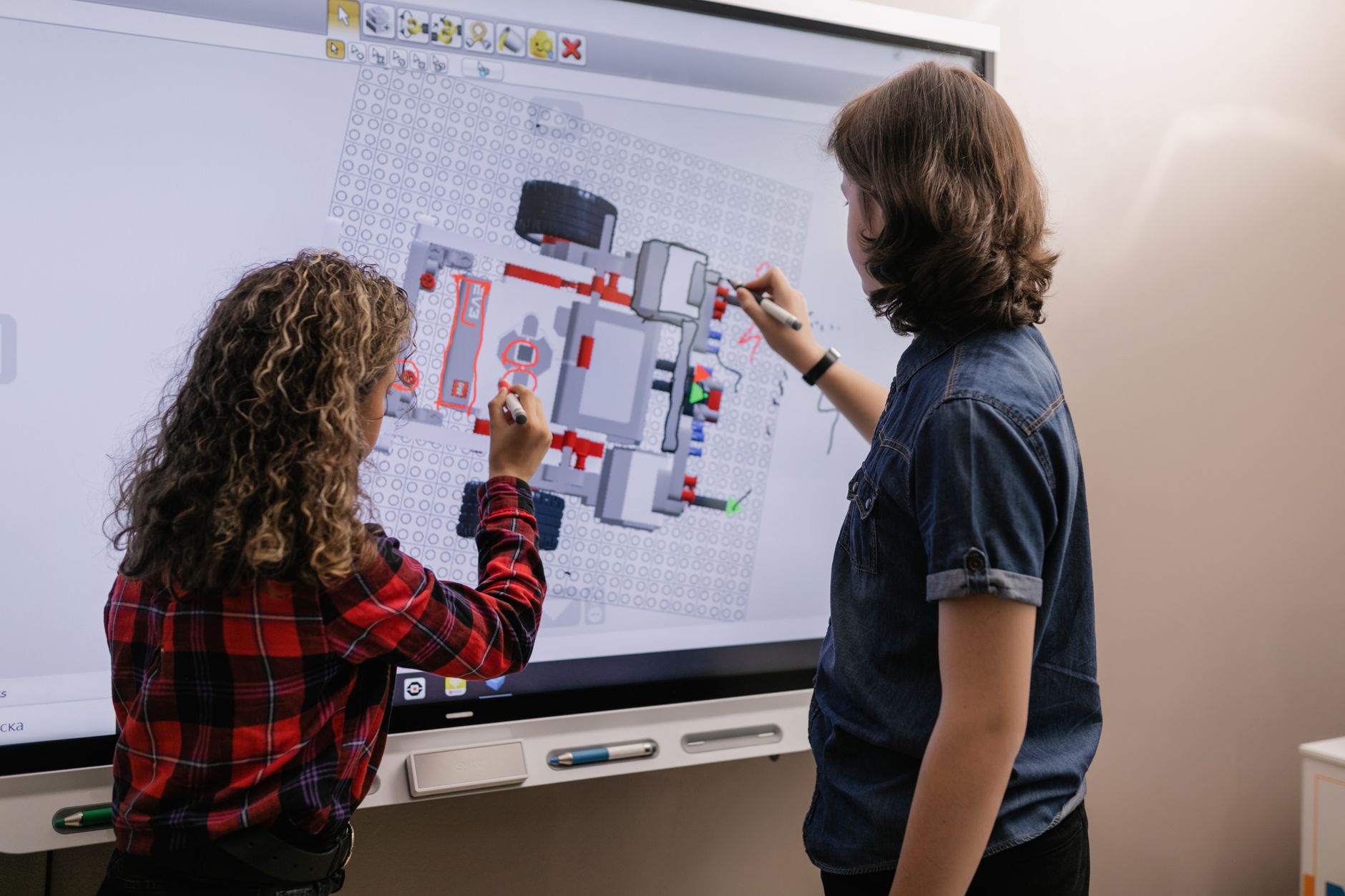
In the primary and secondary education sectors, the role of AI is becoming even more pronounced. Google is set to adjust its student account defaults in early 2027, prioritizing safety by switching Gemini and Search off by default for K-12 accounts unless schools actively opt-in. This moves the needle toward a more controlled, “integrity-first” approach to classroom technology. Meanwhile, in China, the launch of embodied AI curricula by Unitree and D-Robotics is bringing humanoid and four-legged robots into primary schools. With over 180 lessons covering robotics and AI logic, these programs are preparing younger students for a future where human-robot collaboration is commonplace.
Bridging the Global Skills Gap: Internships and Technical Training
While the West focuses heavily on software and AI integration, many emerging economies are utilizing policy shifts to address the immediate need for skilled labor. Kenya, for example, is set to launch 50,000 paid internship positions in early 2027. These roles are designed to bridge the gap between theoretical university education and the practical demands of the modern workforce. For those pursuing professional growth, keeping an eye on all internships available in the digital sector is a proven way to gain the hands-on experience that employers now demand.
In Nigeria, the focus has shifted toward a dual-training model within its 38 federal and state technical colleges. Under this system, students spend 80% of their time on hands-on, practical training and only 20% in the classroom. This vocational focus is a direct response to the global demand for technicians who can maintain the infrastructure of the digital economy. Similarly, in India, the collaboration between IIT Guwahati and Tata Electronics to establish a semiconductor Centre of Excellence highlights the importance of specialized technical training. The center will offer BTech programs in chip assembly and testing, directly feeding into the global semiconductor supply chain.
The Corporate Pivot: Reorganizing Around Intelligence
The impact of AI isn’t just felt in schools; it is radically reorganizing the corporate world. Cognizant has recently formed an OpenAI delivery group consisting of more than 25,000 professionals, signaling a massive shift in how service firms deliver value. This internal restructuring is mirrored by workforce changes at companies like Canva, which recently announced its first significant redundancy round in 13 years. Citing AI disruption and a need to reorganize for efficiency, Canva’s move serves as a reminder that while AI creates new opportunities, it also necessitates a difficult transition for existing roles.
Investment is also flowing into frontline workforce training. Platforms like Bites, which recently raised $40 million, are focusing on how to train non-desk workers—retail employees, hospitality staff, and field technicians—using short, engaging video content linked to sales results. This demonstrates that the “EdTech” label is expanding far beyond the traditional classroom, encompassing lifelong learning and just-in-time corporate training.
Expanding Private Education Horizons
The private higher education market is also seeing a wave of consolidation. In Peru, Laureate’s UPC acquired the University of Sciences and Arts of Latin America (UCAL), while in the UK, the University of Law acquired the London College of Contemporary Arts. These moves suggest that private institutions are looking to diversify their degree offerings and create more comprehensive educational groups. By sharing resources and awarding recognized degrees across multiple specialized colleges, these institutions can offer students a broader range of career paths while maintaining the prestige of a central brand.
The Path Forward for Students and Educators
As we look toward the end of 2026 and the beginning of 2027, the theme is clear: integration. The “hype cycle” of AI is maturing into a cycle of implementation. For students, this means that digital literacy is no longer enough; one must understand how to leverage AI within their specific field. For educators, the challenge lies in maintaining academic integrity while embracing tools that can significantly enhance learning outcomes. For those interested in the infrastructure of this new world, exploring Cloud Computing & DevOps internships can provide the foundational knowledge needed to support the AI systems of tomorrow.
The pullback in venture capital should not be viewed as a lack of confidence in the future of education. Rather, it is a sign that the industry is maturing. The rise in M&A activity and the massive grants for curriculum redesign show that the stakeholders with the most to lose—large corporations and elite universities—are doubling down on a future where education is more technical, more personalized, and more integrated with the global economy. Whether it is through a humanoid robot in a Chinese primary school or a semiconductor lab in India, the boundaries of what is possible in education are expanding every day.
The focus on “testable” AI capabilities suggests that the next generation of EdTech tools will be more reliable and effective than their predecessors. As these technologies become standard, the focus will likely shift from the tools themselves to the human elements of teaching: mentorship, critical thinking, and social-emotional development. In a world where AI can grade an essay or explain a complex physics concept, the human educator’s role becomes more about inspiration and guidance than simple information delivery.
#edtech #educationfunding #aiineducation #futureofwork #venturecapital #learninginnovation


 Views Today : 152
 Views Yesterday : 241
 Your IP Address : 192.0.89.97