
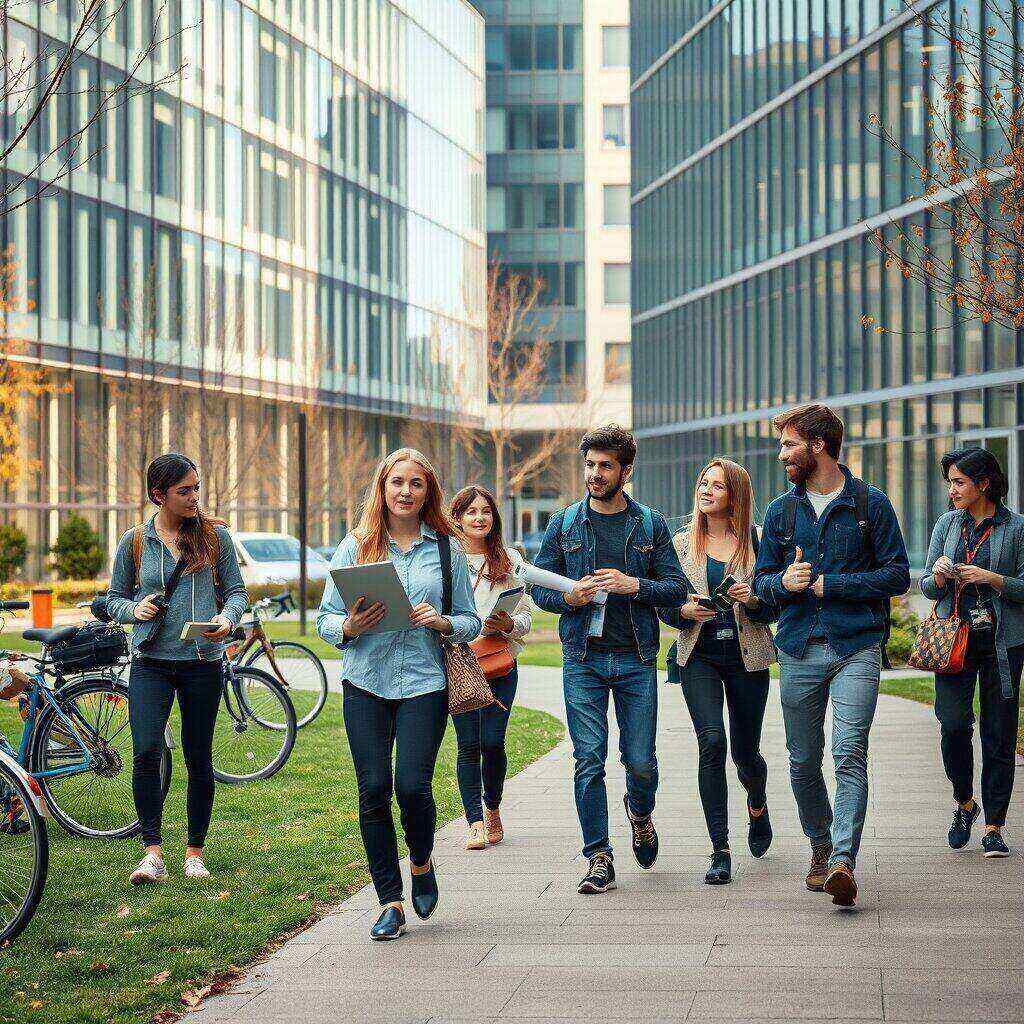
Delft University of Technology, usually called TU Delft, is one of those European universities that students rarely choose by accident. It attracts applicants who already know they want a serious engineering education, a strong research environment, and a campus where technical work is part of daily life rather than branding language. For international students, the appeal is clear: global academic reputation, English-taught master’s options, heavy project culture, and a location in the Netherlands that keeps students close to industry, innovation hubs, and the wider European job market. Quick summary: TU Delft is rigorous, practical, international, and genuinely strong in engineering, but it also expects students to be self-managed and comfortable with pressure. #tudelft #engineeringstudents #studyinthenetherlands #internationalstudents #techcareers
Quick facts students usually want first
- Location: Delft, South Holland, Netherlands
- Type: Public technical research university
- Known for: Engineering, technology, design, water management, aerospace, robotics, sustainability
- Academic structure: Two semesters, typically split into smaller teaching periods with separate assessments
- Main student profile: Academically strong, project-oriented, internationally mobile, research-aware
- Best fit for: Students who want applied engineering with serious theoretical depth
What the academic environment actually feels like
TU Delft has a reputation for being demanding, and that reputation is justified. This is not a university where students can coast through on attendance and last-minute revision. Courses are usually structured around lectures, tutorials, lab work, design assignments, simulation work, and group projects. Even in theory-heavy subjects, there is an expectation that students will connect concepts to systems, models, prototypes, or technical problem-solving.
The strongest impression many students get in the first term is that the university treats engineering as a working discipline, not just an academic subject. You are not only asked to understand formulas or methods; you are expected to use them in structured tasks with deadlines, team coordination, reporting, and technical feedback.
How teaching is organized
TU Delft generally works on a semester system, but the year is often broken into shorter teaching blocks. That means the pace can feel faster than students expect. A module may start with several weeks of lectures, move into assignments and practicals, and then end with exams or project submissions before the next block begins.
The academic year usually starts in late August or early September. The first semester runs through January, and the second usually begins in February and continues into July. Resits and thesis work can extend into August. Students should always verify exact dates on the official academic calendar, because exam weeks and teaching periods vary by faculty.
A realistic view of workload
The workload is one of TU Delft’s defining characteristics. Weekly study schedules can become intense, especially in engineering programs where problem sets, coding exercises, technical reports, and lab preparation overlap. Group projects add another layer: students often have to manage version control, design meetings, intermediate reviews, and shared deadlines at the same time.
That intensity is not necessarily negative. For motivated students, it creates a strong sense of progress. But it does mean that anyone looking for a low-pressure international study experience may find TU Delft harder than expected.
Engineering and technology strengths
TU Delft is especially strong because it combines breadth with specialization. It is not a university known for one narrow technical niche; it is known for a wider engineering ecosystem. Aerospace, mechanical systems, civil engineering, electronics, computing, architecture, sustainable energy, robotics, and transport all sit within a highly technical culture.
Programs that regularly draw international attention include:
- Aerospace Engineering
- Mechanical Engineering
- Electrical Engineering
- Computer Science and Engineering
- Civil Engineering
- Sustainable Energy Technology
- Systems and Control
- Embedded Systems
- Architecture, Urbanism and Building Sciences
- Applied Earth Sciences and water-related fields
One of TU Delft’s advantages is how naturally interdisciplinary work appears across these fields. A robotics student may work with mechanical design, control systems, AI, and sensors. A civil engineering project may intersect with climate adaptation, data modeling, and urban policy. Students interested in modern technical careers often value that overlap because it reflects real industry conditions.
The practical learning culture is not an extra, it is central
This is one of TU Delft’s biggest strengths. Practical learning is not treated as a side feature for brochures. It is embedded into the academic structure through design studios, labs, simulation environments, team-based assignments, capstone projects, research groups, and challenge-based competitions.
Students in computing and data-heavy disciplines often build experience not only through coursework but through independent technical development. That is why many learners also strengthen adjacent skills through project-based paths such as AI & machine learning programs or applied data analytics training when they want more portfolio-ready work outside standard university modules.
Labs, design work, and technical teams
TU Delft is widely known for student teams that work on ambitious engineering challenges, from solar vehicles to hydrogen systems to aerospace designs. Even students who are not on flagship teams still benefit from the surrounding culture. There is a visible respect for making things, testing systems, improving prototypes, and documenting technical decisions properly.
In electronics, mechatronics, and hardware-linked disciplines, students often move toward sensor integration, systems design, and rapid prototyping. Those interested in applied hardware usually find the environment compatible with hands-on areas such as embedded systems projects, especially if they want to build stronger proof of practical ability before job applications.
Computer science and software-oriented students also benefit from a strong engineering mindset. Courses usually ask for more than writing code that works once. Students are pushed toward cleaner architecture, performance awareness, collaborative workflows, testing discipline, and technical communication. In areas linked to infrastructure and distributed systems, supplementary work on cloud computing skills can be useful because TU Delft students are often expected to think beyond classroom theory.
What international students usually notice first
The first surprise for many international students is that TU Delft feels global without losing its Dutch identity. English is common in master’s programs, research settings, and international student life. At the same time, daily life in the city still reflects Dutch routines: cycling everywhere, practical communication, structured administration, and a relatively direct social culture.
The second thing students notice is that international integration does not happen automatically. The university is international, but students still need to make deliberate effort. Joining faculty groups, technical teams, student associations, workshops, and orientation activities matters. Without that effort, it is possible to stay socially limited even on a globally recognized campus.
Language reality
For master’s students, English access is one of TU Delft’s strongest advantages. Most international postgraduate students can function academically in English without major difficulty. The more important issue appears outside the classroom: housing contracts, local services, part-time work, and some social spaces can still reward at least basic Dutch familiarity.
At bachelor’s level, international applicants need to check carefully. TU Delft is far more internationally accessible at master’s level than at undergraduate level, where English-taught options are more limited. Students who assume all technical programs are equally available in English sometimes discover this too late.
Admission structure and how competitive it feels
TU Delft admissions are straightforward on paper but not always simple in practice. Entry standards are serious, and the university expects evidence that students can handle mathematically and technically demanding study. For international applicants, the important point is not just whether they meet formal eligibility, but whether their background genuinely matches the level of the program.
For the most reliable requirements, students should use the official admissions page. Some programs have fixed intake limits, selection procedures, or additional document expectations.
Typical application points students should track
- Main intake: Autumn intake is the standard route for most programs
- Application season: Often begins in autumn or early winter for the following academic year
- Important months: November to January is critical for early preparation; some selective tracks may close around January
- Document set: Academic transcripts, diploma records, motivation statement, CV, English proficiency, and sometimes course-specific proof of preparation
- Non-EU students: Should apply early because visa, housing, and financial planning take time
Admissions are not only about grades. In competitive technical fields, preparation in mathematics, programming, physics, design, or prior engineering coursework can matter a great deal. Students from less aligned academic backgrounds may find the transition difficult even if they are formally admitted.
Sessions, assignments, and exam timelines
TU Delft’s calendar matters because it shapes student stress. The year usually follows two main semesters, each divided into shorter teaching periods. This means assessments come in waves rather than one single final exam season. Students may face quizzes, lab reports, coding tasks, project milestones, presentations, and written exams within the same block.
A common pattern looks like this:
- September to October: Start of teaching, first assignments, project team formation
- October to November: Mid-block tests, labs, technical submissions
- December to January: Major exams, project reviews, reports before semester break
- February: Second semester begins, new modules and practical work
- March to April: Group projects, practicals, progress checks, some mid-term assessments
- May to July: Final assessments, presentations, design submissions, thesis work for some students
- August: Resits or delayed completions in some cases
This structure rewards consistency. Students who postpone work often struggle because assignments stack up quickly. TU Delft is one of those universities where time management is not a generic skill but a survival tool.
Student life in Delft: quieter than Amsterdam, better for focus
Delft is not a huge capital city, and that is part of its value. It is compact, safe, student-heavy, and practical. You can cycle almost everywhere. The city has historic streets, canals, cafés, student associations, and enough movement to feel alive, but it is still calmer than Amsterdam or Rotterdam.
For engineering students, this works well. Daily life feels more organized and less distracted. Many students say Delft makes studying easier because the city rhythm matches academic life. At the same time, some students who want a loud metropolitan social scene may find Delft slightly restrained.
Accommodation and affordability
Affordability is mixed. Compared with some Anglophone destinations, the Netherlands can still make academic sense, especially when students compare quality, mobility, and European access. But TU Delft is not cheap in absolute terms, especially for non-EU students.
The main financial pressure point is housing. Finding a room is one of the biggest challenges international students face. Costs vary, but students should expect that accommodation can be competitive and expensive, especially if they search late. Delft is usually less overwhelming than Amsterdam, yet the housing shortage is very real.
In broad terms, students should budget for:
- Tuition that is relatively manageable for EU students but significantly higher for many non-EU students
- Monthly living costs that can often reach around €1,000 to €1,400 depending on housing and lifestyle
- Upfront expenses for deposits, insurance, residence paperwork, and basic setup
Research environment and innovation culture
TU Delft performs strongly because its teaching is connected to active research. This matters for students who want more than classroom instruction. Research groups, labs, doctoral activity, industry-funded collaborations, and applied technical centers all contribute to a campus atmosphere where innovation feels operational rather than abstract.
In areas such as sustainable energy, smart mobility, robotics, aerospace systems, quantum-related technology, climate engineering, and urban resilience, students are surrounded by topics that matter beyond exams. Even if not every student joins a formal research track, they still benefit from being taught in a setting where current technical questions shape the curriculum.
Career opportunities and how placements really work
TU Delft is strong for career outcomes, but students should understand the European context. This is not a university that promises automatic placements in the way some students from other education systems expect. Jobs are not handed out as a guaranteed end result. Instead, the university gives students a highly credible platform: technical depth, respected degree value, strong employer recognition, career events, thesis pathways, and project experience that employers take seriously.
Graduates move into roles across:
- Aerospace and aviation
- Semiconductors and advanced manufacturing
- Energy and sustainability
- Software engineering and data systems
- Consulting and systems engineering
- Civil infrastructure and water management
- Robotics, control, and automation
- Research, PhD pathways, and technical startups
Companies in the Netherlands and wider Europe value TU Delft, particularly for technically demanding roles. Students often build pathways through thesis collaborations, research assistant work, technical competitions, networking events, and internships completed during or after study. The university’s reputation opens doors, but students still need to position themselves well.
How students prepare for careers
Career preparation at TU Delft is usually practical rather than theatrical. Students refine CVs, build GitHub or technical portfolios, present design work, participate in hackathons, and learn how to discuss projects in a professional way. Recruiters often care less about generic enthusiasm and more about whether a student can explain what they built, what failed, what they improved, and what tools they actually know.
Common challenges students should not ignore
- Housing pressure: one of the biggest issues for international students
- High academic intensity: especially in the first semester
- Group project friction: varying work styles can create tension
- Adjustment period: Dutch directness and independent study culture can feel unfamiliar
- BSc language limitations: not every undergraduate option is equally accessible in English
- Career self-management: opportunities are strong, but students must actively pursue them
None of these are minor issues. They do not cancel TU Delft’s strengths, but they do shape the real student experience. The university is best for students who are comfortable with independence, planning, and technical accountability.
So, who tends to thrive here?
Students who do best at TU Delft are usually those who like solving hard problems, can work consistently across a semester, and do not need constant hand-holding. They are often curious about systems, design, or technology at a level deeper than just job outcomes. They also tend to value being around other serious students, even if that means a more competitive atmosphere.
For international students focused on engineering and technology in Europe, TU Delft remains one of the more convincing choices because it combines academic credibility, practical learning, research seriousness, and access to a strong regional economy. It is not the easiest option, and it is not the cheapest. But for students who want a technical education that feels current, applied, and respected well beyond graduation, TU Delft is easy to take seriously.
#tudelft #engineeringstudents #studyinthenetherlands #internationalstudents #techcareers


 Views Today : 9
 Views Yesterday : 204
 Your IP Address : 216.73.216.174