
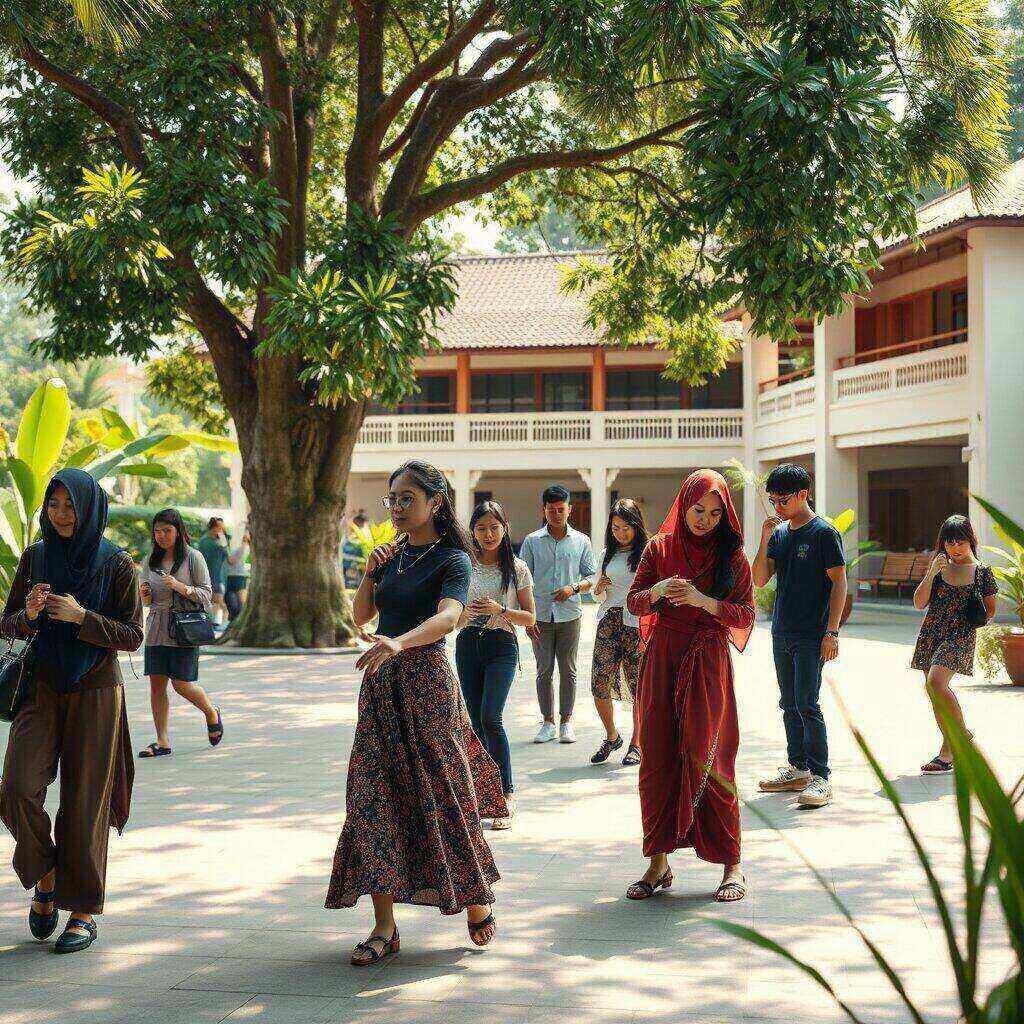
A practical guide to Institut Seni Indonesia Padangpanjang, covering its arts programs, cultural strengths, student life, and evolving career pathways for creative learners in Indonesia and beyond. #artseducation #indonesia #creativecareers #performingarts #designstudents #culturalheritage
Institut Seni Indonesia Padangpanjang occupies a distinctive place in Indonesia’s higher education landscape. For students who want more than a conventional university experience, it represents a learning environment where artistic practice, cultural knowledge, performance, and creative identity come together in meaningful ways. Located in West Sumatra, the institute is closely associated with the rich artistic traditions of the region while also speaking to the needs of modern creative industries.
That combination matters more than ever. Around the world, arts education is being re-evaluated not only as a path for performers, painters, or designers, but also as a foundation for cultural preservation, communication, entrepreneurship, digital storytelling, and innovation. In that context, Institut Seni Indonesia Padangpanjang stands out as a compelling option for students interested in building serious creative skills within a culturally grounded academic setting.
Why Institut Seni Indonesia Padangpanjang draws attention
Many arts institutions promise creativity, but relatively few are rooted so clearly in living tradition. Padangpanjang itself has long been associated with culture, performance, and artistic learning. That gives the institute a natural advantage: students are not studying art in isolation from society. They are learning in a place where heritage, community expression, and regional identity remain visible and relevant.
For prospective students, this creates a powerful academic environment. Instead of treating traditional arts as museum material, the institution encourages engagement with them as evolving practices. Whether a student is interested in music, dance, theatre, fine arts, design, or cultural research, the setting supports both preservation and reinterpretation.
This is one of the biggest reasons the campus continues to matter. It offers a model of arts education that does not force students to choose between cultural depth and contemporary relevance. In an era shaped by global media and digital platforms, that balance is increasingly valuable.
Academic areas students can explore
Institut Seni Indonesia Padangpanjang is widely associated with a range of artistic and creative disciplines. While prospective applicants should always verify the latest departments, curriculum structure, and admissions information through the official university website, the institution is generally recognized for study pathways connected to performance, visual expression, design, and cultural scholarship.
Performing arts and stage-based disciplines
One of the strongest attractions of an arts-focused campus is the emphasis on embodied learning. Students in performing arts-related programs often engage directly with rehearsal, technique, interpretation, staging, and collaboration. This kind of education is practical by nature. It demands discipline, confidence, repetition, and critical reflection.
At a university like this, performance is not only about technical ability. It is also about context. Students are encouraged to understand where forms come from, how communities use them, and how contemporary audiences respond to them. That makes the learning process richer than pure skills training.
For students interested in dance, music, theatre, or interdisciplinary performance, this environment can be especially rewarding. It allows them to refine craft while thinking deeply about artistic meaning, audience engagement, and cultural continuity.
Fine arts, design, and visual communication
Visual arts education has changed dramatically in the past decade. Traditional studio practices remain essential, but today’s students also need to think about branding, exhibition formats, digital portfolios, visual storytelling, and cross-platform communication. That is why institutions with foundations in fine arts and design continue to play an important role.
Students drawn to painting, sculpture, crafts, design, visual communication, or related fields often benefit from a learning atmosphere that values process as much as output. Sketching, experimentation, critique sessions, material exploration, and concept development all help build strong creative habits. In a serious art school environment, students learn not just how to make work, but how to explain it, improve it, and position it in wider cultural conversations.
For many graduates, these skills later translate into careers in design studios, galleries, education, event production, content creation, media, branding, and independent practice.
Research, documentation, and cultural study
Arts education is sometimes misunderstood as purely practical, but institutions like Institut Seni Indonesia Padangpanjang also support intellectual inquiry. Students and lecturers working in the arts often contribute to the documentation of regional traditions, performance histories, musicology, choreography, aesthetics, and cultural change.
This matters in a country as diverse as Indonesia. Higher education institutions focused on the arts can serve as guardians of knowledge that might otherwise be weakened by rapid modernization. At the same time, research helps ensure that traditions remain visible in contemporary academic and public discourse.
For students who enjoy both creativity and scholarship, that combination can be especially attractive. It opens up pathways into teaching, writing, curatorial work, archiving, and cultural policy, not only performance or studio practice.
Learning in a living cultural environment
One of the most compelling aspects of studying at Institut Seni Indonesia Padangpanjang is the local cultural ecosystem. West Sumatra has a strong artistic identity, and that influences the atmosphere around the campus. Students are not simply consuming artistic theory in classrooms. They are learning in a region where music, movement, ritual, storytelling, and visual traditions continue to shape everyday life.
That kind of context can influence student growth in several ways:
-
It deepens appreciation for Indonesian cultural heritage.
-
It encourages students to connect theory with practice.
-
It strengthens sensitivity to community-based art and collective expression.
-
It creates opportunities to reinterpret tradition for modern audiences.
-
It helps students form a stronger artistic identity grounded in place.
There is also a wider global relevance here. International conversations about culture increasingly focus on preservation, sustainability, representation, and respectful innovation. Institutions that train artists within a heritage-aware framework are well positioned to contribute to those discussions. This aligns with broader ideas reflected in UNESCO’s work on intangible cultural heritage, where artistic practices are understood as living forms of knowledge rather than static artifacts.
What student life may feel like
Student life at an arts institute is often shaped by rhythm and collaboration rather than routine alone. Rehearsals, studio sessions, workshops, critiques, exhibitions, and performances can create an intense but rewarding academic experience. For many students, this becomes one of the biggest differences between arts education and more conventional degree structures.
Instead of focusing only on lectures and exams, learners are often expected to build a portfolio of work over time. That can include performances, compositions, installations, visual projects, designs, research papers, or community-based cultural activities. The result is a form of education that feels active and visible. Students can often see their progress not just in grades, but in artistic maturity.
Equally important is peer learning. On creative campuses, some of the most meaningful education happens through watching others work, receiving critique, helping with productions, and joining collaborative projects. Students develop resilience because artistic growth rarely happens in a straight line. Revision, experimentation, and public feedback are part of the process.
For those who thrive in expressive, hands-on environments, this can be energizing. It also helps prepare graduates for real creative careers, where teamwork, deadlines, interpretation, and adaptability are part of everyday professional life.
Creative careers after graduation
A degree from an arts-focused institution can lead to more career directions than many students initially expect. While some graduates will pursue clearly artistic routes such as performance, choreography, composition, visual arts, or teaching, others move into wider creative economy roles where communication, design thinking, and cultural literacy are highly valued.
Possible pathways may include:
-
Performing artist, musician, theatre practitioner, or choreographer
-
Art teacher, lecturer, workshop facilitator, or cultural educator
-
Designer, illustrator, visual communicator, or craft entrepreneur
-
Curatorial assistant, cultural researcher, or arts administrator
-
Content creator, event producer, creative strategist, or media collaborator
-
Community arts organizer or heritage documentation specialist
What has changed in recent years is the growing overlap between arts training and digital work. Students with strong visual or performance backgrounds are increasingly active in creative technology, social media production, digital branding, online education, and multimedia storytelling. That means arts graduates can strengthen their career readiness by pairing creative training with additional digital skills.
For example, students who want broader industry exposure can explore internship opportunities across different fields to understand how creativity is used in business, media, education, and technology settings. Those who plan to build personal portfolio websites or digital showcases may also benefit from learning full stack development skills. And as creative software continues to evolve, some students may find value in understanding how AI and machine learning are influencing design, generative media, recommendation systems, and creative production workflows.
These additions do not replace artistic training. They expand it. In today’s market, a graduate who understands both artistic craft and digital application can be especially adaptable.
What prospective students should prepare
Students considering Institut Seni Indonesia Padangpanjang should approach the application process with seriousness and self-awareness. Arts institutions usually look beyond grades alone. They want evidence of potential, discipline, curiosity, and commitment to a chosen field.
Depending on the program, strong preparation may involve:
-
A portfolio of visual work, compositions, design projects, or creative experiments
-
An audition, performance sample, or practical demonstration
-
A statement of purpose explaining artistic goals and interests
-
Basic knowledge of Indonesian arts, culture, or creative practice
-
Willingness to accept critique and develop over time
It is also wise for applicants to think carefully about their motivation. Are they interested in art only as a hobby, or are they ready for disciplined training? Do they want technical instruction, cultural grounding, or both? Are they open to experimentation and collaboration? Honest answers to these questions can help students choose the right program and prepare more effectively.
Families and guardians also play an important role here. Arts education is sometimes undervalued because people judge it through narrow job assumptions. But the creative sector now touches tourism, media, education, branding, public culture, digital platforms, and entrepreneurship. Students who commit seriously to their field can build meaningful and sustainable careers, especially when they combine artistic depth with practical awareness.
Why the institute matters in today’s education landscape
Universities are increasingly judged by how well they prepare students for change. In that respect, arts institutes deserve more attention than they often receive. They train observation, interpretation, communication, discipline, empathy, and invention, all of which remain relevant in fast-changing economies.
Institut Seni Indonesia Padangpanjang matters because it reflects a broader truth: higher education is not only about producing workers for predefined roles. It is also about cultivating people who can interpret society, preserve memory, create meaning, and imagine better futures. In Indonesia, where local culture and national identity are deeply interconnected, institutions devoted to arts and heritage play an especially important role.
There is also a strategic dimension. As the creative economy grows, countries need graduates who can work across tradition and innovation. An artist today may perform on stage, teach online, design visual campaigns, document local heritage, collaborate on museum projects, or produce content for digital audiences. Education that supports this range is increasingly valuable.
For students who want an academic path that feels expressive, culturally grounded, and professionally flexible, Institut Seni Indonesia Padangpanjang offers a meaningful case study in what modern arts education can be. It is not simply a place to learn techniques. It is a place where identity, creativity, and cultural knowledge can develop together.
That is perhaps its strongest appeal. In a world that moves quickly and often forgets where ideas come from, institutions like this remind students that creative futures are strongest when they are connected to real histories, communities, and ways of seeing.
#artseducation #indonesia #creativecareers #performingarts #designstudents #culturalheritage


 Views Today : 190
 Views Yesterday : 204
 Your IP Address : 57.141.20.70