
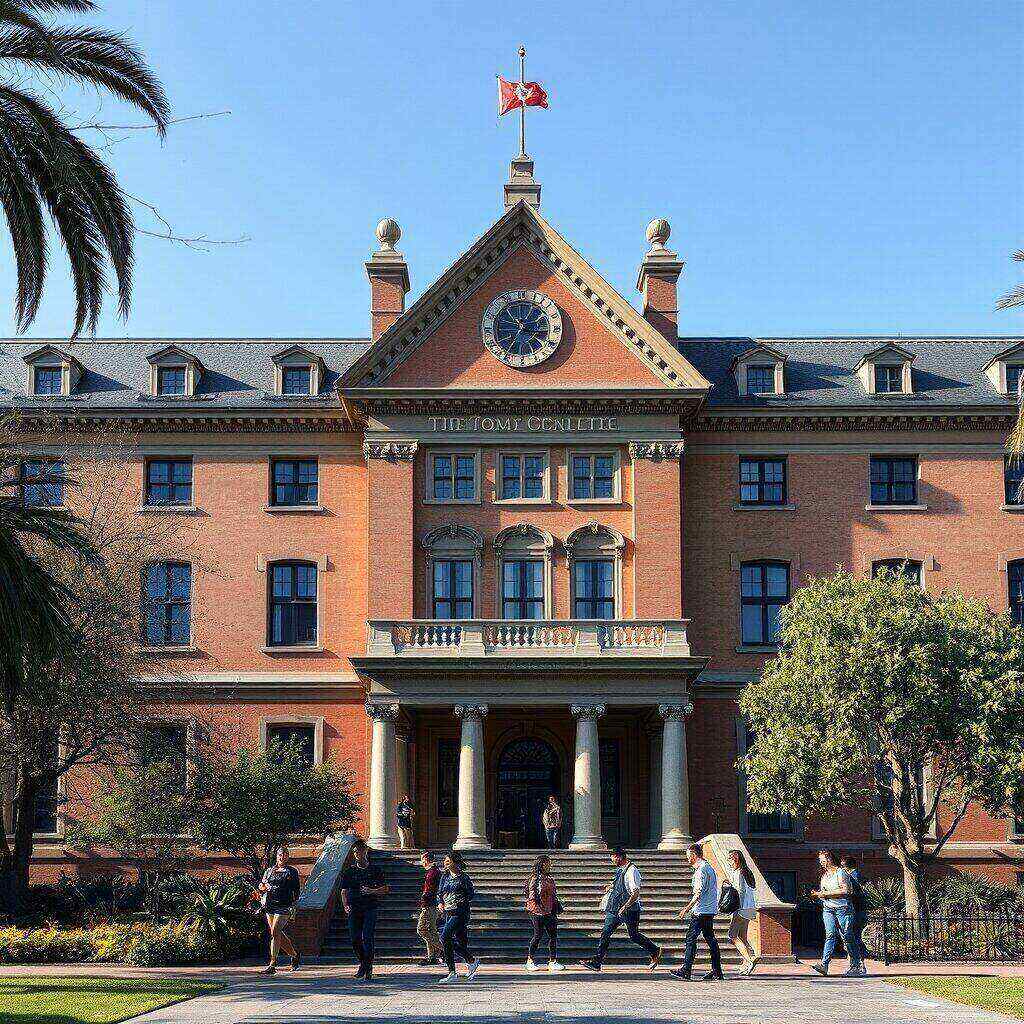
Perched at the foot of Devil’s Peak, with Table Mountain looming behind it and the Atlantic Ocean visible on a clear day, the University of Cape Town doesn’t look like most universities. It feels more like a campus that was accidentally dropped into a national park — and somehow, that setting perfectly mirrors the kind of education it offers. Bold, expansive, and impossible to ignore.
UCT, as it’s known almost universally, was founded in 1829, making it the oldest university in South Africa and one of the oldest on the African continent. Over nearly two centuries, it has grown from a modest colonial college into a research-intensive institution that consistently ranks as Africa’s top university on global indices including the QS World University Rankings and Times Higher Education. For students choosing between staying on the continent or studying abroad, UCT presents a genuinely compelling third option — world-class without requiring a hemisphere change.
The University of Cape Town, located at the foot of Table Mountain, is one of the most prestigious institutions in Africa. With a rich history dating back to 1829, it has established itself as a hub for academic excellence and innovation. As a student at UCT, you can expect a unique blend of academic rigor, cultural diversity, and breathtaking natural beauty.
Quick Facts
- Founded: 1829
- Location: Rondebosch, Cape Town, South Africa
- Faculties: Commerce, Engineering & the Built Environment, Health Sciences, Humanities, Law, Science
- Student Population: Approximately 29,000+
- Academic Year: Two semesters — February to June, July to November
- Primary Language of Instruction: English
- Ranking: Consistently #1 in Africa (QS, Times Higher Education)
The Campus and City Atmosphere
Arriving at UCT for the first time is genuinely striking. The upper campus — home to most faculties — is built along the slopes of Devil’s Peak, with grand stone staircases, colonnaded buildings, and sweeping views over the southern suburbs of Cape Town. It’s photogenic in a way that almost feels unfair to other universities.
But beyond aesthetics, Cape Town itself is a core part of the student experience. The city is layered — historically rich, socially complex, physically beautiful, and economically unequal. Students quickly learn that their education doesn’t stay neatly inside lecture halls. The city pushes back, asks questions, and demands engagement. For students coming from elsewhere in Africa, or from Europe, Asia, or the Americas, this can be one of the most intellectually formative aspects of studying at UCT — not just what happens in seminars, but what happens outside them.
The “Silicon Cape” reputation Cape Town has been building over the past decade also matters. The city has attracted a growing cluster of tech startups, fintech companies, and digital agencies, which means students in technology-adjacent programmes aren’t limited to traditional graduate pathways. The innovation ecosystem is right on the doorstep.
Academic Environment
How Teaching Actually Works
UCT follows a research-led teaching model, which means the people teaching you are often the same people publishing in the journals you’re assigned to read. For students used to a more textbook-driven style of education, this can be an adjustment. Lectures move quickly, reading lists are long, and participation in tutorials is expected — not optional.
Class sizes vary significantly by year and programme. First-year lectures in popular faculties like Commerce or Science can be large, with several hundred students in a hall. But tutorials and practical sessions break these down into far more manageable groups, and by second or third year, most students are working in smaller, more discussion-based environments.
Academic Pressure and Workload
Students consistently describe the academic workload at UCT as demanding but manageable with good habits. The expectation isn’t just that you attend and absorb — it’s that you engage critically, question sources, construct arguments, and demonstrate independent thinking in assessments. Essays, research reports, lab writeups, case analyses, and group presentations are all common formats depending on your faculty.
The university provides extensive academic support through writing centres, supplemental instruction programmes, and faculty-specific tutoring. Students who lean into these resources tend to find their footing much faster.
Faculties and Popular Programmes
UCT’s six faculties each have their own distinct culture and academic rhythm. Some of the most sought-after programmes include:
- Commerce: Actuarial Science, Finance, Accounting, Business Science, Economics
- Engineering & the Built Environment: Civil, Electrical, Mechanical, and Chemical Engineering; Architecture
- Health Sciences: Medicine (MBChB), Physiotherapy, Occupational Therapy, Public Health
- Humanities: Psychology, African Studies, Media Studies, Philosophy, Sociology
- Science: Computer Science, Mathematics, Statistics, Environmental & Geographical Science
- Law: LLB and various postgraduate legal specialisations
For students interested in data-driven careers, the Statistics and Computer Science departments under the Faculty of Science offer strong grounding in both theory and applied work. Students who want to complement their degree with structured practical experience sometimes explore external opportunities in data analytics and data science to build portfolio work alongside their academic coursework.
Sessions, Intakes, and Exam Timelines
Academic Calendar at a Glance
UCT operates on a two-semester system, which follows a fairly predictable rhythm once you’ve been through one cycle:
- Semester 1: February – June
- Semester 1 Exams: June
- Semester 2: July – November
- Semester 2 Exams: November
- Supplementary Exams: August (Sem 1) and December (Sem 2)
- Main Intake: February (some postgraduate programmes admit mid-year in July)
The weeks leading up to the June and November exam periods are noticeably intense across campus — libraries fill up, study groups form in corridors, and the usual social energy shifts toward something more focused. Most faculties provide past exam papers and revision sessions, and lecturers are generally accessible during office hours in this period.
Assessment Style
Continuous assessment is a central feature at UCT. Very few courses rely entirely on a single final exam — most combine assignments, practical tests, class presentations, group projects, and participation marks throughout the semester. Students who stay consistent tend to do better than those who cram at the end, which is arguably a healthier academic structure overall.
Admission Structure
Getting into UCT is competitive, and the process varies by programme. South African applicants are assessed using their National Senior Certificate (NSC) results, with UCT calculating a faculty-specific points score to shortlist candidates. High-demand programmes like Medicine, Architecture, and Actuarial Science have particularly competitive cut-offs and may require additional components like portfolio submissions or aptitude tests.
For international students, equivalent qualifications — including A-Levels, the International Baccalaureate (IB), and various national matriculation systems — are assessed individually. The official UCT admissions portal (www.uct.ac.za/apply) outlines programme-specific requirements and application timelines in detail. Applications for the February intake typically open in April of the preceding year and close around August or September.
UCT also runs Educational Development Programmes (EDP) for students from under-resourced schooling backgrounds, offering extended curricula and additional academic support to level the playing field without compromising on academic standards.
Student Life and Campus Culture
Residences and Living Arrangements
First-year students who secure on-campus residence are considered fortunate — the waiting lists are long, and residence life is a genuinely distinct experience. Each residence has its own culture, traditions, and social calendar, and the inter-residence competitions in sports and performance arts are highlights of the first semester social calendar.
Students who live off-campus tend to settle in the nearby suburbs of Rondebosch, Mowbray, Claremont, or Observatory. “Obs,” as locals call it, is particularly popular for its bohemian atmosphere, affordable eateries, and easy access to both the campus and the city centre.
Student life at UCT is vibrant and diverse, with over 100 student clubs and societies catering to various interests and passions. From sports teams to cultural organizations, there’s something for everyone. The university’s location in Cape Town, one of the most beautiful cities in the world, provides endless opportunities for outdoor activities, cultural exploration, and community engagement.
Clubs, Societies, and Events
Over 100 registered student organisations operate at UCT, spanning a range that goes from mountaineering clubs and debating societies to cultural associations, religious groups, and academic interest clubs. Student governance is active — the Students’ Representative Council (SRC) engages directly with university management on policy matters, and student-led activism has historically shaped the institution in significant ways.
The #RhodesMustFall movement, which began at UCT in 2015 and sparked a global debate about decolonisation in higher education, is perhaps the most prominent recent example of how engaged and vocal the UCT student body can be. For students who care about ideas beyond their degree programmes, this is an environment that rewards intellectual curiosity and civic participation.
Practical Learning Culture
UCT takes experiential learning seriously across all six faculties. In Health Sciences, students rotate through Groote Schuur Hospital — the same hospital where the world’s first human heart transplant was performed in 1967 — gaining real clinical exposure from early in their training. Engineering students complete industry-commissioned capstone projects. Law students run legal aid clinics serving actual clients from under-resourced communities.
In technology-focused programmes, project culture is strong. Computer Science and Information Systems students regularly work on applied problems, build software tools, and participate in external hackathons and coding events. Students looking to extend this practical orientation sometimes pursue structured experience in areas like cloud computing and DevOps or AI and machine learning to complement their coursework with real deployment experience.
Industry Exposure and Career Pathways
How Prepared Are UCT Graduates?
The short answer: quite well, particularly for students who actively engage with the resources available to them. The UCT Careers Service runs workshops on CV writing, interview preparation, and professional networking throughout the year. Graduate recruitment drives are common on campus, with major firms in finance, consulting, engineering, and technology regularly attending career fairs and conducting on-campus interviews.
In sectors like financial services and data science, recruitment pipelines often begin in the third year of a four-year programme. Vacation work and structured internship opportunities during December and June are actively pursued by students in Commerce and Engineering in particular, as these experiences frequently convert into graduate offers.
Popular Career Fields for UCT Graduates
- Investment banking and financial services
- Consulting (management, strategy, and technical)
- Technology and software development
- Public health and global development
- Environmental and climate sciences
- Architecture and urban planning
- Law and public policy
- Data science and analytics
The UCT Graduate School of Business (GSB) adds a postgraduate layer to this, offering MBA and executive education programmes that attract mid-career professionals from across Africa and beyond. Its alumni network is a resource that undergraduate students can tap into through formal mentorship and networking events.
What International Students Usually Notice
- The city is complex. Cape Town’s beauty is real, but so is its inequality. Students who engage thoughtfully with this complexity tend to leave with a much richer understanding of the world.
- The academics are rigorous. UCT’s standards are not inflated for reputation — the workload is real, and performance expectations are high.
- The social environment is diverse and often deeply political. Conversations about identity, race, decolonisation, and social justice are commonplace and substantive.
- Cost of living is relatively accessible. Compared to universities in the UK, Australia, or North America, day-to-day life in Cape Town is affordable.
- Nature is remarkably close. Table Mountain National Park is effectively part of the campus backdrop. Hiking, surfing, cycling, and outdoor adventures are part of ordinary student weekends.
Common Challenges Students Face
No honest review leaves out the difficult parts. UCT students commonly report that the transition from high school to university-level work is steeper than they anticipated. The shift from structured school routines to self-directed learning catches many first-years off guard, and academic support services — while genuinely helpful — require students to actively seek them out.
Accommodation is another consistent pressure point. On-campus residence spots are limited, and navigating the private rental market in Cape Town as a new student can be stressful and expensive. Students from outside South Africa, in particular, benefit from starting this search early and connecting with the university’s international student support office.
Cape Town’s transport infrastructure can also be a challenge. The city is not particularly walkable beyond the immediate campus vicinity, and while the MyCiTi bus service covers key routes, students without personal transport sometimes find getting around inconvenient. Many students eventually rely on rideshare apps or cycle to navigate the city comfortably.
Is UCT Worth It?
For students who are genuinely ready to engage — academically, socially, and intellectually — UCT delivers on what it promises. The combination of rigorous academics, a diverse and charged campus culture, proximity to one of the world’s most interesting cities, and a degree that carries real weight with employers across Africa and internationally makes it a compelling choice.
Studying at UCT is a unique and enriching experience that combines academic excellence with personal growth and development. With its stunning natural surroundings, vibrant cultural scene, and strong sense of community, UCT provides students with the perfect environment to explore their passions, develop their skills, and achieve their full potential.
For students interested in data analytics and data science, UCT offers a range of programs and research opportunities that can help them build a successful career in this field. Additionally, the university’s focus on cloud computing and DevOps provides students with the skills and knowledge needed to thrive in the tech industry.
In conclusion, UCT offers students a world-class education, combined with a unique and enriching student experience. With its strong academic programs, vibrant cultural scene, and stunning natural beauty, UCT is the perfect destination for students looking to achieve their full potential and make a positive impact in the world.
It isn’t a university that carries you. It’s one that challenges you, sometimes frustrates you, and ultimately — if you lean into what it offers — prepares you for a great deal more than just a job. For students weighing their options between studying locally or abroad, UCT offers something that’s genuinely difficult to replicate anywhere else: an African education with global standing, set inside one of the most complex and beautiful cities on earth.
#universityofcapetown #uct #studyinAfrica #studentlife #capetown


 Views Today : 9
 Views Yesterday : 204
 Your IP Address : 216.73.216.174