
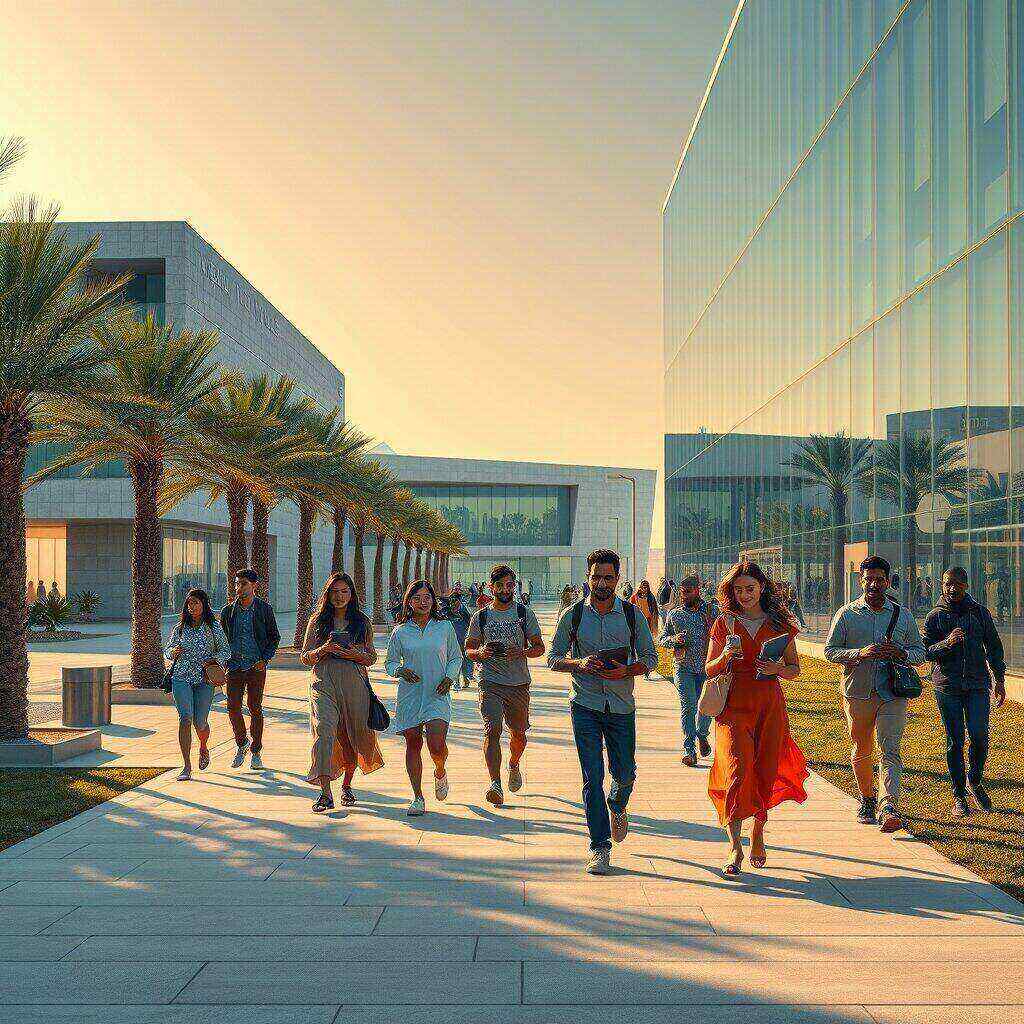
King Abdullah University of Science and Technology, better known as KAUST, is one of those universities that feels very different from the standard campus experience students imagine when they think of the Middle East. Set on the Red Sea in Thuwal, Saudi Arabia, it is modern, international, research-heavy, and unusually focused on future-facing engineering and technology fields. For students interested in advanced labs, interdisciplinary work, and a campus built around innovation rather than tradition, KAUST can be a genuinely exciting place to study.
Summary: KAUST stands out for graduate-level engineering education, strong research funding, world-class laboratories, and a highly international campus community. It suits students who want serious technical work, access to emerging technology sectors, and a residential environment designed around science and innovation. #kaust #saudiarabia #engineeringeducation #studentlife #techcareers
Quick facts
- Founded in 2009
- Location: Thuwal, on the Red Sea coast of Saudi Arabia
- Type: Graduate research university
- Main strengths: engineering, computing, energy, materials, data science, and environmental technologies
- Student profile: highly international, with researchers and graduate students from many countries
- Main intake: usually centered on the fall semester
A campus that feels built for the future
One of the first things students notice about KAUST is the infrastructure. This is not a university that grew slowly over a century and then adapted to technology later. It was built in the modern era with research, sustainability, and scientific collaboration already at the center of the plan. The result is a campus that feels sleek, spacious, and highly functional.
Academic buildings, research centers, housing, sports facilities, dining spaces, and waterfront areas are arranged in a way that supports daily student life without constant commuting. For engineering students, this matters more than it might seem at first. When your class, lab, faculty office, and team meeting space are all close by, the academic workflow becomes smoother and more productive.
There is also a distinctly international research-campus atmosphere. Rather than feeling like a crowded urban university, KAUST feels calm, organized, and intentionally designed. Some students love that focused environment immediately. Others take time to adjust, especially if they expected a more traditional city-based student lifestyle.
Its location in Thuwal adds another layer to the experience. The setting is quieter than Beirut, Dubai, or Doha, and that can be either a major advantage or a limitation depending on personality. Students who want deep concentration often appreciate it. Students who want constant nightlife and city movement may find it more isolated, even though Jeddah is accessible for weekend breaks.
Academic environment: serious, interdisciplinary, and research-led
KAUST is not a casual academic environment. It is built for students who are comfortable with technical depth, independent thinking, and long-term project work. In many programs, learning goes far beyond lectures. Students are expected to read journal papers, join research discussions, present findings, solve open-ended problems, and contribute meaningfully to lab culture.
That makes KAUST especially attractive for engineering and technology students who do not want a purely textbook-based education. The university is well known for areas such as computer science, electrical engineering, mechanical engineering, applied mathematics, materials science, energy systems, and environmental technology. Across these fields, there is a visible push toward solving real-world problems rather than staying inside theory alone.
- Computer science and artificial intelligence
- Electrical and computer engineering
- Mechanical engineering and robotics
- Advanced materials and nanotechnology
- Energy, climate, and water-related technologies
- Applied mathematics, data science, and computation
Another strength is the interdisciplinary culture. At many universities, departments stay in their own lanes. At KAUST, students often cross those boundaries naturally. A robotics project may involve machine learning, sensors, computer vision, and marine applications. A sustainability project might connect materials science, simulation, and industrial systems. That kind of overlap creates a more realistic engineering environment because industry problems rarely arrive neatly divided by department.
Admissions structure and what the university looks for
KAUST is primarily a postgraduate university, so admissions are very different from the undergraduate process students may know from other institutions. Most applicants are aiming for a master’s or PhD pathway, and the evaluation is usually based on academic background, research potential, program fit, and readiness for advanced study.
The university publishes updated requirements through its official admissions page, and applicants should always rely on the latest cycle information because requirements can shift. In general, students usually prepare a combination of:
- Academic transcripts and degree certificates
- A CV or technical resume
- A statement of purpose or research interest
- Recommendation letters
- English language proof where applicable
A big reason KAUST attracts global applicants is funding. Many admitted graduate students receive fellowships that can include tuition coverage, housing support, and a living stipend. That changes the financial calculation dramatically compared with many other international technology universities. It also means the admission pool is competitive. Strong grades help, but clarity of direction and academic fit matter just as much.
Students who do best in the process usually show more than academic scores. They present a clear link between past study, current interests, and future research goals. KAUST tends to appeal to applicants who already know the kind of technical problems they want to work on.
Semesters, assignment rhythm, and exam timelines
KAUST generally follows a semester-based system. The major intake is typically aligned with the fall term, with orientation and settlement activities often taking place in August and classes starting in late August or early September. From there, the academic pace becomes fairly intense quite quickly.
In the fall semester, students often face coursework deadlines by September and October, midterm-style assessments around October or early November, and final exams or major end-of-term submissions in December. The spring semester usually begins in January, with classes continuing into May. March is often heavy with assignments, project reviews, and mid-semester evaluations, while May tends to bring finals, presentations, research reports, and thesis-related milestones.
Summer is not always a complete academic break, especially for research-based students. For many, it becomes a period for experiments, coding, conference writing, lab progress, or collaboration with research groups and external partners. In a place like KAUST, the academic year feels continuous because even quieter months often remain professionally useful.
A typical term may include:
- Weekly problem sets or reading responses
- Lab meetings and technical discussions
- Coding, simulation, or design assignments
- Group presentations and written reports
- Research milestones linked to thesis or publication goals
That is why the pressure at KAUST is not just about final exams. The real challenge is the steady stream of expectations across the whole semester.
Practical learning is part of the culture, not an add-on
For students interested in engineering and technology, KAUST’s most impressive quality may be how naturally practical learning fits into the academic system. This is not the sort of university where applied work appears only at the end of a program. From early on, students are expected to work with tools, systems, data, and research processes that feel close to real professional environments.
In computing and engineering programs, practical learning often looks like a blend of coding, modeling, experimentation, design iteration, and documentation. Students may spend one day in a seminar, another in a fabrication or testing environment, and another debugging code with their research team. That mix builds technical confidence, but it also demands discipline because the work is rarely linear.
Students interested in fast-moving digital sectors often find KAUST especially relevant. Its ecosystem connects naturally to AI, robotics, automation, smart infrastructure, advanced materials, climate tech, and high-performance computing. Some students also widen their applied skill set through external resources in areas like AI & machine learning programs, data analytics training, or cloud computing skills when they want to strengthen portfolio depth beyond their lab specialization.
There is also a visible innovation layer on campus. Students are not only encouraged to publish or complete thesis work; they are also exposed to entrepreneurship, commercialization, and technical problem-solving that may lead toward real products or startups. Research showcases, startup demos, technical events, and collaborative challenges create opportunities to test ideas publicly and build confidence beyond the classroom.
Career development and what placements really look like
Students asking about placements should understand KAUST on its own terms. It does not operate like a mass-market university where a standard set of employers comes for broad campus hiring every season. Career outcomes here are shaped more by research quality, faculty connections, industry collaboration, project depth, and the student’s own initiative.
That said, KAUST has strong career value, especially in sectors that are expanding across Saudi Arabia and the Gulf. Students benefit from links to energy, sustainability, advanced manufacturing, computing, and deep-tech innovation. The university’s location in a region investing heavily in future industries gives it a practical edge, especially for students who want to work in emerging technology areas rather than only conventional corporate tracks.
Career preparation often happens through a mix of technical projects, faculty mentorship, conference exposure, resume building, and network development. Some students move into PhD programs or postdoctoral research. Others head into applied R&D, engineering firms, startup ecosystems, consulting, or innovation-linked roles connected to major regional development initiatives.
- Research and development positions
- AI, data, and advanced computing roles
- Energy transition and sustainability careers
- Robotics and automation pathways
- Materials and manufacturing innovation
- Doctoral study and academic research progression
Students who actively use faculty networks, technical events, and career support usually gain the most from KAUST. It is a university that rewards initiative more than passivity.
What international students usually notice first
International students often describe KAUST as one of the most globally mixed academic spaces in the region. English is the working language of most academic interaction, and the campus community includes students, researchers, faculty, and families from a wide range of national backgrounds. That gives the university a genuinely international feel rather than a superficially international label.
In practical terms, this changes the classroom experience. Group work often includes students with very different educational styles, which can be both refreshing and demanding. You learn not only how to solve technical problems, but also how to explain them, document them, and work across different communication habits. That is valuable preparation for multinational engineering teams.
The residential nature of the university is another major factor. Housing, recreation, dining, and research facilities are integrated into one community, which makes the first few months easier for many newcomers. The official KAUST website gives a useful overview of campus life, research centers, and student services for those trying to picture the day-to-day environment.
Student lifestyle on a graduate research campus
KAUST does not feel like a classic undergraduate university with nonstop club energy and crowded lecture halls. Its social environment is more mature, quieter, and often shaped by labs, research groups, sports, cultural communities, and shared residential life. For many students, that becomes a major advantage because it creates a balanced routine between demanding academic work and a manageable personal life.
Outside academics, students can access gyms, beachside spaces, swimming, community events, cultural gatherings, and informal networking areas. Because the campus sits by the Red Sea, there is a distinctive atmosphere that many students find unexpectedly calming after long days of research and coursework. Even simple routines like evening walks, coffee meetings, or study sessions can feel more relaxed than in a congested city campus.
Accommodation is also an important part of the student experience. Compared with many universities around the world, housing and campus services are often seen as a strong point at KAUST. Reliable living conditions can make a significant difference when students are dealing with project deadlines, research setbacks, and long lab hours.
Common challenges students should think about honestly
KAUST has a lot to offer, but it is not the perfect fit for every student. First, the academic environment is demanding. Students who are not comfortable with research pressure, self-management, or open-ended technical work may find the pace intense.
Second, the location is peaceful but somewhat contained. If your ideal student life depends on daily urban exploration and a constant city buzz, KAUST may feel too quiet. Third, because it is largely a graduate institution, the social atmosphere can feel more professional and focused than youthful in the traditional college sense.
There can also be adjustment issues related to climate, regional culture, and the expectations of a highly international research environment. None of these points cancel the university’s strengths, but they are important to consider realistically.
Why KAUST appeals to ambitious engineering students
For the right student, KAUST offers something rare: top-tier research infrastructure, strong financial support, global academic exposure, and direct relevance to future technology sectors, all in one deliberately designed campus environment. It is especially compelling for students who want more than classroom learning and are serious about building a technical identity through research, projects, collaboration, and innovation.
If your ideal university experience includes advanced labs, a diverse graduate community, and meaningful access to fields like AI, robotics, energy transition, advanced materials, and computational science, KAUST deserves serious attention. It may not offer the loudest or most traditional student experience in the region, but for focused, future-oriented engineers and technologists, it can be one of the most rewarding places to study.
#kaust #saudiarabia #engineeringeducation #studentlife #techcareers


 Views Today : 5
 Views Yesterday : 204
 Your IP Address : 216.73.216.174